
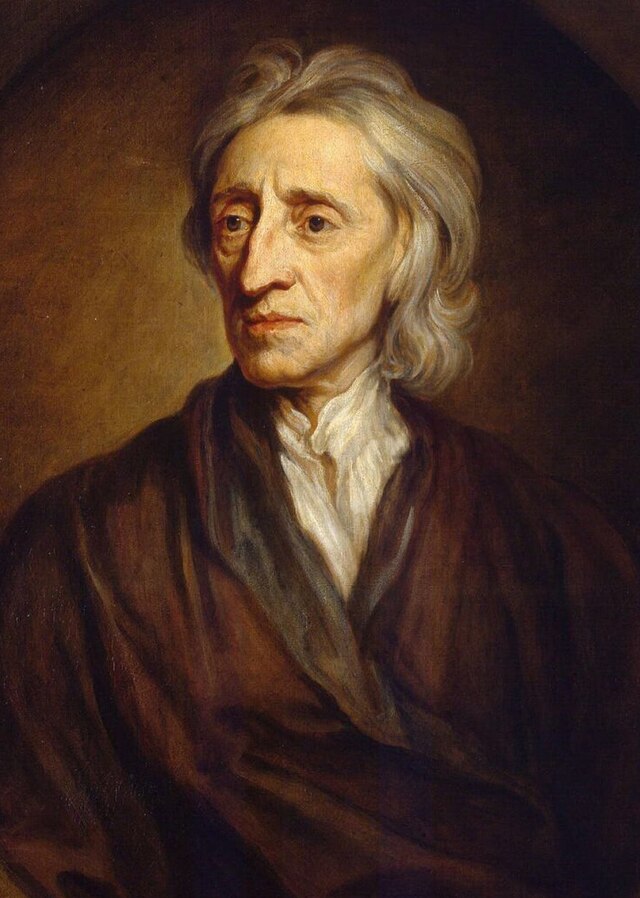
John Locke, born on August 29, 1632, in Wrington, Somerset, England, is widely regarded as one of the most influential philosophers in Western history. Often referred to as the “Father of Liberalism,” Locke’s ideas on liberty, government, and human understanding have profoundly shaped modern political thought and continue to resonate in contemporary debates about democracy, human rights, and the role of the state. His contributions to philosophy, particularly in the realms of political theory, epistemology, and education, have earned him a place among the pantheon of great thinkers who have left an indelible mark on the world.
Early Life and Education
John Locke was born into a modest but intellectually inclined family. His father, also named John Locke, was a lawyer and a small landowner who fought as a captain for the Parliamentarian forces during the English Civil War. This background of political turbulence and the struggle for power in England likely influenced the young Locke’s later ideas about government and authority.
Locke’s early education took place at the prestigious Westminster School in London, where he excelled academically. In 1652, at the age of 20, he was admitted to Christ Church, Oxford, one of the most prominent colleges in the University of Oxford. Although Locke initially studied the traditional curriculum of logic, metaphysics, and classical languages, he soon grew dissatisfied with the scholasticism that dominated the university’s teachings. Instead, he developed an interest in the more empirical and practical subjects, particularly medicine and the natural sciences.
In 1659, Locke earned a Bachelor of Arts degree, followed by a Master of Arts in 1662. Despite his academic achievements, Locke’s intellectual curiosity led him to pursue a different path than many of his contemporaries. He began studying medicine, eventually earning a medical degree, and became deeply involved in the scientific community of his time, interacting with prominent figures such as Robert Boyle and Thomas Sydenham.
The Shift to Political Thought
Locke’s involvement in medicine and science brought him into contact with Lord Ashley, later known as the Earl of Shaftesbury, a powerful and influential political figure in England. In 1667, Locke became Lord Ashley’s personal physician, a role that would profoundly shape his future. Lord Ashley was not only a patient but also a mentor to Locke, introducing him to the world of politics and governance.
Through his association with Shaftesbury, Locke became involved in the political intrigues and conflicts of the time, particularly those surrounding the Exclusion Crisis, a contentious political battle over whether the Catholic James II should be excluded from the line of succession to the English throne. Locke’s political ideas began to take shape during this period, as he observed the tensions between the monarchy and Parliament, as well as the broader struggle for religious tolerance and political liberty in England.
Locke’s experiences during this time led him to formulate his theories on government, which he later articulated in his most famous work, “Two Treatises of Government.” These treatises, published anonymously in 1689, after the Glorious Revolution, would become foundational texts in the development of modern democratic theory.
Exile and the Glorious Revolution
Locke’s political activities and his association with Shaftesbury eventually put him at odds with the ruling authorities. In 1683, as tensions escalated between the Crown and Parliament, Locke fled to the Netherlands, where he lived in exile for several years. During this period, Locke continued to develop his philosophical ideas, writing some of his most important works.
The political landscape in England shifted dramatically with the Glorious Revolution of 1688, which saw the overthrow of James II and the ascension of William of Orange and his wife Mary to the English throne. The revolution was a turning point in English history, marking the beginning of a constitutional monarchy and the affirmation of parliamentary sovereignty over the monarchy. Locke returned to England in 1689, with his ideas about government and liberty perfectly aligned with the new political order.
Key Philosophical Contributions
Locke’s return to England marked the beginning of the most productive period of his life. In 1689, he published his “Letter Concerning Toleration,” a groundbreaking work that argued for the separation of church and state and the importance of religious tolerance. Locke’s arguments in favor of tolerance were rooted in his belief that the state should not impose religious beliefs on individuals, as true faith cannot be compelled by force.
The same year, Locke published his most famous work, “An Essay Concerning Human Understanding,” which sought to explore the nature of human knowledge and understanding. In this essay, Locke rejected the notion of innate ideas, arguing instead that the human mind is a “tabula rasa” or blank slate at birth, and that all knowledge is derived from experience. This empiricist approach to knowledge would have a profound influence on later philosophers, particularly those in the Enlightenment tradition.
Locke’s “Two Treatises of Government,” also published in 1689, articulated his theories of natural rights, social contract, and the right of revolution. In the first treatise, Locke refuted the doctrine of the divine right of kings, which held that monarchs derived their authority directly from God. In the second treatise, he outlined his vision of a just and legitimate government, one that is based on the consent of the governed and exists to protect the natural rights of life, liberty, and property.
Locke’s ideas about government, particularly his emphasis on the social contract and the protection of individual rights, would become central to the development of liberal democratic thought. His influence can be seen in the writings of later political thinkers, including Thomas Jefferson, who drew heavily on Locke’s ideas in drafting the Declaration of Independence.
Locke’s Influence on Education
In addition to his contributions to political theory and philosophy, Locke also made significant contributions to the field of education. In 1693, he published “Some Thoughts Concerning Education,” a work that outlined his views on how children should be raised and educated. Locke emphasized the importance of practical learning, physical exercise, and moral education, arguing that education should be tailored to the individual needs and abilities of each child.
Locke’s ideas on education were revolutionary for his time, advocating for a more humane and individualized approach to teaching. He believed that children should be encouraged to think for themselves and that education should aim to develop a well-rounded and virtuous individual, capable of making rational decisions and contributing to society.
Locke’s educational philosophy had a lasting impact, influencing the development of educational theory and practice in the centuries that followed. His emphasis on the importance of experience, observation, and critical thinking in education remains relevant today, as educators continue to grapple with the challenges of preparing students for an increasingly complex and interconnected world.
Legacy and Final Years
John Locke spent his final years at the home of Sir Francis and Lady Masham in Oates, Essex, where he was cared for by Lady Masham, the daughter of the philosopher Ralph Cudworth. Despite his declining health, Locke continued to write and correspond with other intellectuals until his death on October 28, 1704.
Locke’s legacy is vast and enduring. His ideas about government, individual rights, and the nature of knowledge have had a profound influence on the development of modern philosophy and political theory. His works laid the groundwork for the Enlightenment and the subsequent development of liberal democratic thought, influencing key figures such as Voltaire, Rousseau, and the American Founding Fathers.
Locke’s insistence on the importance of reason, experience, and tolerance continues to resonate in contemporary debates about the role of government, the protection of individual rights, and the nature of education. His writings remain essential reading for anyone seeking to understand the philosophical foundations of modern democracy and the principles of liberty that underpin it.
Conclusion
John Locke’s life and work represent a turning point in the history of Western thought. His contributions to philosophy, political theory, and education have had a lasting impact on the world, shaping the development of modern democratic societies and the way we think about knowledge, government, and individual rights. Locke’s ideas continue to inspire and challenge us, reminding us of the importance of liberty, reason, and tolerance in the pursuit of a just and free society.
Locke’s philosophy, grounded in the principles of empirical observation and rational inquiry, remains a cornerstone of the liberal tradition, influencing political thinkers, educators, and philosophers for centuries. As we continue to navigate the complexities of modern life, Locke’s vision of a society based on reason, tolerance, and the protection of individual rights offers a timeless guide to building a more just and equitable world.


