
Introduction
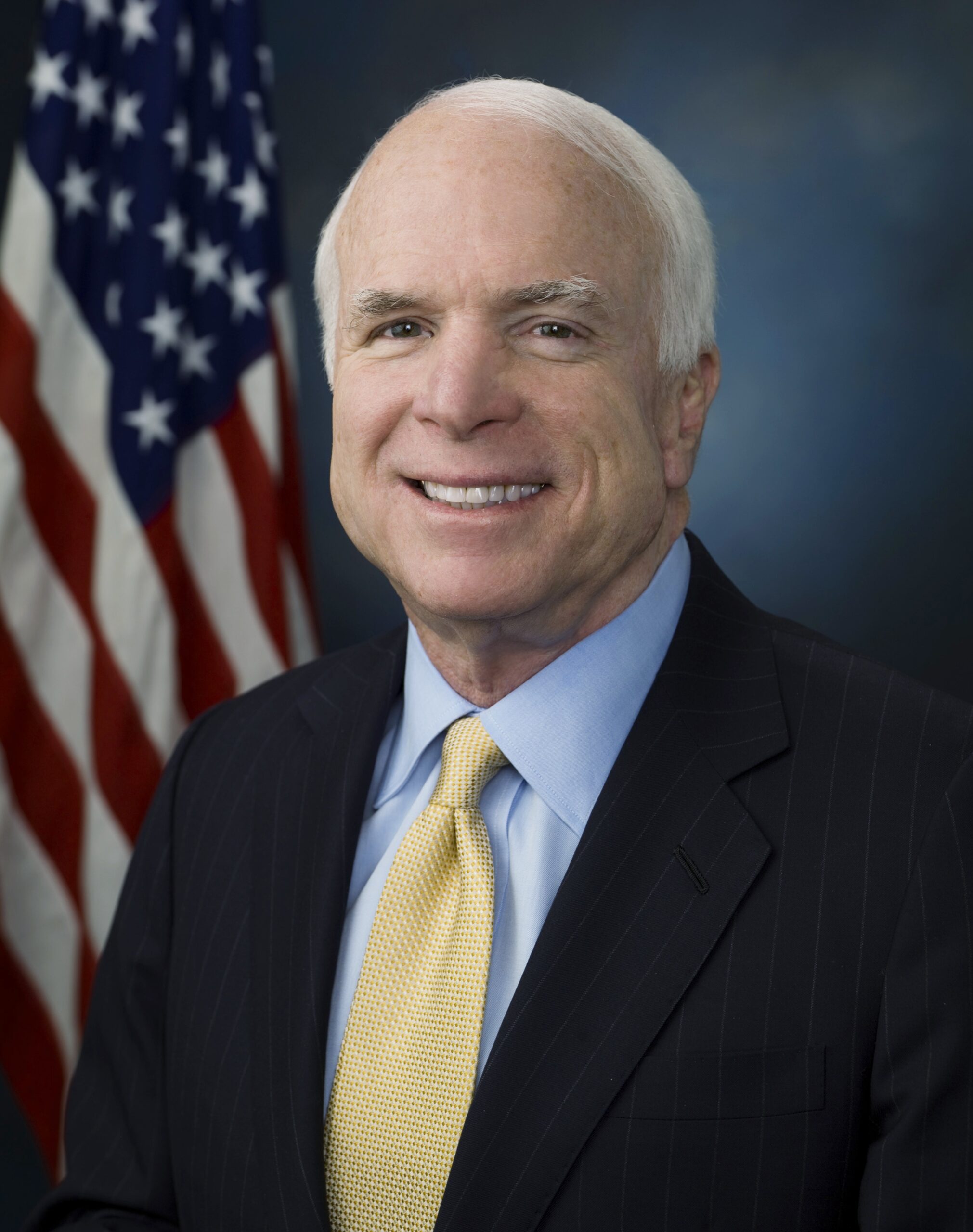
John McCain was a towering figure in American politics, known for his unwavering commitment to public service, his deep-rooted patriotism, and his maverick spirit. Over the course of his long career, McCain became a symbol of courage and resilience, having survived brutal imprisonment during the Vietnam War and later becoming a leading voice in the U.S. Senate. His life was marked by significant achievements and moments of profound influence, making him a key figure in American political history. This article delves into the life, career, and legacy of John McCain, exploring his journey from a naval aviator to a presidential candidate and influential senator.
Early Life and Military Background
John Sidney McCain III was born on August 29, 1936, in the Panama Canal Zone, an area controlled by the United States at the time. He was born into a distinguished military family; both his father, John S. McCain Jr., and his grandfather, John S. McCain Sr., were four-star admirals in the U.S. Navy. This legacy of military service profoundly influenced McCain’s upbringing, instilling in him a sense of duty and honor from a young age.
McCain’s early education was rigorous and disciplined. He attended Episcopal High School in Alexandria, Virginia, where he was known for his rebellious streak but also for his leadership qualities. In 1954, he followed in the footsteps of his father and grandfather by enrolling at the United States Naval Academy in Annapolis, Maryland. Despite his intelligence and natural leadership abilities, McCain graduated in 1958 near the bottom of his class, ranking 894th out of 899 students. His academic performance, however, did not deter him from pursuing a career in the Navy.
Military Service and the Vietnam War
After graduating from the Naval Academy, McCain began his training as a naval aviator, eventually earning his wings in 1960. He was assigned to fly attack aircraft and quickly gained a reputation as a skilled pilot. However, his early career was marred by several close calls, including a plane crash in Corpus Christi Bay, Texas, which he survived.
McCain’s most harrowing experience came during the Vietnam War. On October 26, 1967, while flying a bombing mission over Hanoi, McCain’s A-4E Skyhawk was shot down by a surface-to-air missile. He ejected from the aircraft, breaking both arms and a leg in the process. McCain was captured by North Vietnamese forces and held as a prisoner of war (POW) for over five years. During his captivity, McCain endured brutal torture and solitary confinement, but he refused early release, insisting that POWs captured before him be released first—a decision that exemplified his steadfast adherence to the military code of conduct.
McCain’s resilience and courage during his imprisonment made him a national hero upon his return to the United States in 1973. He was awarded several commendations, including the Silver Star, the Legion of Merit, and the Distinguished Flying Cross, among others. His experiences as a POW deeply shaped his views on military and foreign policy, as well as his commitment to public service.
Transition to Politics
After retiring from the Navy in 1981 with the rank of captain, John McCain embarked on a new chapter in his life—politics. He moved to Arizona and married Cindy Hensley, the daughter of a wealthy beer distributor. In 1982, McCain was elected to the U.S. House of Representatives, representing Arizona’s 1st Congressional District. During his time in the House, McCain quickly established himself as a staunch conservative, aligning with the policies of President Ronald Reagan.
In 1986, McCain successfully ran for the U.S. Senate, succeeding the legendary Barry Goldwater. As a senator, McCain became known for his maverick approach, often challenging party orthodoxy and crossing the aisle to work with Democrats on key issues. His commitment to bipartisanship and his willingness to speak out against corruption and special interests earned him a reputation as a principled and independent-minded lawmaker.
Presidential Ambitions and the 2000 Campaign
John McCain’s first bid for the presidency came in 2000. Running as a Republican, he positioned himself as a reformer who would challenge the influence of money in politics. His campaign gained significant momentum during the New Hampshire primary, where he won a decisive victory over the establishment favorite, Texas Governor George W. Bush. McCain’s straight-talking style and his “Straight Talk Express” campaign bus became symbols of his candidacy, appealing to voters who were disillusioned with traditional politics.
However, McCain’s campaign faced significant challenges in the subsequent primaries, particularly in South Carolina, where negative attacks and political maneuvering by Bush’s campaign led to McCain’s defeat. Despite his loss, McCain’s 2000 presidential bid elevated his national profile and solidified his status as a maverick within the Republican Party.
Senate Leadership and the McCain-Feingold Act
After his unsuccessful presidential bid, McCain returned to the Senate, where he continued to play a prominent role in shaping U.S. policy. One of his most significant legislative achievements was the Bipartisan Campaign Reform Act of 2002, commonly known as the McCain-Feingold Act. Co-sponsored with Democratic Senator Russ Feingold, the legislation aimed to reduce the influence of money in politics by banning “soft money” contributions to political parties and restricting the use of “issue ads” funded by corporations and unions.
The McCain-Feingold Act was a landmark piece of legislation, representing one of the most substantial efforts to reform campaign finance laws in decades. Although parts of the law were later overturned by the Supreme Court’s Citizens United decision in 2010, McCain’s work on the issue demonstrated his commitment to transparency and accountability in government.
The 2008 Presidential Campaign
John McCain’s second bid for the presidency came in 2008, following years of speculation about his intentions. Running as the Republican nominee, McCain faced a challenging political environment, with the country embroiled in wars in Iraq and Afghanistan and the economy on the brink of collapse. McCain’s campaign focused on his experience, particularly his military service and his years in the Senate, positioning him as a steady hand in a time of crisis.
However, McCain’s campaign was marked by several controversial decisions, including his selection of Alaska Governor Sarah Palin as his running mate. While Palin energized the conservative base, her lack of experience and controversial statements became a liability for the campaign. Additionally, McCain struggled to distance himself from the unpopular policies of outgoing President George W. Bush, particularly in the context of the financial crisis.
In the general election, McCain faced Democratic Senator Barack Obama, who had galvanized voters with a message of hope and change. Despite a spirited campaign, McCain was defeated, with Obama winning a decisive victory. In his concession speech, McCain graciously acknowledged the historic nature of Obama’s win and called for unity in the face of the challenges ahead.
Later Years and Final Acts of Public Service
Following his defeat in the 2008 election, John McCain returned to the Senate, where he continued to play a vital role in U.S. politics. He remained a vocal advocate for a strong national defense and continued to challenge both Republican and Democratic administrations on issues related to foreign policy and national security.
In 2017, McCain was diagnosed with glioblastoma, an aggressive form of brain cancer. Despite his illness, McCain continued to fulfill his senatorial duties, including a dramatic return to Washington, D.C., to cast a decisive vote against the repeal of the Affordable Care Act (Obamacare). His thumbs-down vote symbolized his enduring commitment to principle over party and was widely seen as a defining moment in his final years.
McCain passed away on August 25, 2018, at the age of 81, just days before his 82nd birthday. His death was met with an outpouring of tributes from across the political spectrum, reflecting his impact on American politics and his reputation as a statesman who put country before party.
Legacy and Impact
John McCain’s legacy is one of courage, service, and principled leadership. Throughout his life, McCain demonstrated an unwavering commitment to his country, whether as a naval aviator enduring the horrors of war, a senator advocating for bipartisan reform, or a presidential candidate challenging the status quo. His maverick spirit and willingness to stand up for what he believed in, even when it was unpopular, earned him the respect of colleagues and citizens alike.
McCain’s influence extended beyond the policies he championed; he was a symbol of integrity in an increasingly polarized political landscape. His dedication to public service, his efforts to bridge divides, and his insistence on putting the country first continue to serve as a model for future generations of leaders.
In his final memoir, The Restless Wave, McCain reflected on his life and career with the characteristic candor that defined him. He acknowledged his mistakes and shortcomings but remained proud of his service and his contributions to the nation. McCain’s life was a testament to the values of duty, honor, and courage, and his legacy will undoubtedly endure as a beacon of what American leadership can and should be.


