
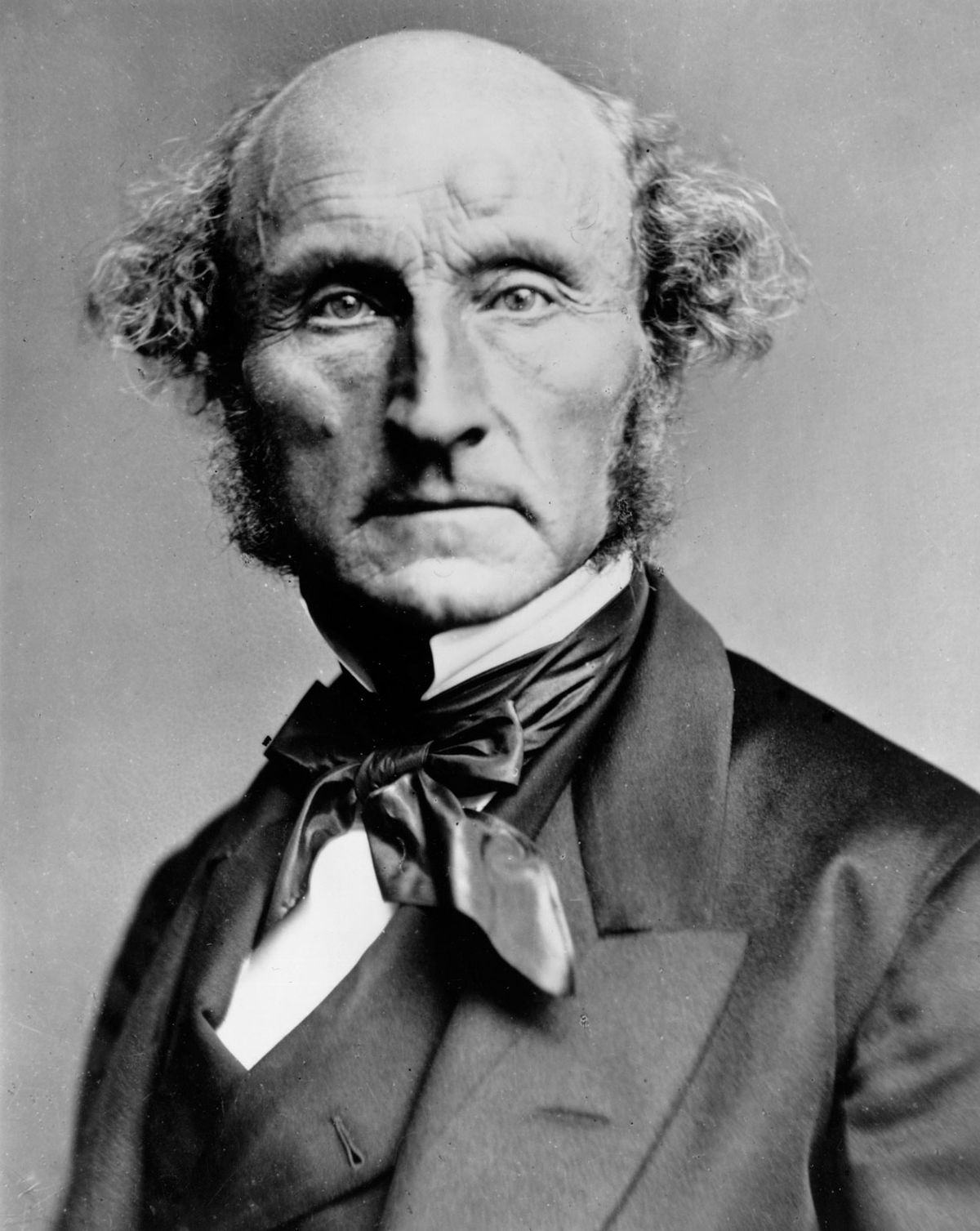
John Stuart Mill, born on May 20, 1806, in Pentonville, London, is one of the most influential thinkers in the history of philosophy, economics, and political theory. His work has left an indelible mark on modern intellectual history, particularly through his contributions to the philosophy of utilitarianism and liberalism. This article explores his life, achievements, and the enduring legacy of his ideas.
Early Life and Education: The Making of a Prodigy
John Stuart Mill’s intellectual journey began at an exceptionally young age, shaped by the rigorous education provided by his father, James Mill, a Scottish historian, philosopher, and economist. James Mill had a clear objective: to mold his son into a genius dedicated to the cause of utilitarianism, a philosophy that emphasizes the greatest happiness for the greatest number.
From as early as three years old, John Stuart Mill was immersed in an intensive curriculum that included the study of mathematics and history. By the age of ten, he was proficient in reading the classical works of Greek and Latin authors in their original languages. At thirteen, he was already studying the seminal works of Adam Smith and David Ricardo, two towering figures in the field of political economy.
The French Connection: A Year in France
At fourteen, Mill spent a year in France, an experience that significantly influenced his intellectual development. During his time in France, he not only deepened his knowledge of economics and philosophy but also developed a love for the French countryside and culture. This period of his life was marked by a deep appreciation for the natural beauty of the French mountains and the hospitality of Parisian society.
Mental Struggles and Recovery
The intense educational regime imposed by his father took a toll on Mill’s mental health. In his early twenties, he experienced a profound period of depression, questioning the value of the rigorous intellectual life he had been leading. This mental struggle, however, was also a turning point. Mill found solace in the poetry of Wordsworth, which helped him recover and gain a new perspective on life, one that emphasized the importance of emotional well-being alongside intellectual pursuits.
Professional Life: The British East India Company
Mill’s professional career began in 1823 when he joined the British East India Company, following in his father’s footsteps. He worked there for 35 years, during which time he rose to the position of Chief Examiner, the highest rank in the company. His work at the East India Company provided him with a practical understanding of economic and political governance, which influenced his later writings.
Marriage to Harriet Taylor: A Partnership of Equals
In 1851, Mill married Harriet Taylor, a woman with whom he had shared a close, albeit platonic, friendship for 21 years. Harriet was already married when they met, but her intellectual companionship deeply influenced Mill. Their marriage, though brief—Harriet passed away in 1858—was a profound partnership that greatly impacted Mill’s views on women’s rights. His essay, “The Subjection of Women,” published in 1869, is considered one of the most important works advocating for gender equality.
Philosophical Contributions: Utilitarianism and Beyond
John Stuart Mill is perhaps best known for his association with utilitarianism, a moral philosophy initially developed by Jeremy Bentham. However, Mill’s version of utilitarianism was more complex and humane than Bentham’s. While Bentham focused on quantifying happiness, Mill introduced qualitative distinctions, arguing that intellectual and moral pleasures are superior to physical pleasures. His famous statement, “It is better to be a human being dissatisfied than a pig satisfied,” encapsulates this idea.
Mill’s philosophical contributions extended beyond utilitarianism. He was also a fierce advocate for individual liberty, a theme that is central to his seminal work, “On Liberty” (1859). In this book, Mill argues for the protection of individual freedoms against societal and governmental interference, provided that one’s actions do not harm others. This work remains a foundational text in the study of liberal political philosophy.
Political Career: Champion of Women’s Rights and Social Reforms
Between 1865 and 1868, Mill served as the Rector of the University of St. Andrews and as a Member of Parliament for the London boroughs of City and Westminster. During his time in Parliament, Mill was a vocal advocate for a range of social reforms. He supported the extension of suffrage to women, the proportional representation electoral system, and the legalization of trade unions and cooperatives.
Mill’s advocacy for women’s rights was particularly groundbreaking. He was one of the first public figures to argue for the enfranchisement of women and their equal treatment in all aspects of society. His work laid the groundwork for later feminist movements and remains a touchstone in discussions of gender equality.
Economic Theories: A Balanced Approach
In the realm of economics, John Stuart Mill is best known for his work “Principles of Political Economy” (1848), which was for many years the standard textbook in British universities. Mill’s economic thought was characterized by a balance between classical liberalism and a recognition of the need for social justice. He believed in the importance of a free market but also argued that the distribution of wealth should be subject to ethical considerations and social policies.
One of Mill’s key contributions to economic thought was his distinction between the laws of production and the laws of distribution. He argued that while the former are natural and unchangeable, the latter are determined by social conventions and can be altered through policy interventions. This view provided a foundation for later economic theories that emphasize the role of government in addressing inequality.
Later Life and Legacy
Mill’s later years were marked by continued intellectual productivity and public service. After leaving Parliament, he continued to write and engage in public debates on issues such as land reform and the Irish Question. His work during this period reflected his ongoing commitment to social justice and the betterment of society.
John Stuart Mill passed away on May 8, 1873, in Avignon, France, at the age of 67. His legacy, however, endures. Mill’s ideas on liberty, democracy, and social justice continue to influence contemporary debates in philosophy, politics, and economics. His insistence on the importance of individuality and personal freedom has made him a central figure in the liberal tradition, while his nuanced approach to utilitarianism remains a subject of study and discussion in moral philosophy.
Historical Context and Influence
To fully appreciate Mill’s contributions, it is essential to understand the historical context in which he lived. The 19th century was a period of significant social, political, and economic change in Britain and beyond. The Industrial Revolution was transforming economies and societies, leading to new social challenges, including stark economic inequalities and the rise of the working class.
Mill’s work can be seen as a response to these changes. His advocacy for social reforms, such as the extension of suffrage and workers’ rights, was informed by a desire to address the inequities that had emerged in industrial society. At the same time, his defense of individual liberty can be understood as a reaction against the increasing power of the state and other institutions over individual lives.
Mill’s ideas were also shaped by the intellectual currents of his time. The 19th century saw the rise of new scientific and philosophical ideas, including the theory of evolution and advances in social science. Mill was deeply engaged with these developments, and his work reflects a commitment to the idea that human society could be improved through rational thought and evidence-based policy.
Mill’s Enduring Relevance
John Stuart Mill’s work remains relevant today because many of the issues he grappled with are still with us. Debates about the balance between individual freedom and social responsibility, the role of government in addressing inequality, and the rights of marginalized groups continue to be central to political and philosophical discourse.
In particular, Mill’s ideas about liberty and free speech have been cited in contemporary debates about censorship, hate speech, and the limits of free expression. His principle that individuals should be free to do as they wish, provided they do not harm others, continues to be a guiding tenet for liberal democracies around the world.
Moreover, Mill’s advocacy for women’s rights has had a lasting impact. His arguments for gender equality laid the groundwork for later feminist movements and continue to inspire activists and scholars today. In this sense, Mill was ahead of his time, recognizing the importance of social justice and equality long before these ideas became mainstream.
Conclusion
John Stuart Mill was a thinker of extraordinary breadth and depth, whose work spanned philosophy, economics, politics, and social theory. His contributions to utilitarianism, liberalism, and economic thought have had a lasting impact on the way we think about society and the role of the individual within it. Mill’s life and work are a testament to the power of ideas to shape the world, and his legacy continues to be felt in contemporary debates about freedom, justice, and the good life.
As we continue to navigate the challenges of the 21st century, Mill’s insights offer valuable guidance. His emphasis on the importance of individuality, reasoned debate, and social justice remains as relevant today as it was in his time. In understanding Mill, we gain not only a window into the intellectual history of the 19th century but also a resource for thinking about the challenges and opportunities of our own era.


