
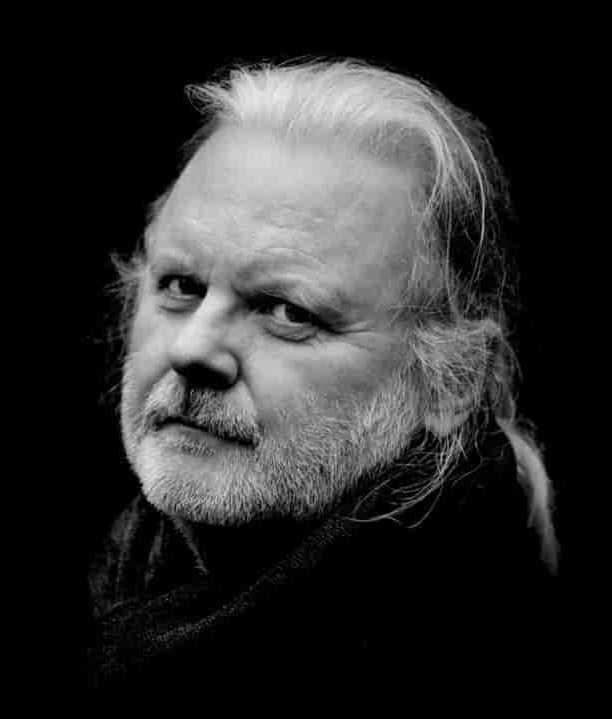
Jon Fosse, born on September 29, 1959, in Haugesund, Norway, is a renowned Norwegian writer, playwright, and poet. Fosse’s contributions to literature and theater have garnered him international acclaim, culminating in the prestigious Nobel Prize in Literature in 2023. Known for his minimalist style and deep exploration of human emotions and existential themes, Fosse is often compared to great literary figures like Henrik Ibsen. His work has had a profound impact on contemporary literature and theater, making him one of the most significant voices in the modern literary world.
Early Life and Literary Beginnings
Jon Fosse was born and raised in Haugesund, a coastal town in southwestern Norway, located in the picturesque region of the Norwegian fjords. The natural beauty of this area, with its dramatic landscapes and tranquil surroundings, profoundly influenced Fosse’s sensibilities as a writer. From a young age, Fosse was drawn to literature and the arts, and he began writing poetry and short stories during his teenage years.
Fosse’s early works were deeply rooted in the cultural and literary traditions of Norway, but they also reflected a unique voice that would later become his trademark. He studied literature and philosophy at the University of Bergen, where he was exposed to a wide range of literary influences, from classical philosophy to modernist literature. This diverse academic background helped shape Fosse’s writing style, which is characterized by its philosophical depth and exploration of the human condition.
Breakthrough in Theater: Minimalism and Innovation
Jon Fosse’s breakthrough came in the early 1990s when he began focusing on writing for the theater. His debut as a playwright came in 1992 with the play Og aldri skal vi skiljast (And We’ll Never Be Parted), which immediately established him as a significant new voice in Norwegian theater. Fosse’s plays are known for their sparse dialogue, minimalist settings, and intense focus on the inner lives of the characters. This minimalist approach to drama has often been compared to the works of Samuel Beckett and Harold Pinter, but Fosse’s style is uniquely his own.
Fosse’s plays often explore themes of loneliness, existential angst, and the complexities of human relationships. His characters are frequently caught in situations of emotional or psychological tension, where much is left unsaid, and the pauses between the lines carry as much weight as the dialogue itself. This use of silence and ambiguity is a hallmark of Fosse’s work, creating a powerful emotional resonance that has captivated audiences worldwide.
One of Fosse’s most celebrated plays is Nokon kjem til å komme (Someone Is Going to Come), which premiered in 1996. The play exemplifies Fosse’s minimalist style, with its simple plot and intense focus on the psychological dynamics between the characters. The play’s success led to Fosse’s works being translated into numerous languages and performed in theaters around the world, solidifying his reputation as a leading figure in contemporary theater.
Literary Career: Transition to Prose and the Trilogien
While Fosse initially made his mark as a playwright, he has also made significant contributions to literature through his prose works. In the mid-2010s, after two decades of focusing primarily on theater, Fosse returned to writing fiction. His return to prose was marked by the publication of the Trilogien (Trilogy) in 2014, a collection of three interconnected novellas. The Trilogien was met with critical acclaim and is considered one of Fosse’s most important literary works.
The Trilogien explores themes of memory, identity, and the passage of time, using a lyrical and meditative narrative style. The interconnected stories reflect Fosse’s mastery of language and his ability to delve deeply into the human psyche. The Trilogien was a significant literary achievement that demonstrated Fosse’s versatility as a writer and his ability to transcend the boundaries between different literary forms.
In 2015, Fosse embarked on what would become one of his most ambitious projects, a Septology—a seven-part novel that spans over 1,200 pages. This monumental work further established Fosse as a major literary figure, with its intricate exploration of existential themes and its innovative narrative structure. The Septology was divided into two volumes and has been translated into multiple languages, bringing Fosse’s work to a global audience.
The Nobel Prize and International Recognition
Jon Fosse’s contributions to literature and theater have earned him numerous accolades throughout his career. In 2023, he was awarded the Nobel Prize in Literature, one of the highest honors in the literary world. The Nobel Committee recognized Fosse “for his innovative prose and plays that give voice to the unspeakable.” This award was a testament to Fosse’s profound impact on contemporary literature and his ability to articulate the complexities of the human experience.
Fosse’s work has been praised for its ability to capture the nuances of human emotions and the often-overlooked aspects of daily life. His writing is both universal and deeply personal, resonating with readers and audiences across cultural and linguistic boundaries. The Nobel Prize solidified Fosse’s place among the great literary figures of our time and brought renewed attention to his extensive body of work.
In addition to the Nobel Prize, Fosse has received numerous other awards and honors. In 2003, he was named a Knight of the Order of Merit by the French government, recognizing his contributions to literature and culture. In 2023, he was also listed by the Daily Telegraph as one of the 100 living geniuses, further highlighting his status as a leading figure in the arts.
Personal Life and Philosophical Influences
Jon Fosse’s personal life and philosophical beliefs have played a significant role in shaping his writing. Raised in a Lutheran family, Fosse’s work often grapples with themes of faith, doubt, and the search for meaning in an uncertain world. His exploration of existential questions is deeply rooted in the philosophical traditions of Western thought, drawing on the works of thinkers like Søren Kierkegaard and Martin Heidegger.
Fosse’s writing is also influenced by his connection to the natural landscape of Norway, particularly the rugged beauty of the fjords and the sense of isolation that comes with living in such a remote and sparsely populated region. This connection to nature is reflected in the atmospheric settings of his plays and novels, where the natural world often serves as a backdrop for the characters’ internal struggles.
Despite the often somber and introspective nature of his work, Fosse’s writing is not without hope. His exploration of the human condition, though marked by a deep awareness of life’s challenges and uncertainties, also contains moments of grace and transcendence. This balance between darkness and light, despair and redemption, is one of the defining features of Fosse’s work and contributes to its enduring appeal.
The Role of Silence and the “Unspeakable” in Fosse’s Work
One of the most distinctive aspects of Jon Fosse’s writing is his use of silence and the “unspeakable.” In both his plays and prose, Fosse often leaves much unsaid, allowing the pauses and silences to carry as much weight as the spoken words. This use of silence is not merely a stylistic choice but a fundamental part of Fosse’s approach to storytelling. It reflects his belief that some aspects of human experience are beyond words and can only be hinted at through suggestion and implication.
Fosse’s focus on the unspeakable is closely tied to his exploration of existential themes. His characters often find themselves grappling with deep, unarticulated emotions and thoughts that they cannot fully express. This tension between what is said and what is left unsaid creates a powerful sense of ambiguity and mystery in Fosse’s work, inviting the audience or reader to engage with the text on a deeper level.
This emphasis on the unspeakable has led some critics to describe Fosse’s work as “minimalist,” but this term does not fully capture the richness and complexity of his writing. While Fosse’s style is indeed spare and economical, it is also deeply poetic and resonant, with layers of meaning that reveal themselves gradually over time. His ability to convey profound truths through simple, understated language is one of the hallmarks of his genius.
Jon Fosse’s Legacy and Impact on Contemporary Literature and Theater
Jon Fosse’s influence on contemporary literature and theater is profound. His innovative approach to storytelling, characterized by its minimalism, existential depth, and focus on the unspeakable, has inspired a new generation of writers and playwrights. Fosse’s work has been translated into more than 40 languages, and his plays are regularly performed in theaters around the world, from Europe to Asia.
In many ways, Fosse’s work represents a bridge between the traditions of European modernism and the concerns of contemporary literature. His exploration of existential themes, his use of silence and ambiguity, and his focus on the complexities of human relationships place him in the lineage of great modernist writers like Samuel Beckett and Harold Pinter. At the same time, Fosse’s work is deeply rooted in the present, addressing the challenges and uncertainties of modern life in a way that is both timeless and profoundly relevant.
Fosse’s legacy is not only evident in his own work but also in the way he has influenced the broader literary and theatrical landscape. His emphasis on the power of silence, the importance of what is left unsaid, and the exploration of the unspeakable has opened up new possibilities for storytelling and has challenged traditional notions of what literature and theater can be. Fosse’s work continues to be a source of inspiration and innovation, and his impact on the arts will undoubtedly be felt for generations to come.
Conclusion
Jon Fosse is a towering figure in contemporary literature and theater, whose work has redefined the possibilities of storytelling. His minimalist style, deep philosophical engagement, and focus on the unspeakable have made him one of the most important writers of our time. Fosse’s influence extends far beyond the borders of Norway, resonating with readers and audiences around the world. His work invites us to reflect on the complexities of human existence, the power of silence, and the mysteries that lie beyond words. As we continue to explore and appreciate Fosse’s contributions to literature and theater, it is clear that his legacy will endure, inspiring future generations of writers, artists, and thinkers.


