
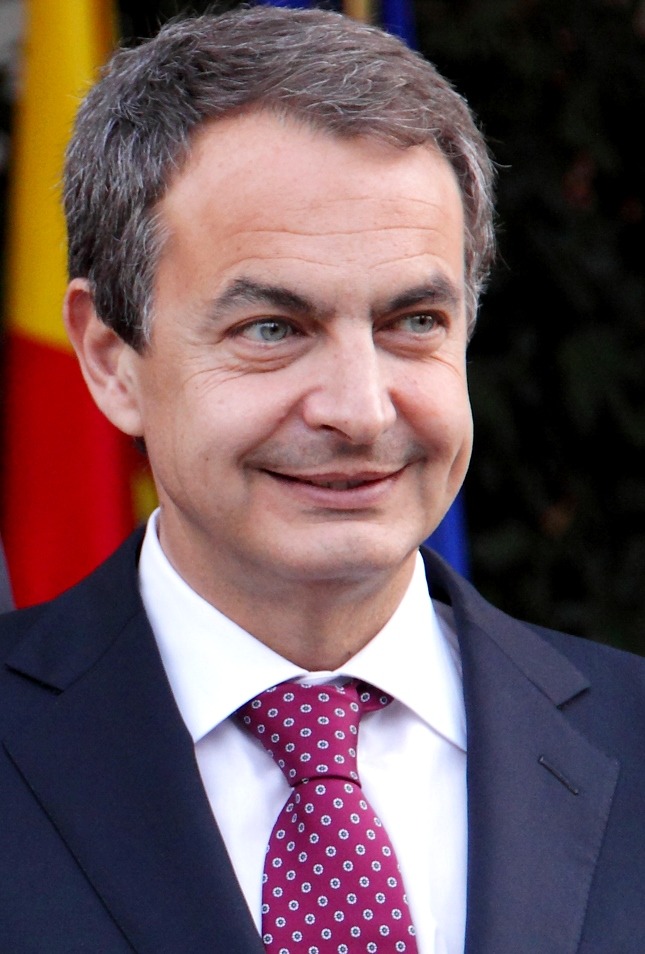
José Luis Rodríguez Zapatero, born on August 4, 1960, in Valladolid, Spain, is a prominent figure in Spanish politics, known for his tenure as the Prime Minister of Spain. Zapatero, a member of the Spanish Socialist Workers’ Party (PSOE), served two terms as the country’s leader from 2004 to 2011. His leadership was marked by significant social reforms, economic challenges, and a nuanced approach to Spain’s political and social issues. This article explores Zapatero’s life, his rise to political prominence, his time as Prime Minister, and the lasting impact of his policies.
Early Life and Political Influences
José Luis Zapatero was born into a politically engaged family with deep roots in Spain’s complex political history. His paternal grandfather, José Rodríguez Lozano, was a captain in the Republican Army during the Spanish Civil War and was executed by Francisco Franco’s forces. This tragic family history had a profound influence on Zapatero, shaping his political views and his commitment to social justice and democracy.
Zapatero’s father, Juan Rodríguez García-Lozano, was a lawyer and a dedicated socialist, further embedding political discourse into the young Zapatero’s life. His mother, Purificación Zapatero, along with his maternal grandfather, Faustino Zapatero, also played crucial roles in his upbringing. The Zapatero family was politically diverse, with varying viewpoints that often led to intense debates at home, particularly on topics such as justice, politics, and literature. These discussions nurtured Zapatero’s passion for dialogue and debate, which would later become a hallmark of his political career.
Zapatero was also a lover of literature, with a particular fondness for Latin American authors, especially the Argentine writer Jorge Luis Borges. His intellectual pursuits were complemented by his interest in sports, particularly soccer and climbing, hobbies that he continued to enjoy even during his demanding political career.
Education and Early Political Involvement
Zapatero’s formal education began at the religious school “Discípulas de Jesús” in 1966, and he later attended “Colegio Leonés,” the only private school in León at the time. His academic journey culminated in his enrollment at the University of León, where he studied law, graduating in 1982. It was during his university years that Zapatero met his future wife, Sonsoles Espinosa, a music teacher.
Zapatero’s political activism began early. At the age of 16, he participated in his first political rally on August 15, 1976, in Gijón, aligned with the then-illegal Socialist Party. Influenced by the future Spanish Prime Minister Felipe González, Zapatero shifted his allegiance from the Communist Party to the PSOE, officially joining the party on February 23, 1979.
By 1982, Zapatero had become the head of the Socialist Youth organization in the province of León. His dedication and leadership skills quickly brought him to the attention of the party’s national leadership. In 1986, he was elected to the Spanish Parliament, representing León. This marked the beginning of his rapid ascent in national politics, which would eventually lead him to the highest office in the country.
Rise to Power: Leadership in the PSOE
The late 1990s were a challenging time for the Spanish Socialist Party, which faced internal divisions and electoral defeats. However, Zapatero’s regional success and his ability to navigate the turbulent political landscape earned him the respect of his peers. In December 1999, he was awarded the “Diputado Revelación” (Revelation Deputy) prize by the Spanish Parliamentary Journalists Association, recognizing his work as a deputy.
The turning point in Zapatero’s political career came in 2000 when he was elected Secretary-General of the PSOE, succeeding Joaquín Almunia, who had lost the general election to José María Aznar of the People’s Party (PP). Zapatero’s leadership marked a new era for the PSOE, as he focused on rebuilding the party and presenting it as a modern, progressive force in Spanish politics.
The First Term: Social Reforms and Controversies
Zapatero’s first term as Prime Minister began under dramatic circumstances. The general elections of March 2004 were overshadowed by the devastating terrorist attacks in Madrid on March 11, 2004, which killed 191 people. The attacks, widely attributed to Islamist extremists, shocked the nation and significantly influenced the election’s outcome. Many Spaniards criticized the ruling People’s Party for its handling of the attacks, particularly its initial attempts to link the bombings to the Basque separatist group ETA. In this charged atmosphere, Zapatero and the PSOE won a surprise victory.
As Prime Minister, Zapatero quickly set about implementing a series of progressive reforms that would define his tenure. One of his most notable achievements was the legalization of same-sex marriage in 2005, making Spain the third country in the world to grant full marriage rights to gay and lesbian couples. This landmark legislation also allowed same-sex couples to adopt children, reflecting Zapatero’s commitment to expanding civil rights.
Zapatero’s government also made significant strides in gender equality, passing laws to increase women’s representation in politics and the workforce. His cabinet was one of the most gender-balanced in the world at the time, with women holding key positions, including the Defense Ministry.
Another cornerstone of Zapatero’s domestic policy was the promotion of secularism. His government introduced reforms to reduce the influence of the Catholic Church in public life, including making religious education optional in schools and emphasizing the teaching of civic values. These changes sparked fierce opposition from conservative and religious groups, who accused Zapatero of undermining Spain’s cultural and religious heritage.
Economic Policies and the Global Financial Crisis
While Zapatero’s social reforms garnered widespread attention, his economic policies were more mixed. During his first term, Spain experienced robust economic growth, continuing a trend that had begun under his predecessor, José María Aznar. Zapatero’s government pursued a mix of liberalization and social welfare policies, including measures to boost the housing market and encourage consumer spending.
However, the global financial crisis of 2008 had a profound impact on Spain, exposing the vulnerabilities in the Spanish economy, particularly its overreliance on the construction sector. The collapse of the housing bubble led to a sharp increase in unemployment, which eventually reached over 20%, one of the highest rates in Europe. Zapatero’s initial response to the crisis was criticized for being too slow and insufficiently robust. As the economic situation worsened, his government was forced to implement austerity measures, including cuts to public spending and social programs, which were deeply unpopular among his base of supporters.
Despite these challenges, Zapatero’s economic legacy is not entirely negative. His government introduced significant labor market reforms aimed at increasing flexibility and reducing unemployment, although these measures were controversial and faced strong opposition from trade unions.
The Second Term: Continued Reforms and Growing Challenges
Zapatero’s second term as Prime Minister, beginning in 2008, was marked by both continuity and change. On the social front, his government continued to push for progressive reforms, including measures to enhance LGBT rights and promote gender equality. However, the worsening economic situation increasingly dominated the political agenda.
The financial crisis and its aftermath placed enormous pressure on Zapatero’s government. As unemployment soared and public discontent grew, the PSOE’s popularity began to decline. In an attempt to stabilize the economy, Zapatero implemented a series of austerity measures, including spending cuts, pension freezes, and labor market reforms. These policies were met with widespread protests and strikes, as many Spaniards felt betrayed by a government they had expected to protect their social welfare.
In addition to economic challenges, Zapatero’s second term was also marked by the ongoing threat of domestic terrorism. Although Zapatero had initially pursued a policy of negotiation with ETA, the Basque separatist group, the failure of these talks and continued attacks forced a shift towards a more hardline approach. Despite these efforts, ETA remained a persistent challenge throughout his time in office.
One of the most controversial aspects of Zapatero’s second term was his handling of the television industry. In 2009, his government introduced a reform that effectively eliminated commercial advertising on the state-run broadcaster TVE, making it the first public broadcaster in Europe to rely entirely on public funding. This move was part of a broader effort to reduce the influence of commercial interests in public media, but it also raised concerns about the financial sustainability and independence of the broadcaster.
Decision to Step Down and Legacy
As the economic crisis deepened and public dissatisfaction grew, Zapatero announced in April 2011 that he would not seek re-election in the 2012 general elections. This decision marked the beginning of the end of his political career, as he focused on managing the final months of his government and preparing the PSOE for a leadership transition. Zapatero’s choice of Alfredo Pérez Rubalcaba, his Interior Minister, as his successor reflected his desire to maintain continuity within the party while addressing the urgent need for economic recovery.
However, the PSOE faced an uphill battle in the 2011 elections, as the party was widely blamed for the country’s economic woes. The election, held in November 2011, resulted in a decisive victory for the People’s Party, led by Mariano Rajoy, signaling a shift to the right in Spanish politics.
Zapatero left office with a mixed legacy. His social reforms, particularly in the areas of LGBT rights and gender equality, have been widely praised and remain among the most progressive in Europe. However, his handling of the economic crisis and the austerity measures he implemented left many Spaniards feeling disillusioned and betrayed. Despite these criticisms, Zapatero’s commitment to dialogue, democracy, and social justice continues to influence Spanish politics.
Historical Context and Impact
To fully understand Zapatero’s legacy, it is essential to consider the broader historical context in which he governed. Zapatero came to power during a period of significant social and economic change in Spain. His tenure as Prime Minister coincided with the country’s transition from a rapidly growing economy to one facing severe economic challenges. The global financial crisis of 2008 not only exposed the weaknesses in Spain’s economic model but also tested the resilience of its political institutions.
Zapatero’s emphasis on social reforms and civil rights reflected a broader shift towards more progressive values in Spanish society. His government’s legalization of same-sex marriage and other progressive policies were emblematic of a new era in Spanish politics, one that sought to break with the conservative legacy of Franco’s dictatorship and embrace a more inclusive and democratic vision for the country.
However, the economic crisis and the subsequent austerity measures highlighted the limitations of this progressive agenda in the face of global economic forces. Zapatero’s experience underscores the challenges that left-leaning governments face when trying to balance social justice with economic stability in an increasingly interconnected world.
Conclusion
José Luis Rodríguez Zapatero’s time as Prime Minister of Spain was marked by significant achievements and formidable challenges. His leadership brought about some of the most progressive social reforms in Spanish history, transforming the country into a more inclusive society. At the same time, the economic crisis of 2008 and the austerity measures that followed cast a long shadow over his legacy.
Zapatero’s story is one of a leader who sought to modernize Spain and promote social justice, even as he grappled with the complexities of governing during a time of economic turmoil. His legacy continues to be debated, but there is no doubt that his tenure had a profound impact on Spain’s political landscape and the lives of its citizens.


