
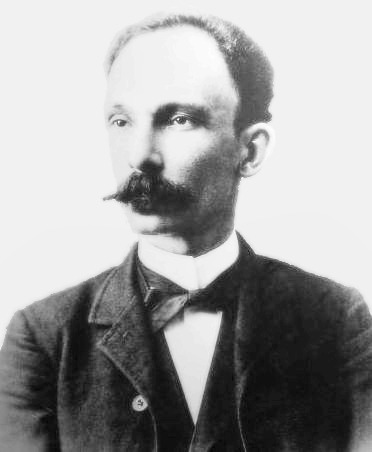
José Martí, born on January 28, 1853, in Havana, Cuba, is one of the most significant figures in Cuban history and Latin American literature. His life was marked by his unwavering dedication to the cause of Cuban independence from Spanish rule, his profound contributions to literature, and his enduring legacy as a symbol of freedom and human rights. This article explores the life, career, and legacy of José Martí, delving into the historical context of his time, his literary achievements, and his role as a revolutionary leader.
Early Life and Education
José Martí was born into a modest family in Havana during a period when Cuba was still a Spanish colony. His parents, both originally from Cádiz, Spain, were among the many Spaniards who had migrated to Cuba in search of better opportunities. Martí was the eldest of eight children, and his early life was shaped by the challenges and hardships faced by his family.
At the age of four, Martí’s family moved to Spain, settling in Valencia. This early exposure to Spanish culture and society would later influence his views on colonialism and independence. However, the family returned to Cuba when Martí was six years old, where he began his formal education. He attended various schools in Havana, where his intellectual abilities and passion for learning quickly became evident.
At the age of 14, Martí enrolled in the Professional School of Painting and Sculpture in Havana with the intent to study drawing. However, it was during this period that his political consciousness began to emerge. In 1869, at just 16 years old, Martí published his first political text in the newspaper El Diablo Cojuelo, marking the beginning of his lifelong commitment to the cause of Cuban independence.
Early Activism and Imprisonment
The late 1860s were a tumultuous time in Cuba. The Ten Years’ War (1868–1878), the first major attempt by Cuban patriots to gain independence from Spain, had just begun. Martí, deeply influenced by the revolutionary fervor of the time, became increasingly involved in the movement. He wrote and published a patriotic drama in verse, Abdala, and a famous sonnet titled 10 de octubre, both of which reflected his growing nationalist sentiments.
However, Martí’s activism soon drew the attention of the Spanish authorities. In October 1869, he was arrested on charges of treason due to his outspoken criticism of Spanish rule. Despite being only 16 years old, Martí was sentenced to six years of hard labor, a harsh punishment that underscored the repressive nature of the colonial regime.
Martí’s time in prison was marked by severe hardship. The brutal conditions of his incarceration left him with lasting physical injuries, particularly to his legs, which were damaged by the chains used to restrain him. Despite the pleas of his mother and the legal efforts of a family friend, Martí remained imprisoned, suffering not only physically but also mentally. His experience in prison deepened his resolve to fight against the injustices perpetrated by the Spanish colonial government.
Exile and Continued Struggle for Cuban Independence
After serving part of his sentence, Martí was eventually released in 1871, but he was exiled to Spain. This forced exile marked the beginning of a period of intense intellectual and political activity. While in Spain, Martí continued his education, earning degrees in law and philosophy from the University of Zaragoza. During this time, he also began to publish articles condemning the Spanish colonial system and advocating for Cuban independence.
Martí’s time in Spain, France, and later Mexico and Guatemala, broadened his perspective and deepened his understanding of the global struggle for freedom and justice. He became an eloquent advocate for the rights of oppressed peoples, writing extensively on issues of colonialism, slavery, and human rights. His writings from this period reflect a mature understanding of the complexities of the struggle for independence and the need for a broader vision of social justice.
In 1877, Martí returned to Cuba under a false name, hoping to contribute directly to the independence movement. However, the political situation on the island made it difficult for him to find work, and he was soon forced to leave again. He moved to Guatemala, where he worked as a teacher of literature and history, continuing to write and advocate for Cuban independence.
Life in the United States and Leadership in the Cuban Revolution
In 1880, Martí moved to New York City, where he would spend much of the rest of his life. The United States in the late 19th century was a place of both opportunity and contradiction for Martí. While he admired the democratic ideals on which the country was founded, he was also critical of its imperialistic tendencies, particularly in Latin America. His time in New York was marked by prolific writing and intense political activism.
Martí quickly became a central figure in the Cuban exile community in the United States, particularly in Florida. He mobilized the Cuban communities in Key West and Tampa, organizing them to support the cause of independence. He founded the Cuban Revolutionary Party in 1892, with the goal of achieving independence from Spain without falling under the influence of the United States. Martí was adamant that the Cuban struggle for independence should not lead to annexation by the United States, a stance that reflected his broader concerns about American imperialism.
Martí’s leadership was not limited to organizational efforts. He was a prolific writer and orator, using his skills to inspire and unite the Cuban diaspora. His essays, poems, and speeches from this period are filled with a deep love for his homeland and a fervent desire for its freedom. His famous phrase, “El verdadero hombre no mira de qué lado se vive mejor, sino de qué lado está el deber” (“The true man does not look to see on which side lives better, but on which side lies duty”), encapsulates his commitment to the cause of justice and independence.
The Final Campaign and Martí’s Legacy
In 1895, Martí returned to Cuba to join the fight for independence in person. He was instrumental in drafting the Montecristi Manifesto, which outlined the principles of the Cuban Revolutionary Party and called for the unification of all Cubans in the struggle for independence. Martí envisioned a free Cuba that was inclusive of all races and social classes, a revolutionary ideal that was ahead of its time.
Tragically, Martí’s return to Cuba was short-lived. On May 19, 1895, at the age of 42, Martí was killed in the Battle of Dos Ríos. His death was a significant blow to the Cuban independence movement, but his ideas and writings continued to inspire those who carried on the fight. Martí’s body was buried in Santiago de Cuba, and he was quickly revered as a national hero.
Martí’s legacy is vast and enduring. He is remembered not only as a revolutionary leader but also as one of Latin America’s most important intellectuals. His collected works, which include over 70 volumes of essays, poems, articles, and letters, are a testament to his profound influence on both the political and literary worlds. Martí’s writings continue to be studied and revered for their literary merit, as well as for their insights into issues of identity, freedom, and social justice.
One of Martí’s most famous literary contributions is the collection Versos sencillos (“Simple Verses”), published in New York in 1891. These poems reflect Martí’s deep connection to his homeland and his hope for a better future for Cuba. The most famous of these verses inspired the lyrics of the iconic Cuban song “Guantanamera,” which remains a symbol of Cuban identity and pride.
In recognition of his contributions to Cuban and global culture, the Cuban government established the Order of José Martí in 1972. This prestigious award is given to individuals who have made significant contributions to peace, culture, education, and the arts, both in Cuba and around the world.
Conclusion
José Martí’s life was a testament to the power of ideas and the enduring strength of the human spirit. As a poet, journalist, and revolutionary, Martí dedicated his life to the cause of Cuban independence and the broader struggle for human rights and justice. His writings, filled with wisdom, passion, and a deep love for his homeland, continue to inspire people around the world. Martí’s vision of a free and just Cuba, where all people could live with dignity, remains a powerful reminder of the ideals for which he fought and the legacy he left behind.
Martí’s life and work exemplify the profound impact that one individual can have on the course of history. His commitment to freedom, his eloquence in expressing the aspirations of his people, and his ultimate sacrifice for the cause of independence have earned him a place among the great figures of Latin American history. Today, Martí is not only remembered as a hero of Cuba but also as a universal symbol of the struggle for liberty and justice.


