
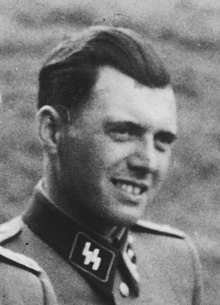
Josef Mengele, born on March 16, 1911, in Günzburg, Germany, is one of history’s most infamous figures, notoriously known as the “Angel of Death” or the “Black Angel of Auschwitz.” His name is synonymous with the horrors of the Holocaust, where he conducted brutal and inhumane medical experiments on prisoners, particularly twins, in pursuit of Nazi racial purity theories. Mengele’s life is a chilling reminder of the depths of human cruelty and the perils of extremist ideologies.
Early Life and Ideological Foundations
Mengele was born into a family with strong Catholic traditions and nationalist political leanings. His early life in Günzburg, a small Bavarian town, was marked by a disciplined upbringing. The Mengele family was well-established in the local community, owning a successful agricultural machinery manufacturing business. This privileged background provided Josef with the resources and opportunities to pursue higher education, which played a significant role in shaping his future path.
In 1930, Mengele began his medical studies at the University of Munich, later continuing in Vienna. He developed a keen interest in anthropology and genetics, subjects that were increasingly influenced by the racial ideologies of the time. By 1935, Mengele had earned his medical degree with a dissertation on racial differences, specifically analyzing jaw disparities among four different racial groups. This early work foreshadowed his later obsession with racial purity and his role in the Nazi regime’s genocidal policies.
Mengele’s academic journey led him to the University of Frankfurt, where he met Professor Otmar von Verschuer, a prominent geneticist specializing in twin studies. Von Verschuer was a key figure in the field of genetics and a staunch supporter of Nazi racial theories. His mentorship deeply influenced Mengele, fostering his belief that twins held the key to unlocking the secrets of hereditary traits essential for the creation of a so-called “pure Aryan race.”
The Path to Auschwitz: A Doctor’s Descent into Horror
Mengele’s involvement with the Nazi party began in his youth. In 1927, he joined the Pan-German Youth League, a nationalist organization that promoted ideas of German supremacy. By 1931, he was a member of the Stahlhelm, a paramilitary organization that later became part of the SA (Sturmabteilung), the Nazi Party’s original paramilitary wing. Mengele’s ideological commitment to Nazism grew stronger over the years, aligning him with the most extreme elements of the regime.
In 1938, Mengele joined the SS (Schutzstaffel), an elite paramilitary organization that played a central role in the enforcement of Nazi policies, including the implementation of the Holocaust. By the time World War II broke out, Mengele was fully entrenched in the Nazi apparatus, eager to serve the regime’s objectives.
Despite his growing involvement in the Nazi regime, Mengele faced challenges in his personal life due to the very racial policies he supported. When he sought to marry Irene Schoenbein in 1939, he encountered difficulties in proving his Aryan lineage to the Central Office for Race and Resettlement. The process was complicated by his inability to document his family’s racial purity back to 1750 and Irene’s lack of racial documentation for her American grandfather. However, after much effort, the couple was granted permission to marry.
War and the Path to Infamy
Mengele volunteered for military service at the outbreak of World War II and was initially assigned to the Eastern Front. There, he served as a medical officer and was decorated with the Iron Cross First Class for his bravery after being wounded in combat. His injuries led to his reassignment to Berlin, where he reconnected with Professor von Verschuer, who had become the director of the Department of Anthropology and Genetics at the prestigious Kaiser Wilhelm Institute.
It was during this period that von Verschuer proposed that Mengele join him in conducting research at Auschwitz, the largest of the Nazi concentration camps and the epicenter of the Holocaust. In May 1943, Mengele was assigned to Auschwitz, where he would become infamous for his role in the selection process of incoming prisoners. He decided who would be sent to the gas chambers and who would be subjected to his horrific experiments.
The “Angel of Death” at Auschwitz
At Auschwitz, Mengele’s role extended far beyond that of a typical SS officer. He became the chief medical officer at the Birkenau section of the camp, where he conducted some of the most heinous medical experiments known to history. His primary focus was on twins, whom he believed could provide critical insights into the genetic foundations of racial purity.
Mengele’s experiments were marked by extreme cruelty and a complete disregard for human life. He subjected twins to gruesome procedures, including without anesthesia, mutilations, and injections of lethal diseases such as typhus and leprosy. Mengele was obsessed with manipulating the human body to conform to his twisted racial ideals. He attempted to create conjoined twins by surgically sewing siblings together and injected chemicals into prisoners’ eyes in an attempt to change their color.
His experiments were not limited to twins; Mengele also conducted castrations, sterilizations, and subjected prisoners to extreme conditions such as freezing to death, all in the name of Nazi pseudo-science. His actions at Auschwitz earned him the moniker “Angel of Death,” a name that has become synonymous with the atrocities of the Holocaust.
Escape and Life in Hiding
As the tide of war turned against Nazi Germany, Mengele began to prepare for his escape. With the Soviet Red Army advancing towards Auschwitz, he fled the camp in January 1945, narrowly avoiding capture. Mengele’s escape marked the beginning of a life on the run that would last for decades.
Mengele initially managed to evade Allied forces by blending in with the influx of German refugees. He eventually made his way to South America, where he lived under various aliases. Despite extensive efforts by the Israeli Mossad and other international agencies to capture him, Mengele managed to elude justice for the rest of his life.
He settled in Argentina, where he lived under the name Helmut Gregor. In 1959, after Israeli agents captured Adolf Eichmann, another notorious Nazi war criminal, Mengele fled to Paraguay and later to Brazil. There, he lived a relatively quiet life, supported by a network of Nazi sympathizers and family members who sent him money.
Despite the ongoing manhunt, Mengele remained a step ahead of his pursuers. His elusive nature and the protection he received from his supporters allowed him to avoid the fate that befell many of his Nazi contemporaries.
The Mysterious Death of Josef Mengele
Josef Mengele’s life came to an end under murky circumstances. On February 7, 1979, he reportedly drowned while swimming off the coast of Bertioga, Brazil. However, there was widespread skepticism about the circumstances of his death. Some speculated that Mengele had faked his own death to continue living in hiding. It wasn’t until 1985, when a forensic examination of Mengele’s remains confirmed his identity, that his death was officially recognized.
Mengele’s death marked the end of one of the most notorious chapters in the history of the Holocaust. Yet, the mysteries surrounding his life, his escape, and his years in hiding continue to fascinate and horrify historians and the public alike.
Legacy and Historical Impact
Josef Mengele’s legacy is one of horror and infamy. His name is forever etched in history as a symbol of the perverse and dehumanizing ideologies that drove the Holocaust. Mengele’s experiments at Auschwitz are considered some of the most egregious violations of medical ethics in history. His work was a grotesque abuse of science, using human beings as mere tools for his twisted ambitions.
The impact of Mengele’s actions extends far beyond the immediate victims of his experiments. The trauma inflicted on the survivors, many of whom carry physical and psychological scars, is a testament to the lasting damage of his crimes. The legacy of Mengele serves as a stark reminder of the dangers of unchecked power and the potential for science to be manipulated for nefarious purposes.
Mengele’s story is also a cautionary tale about the importance of justice and the challenges of holding war criminals accountable. Despite his notorious reputation, Mengele managed to evade capture and punishment for decades, highlighting the complexities of post-war justice and the difficulties in bringing perpetrators to account.
Conclusion
Josef Mengele remains one of the most reviled figures in history, a man whose actions during the Holocaust epitomize the depths of human cruelty. His life story, from his early years in Günzburg to his death in Brazil, is a chilling narrative of how ideology, science, and power can combine to produce unimaginable horror. Mengele’s legacy is a sobering reminder of the atrocities of the Holocaust and the enduring importance of remembering and confronting this dark chapter in human history.
As we continue to reflect on the lessons of the Holocaust, the story of Josef Mengele serves as a powerful example of the need for vigilance against the forces of hate and intolerance. His life and actions remind us of the critical importance of ethical standards in science and medicine and the necessity of justice in the face of crimes against humanity.


