
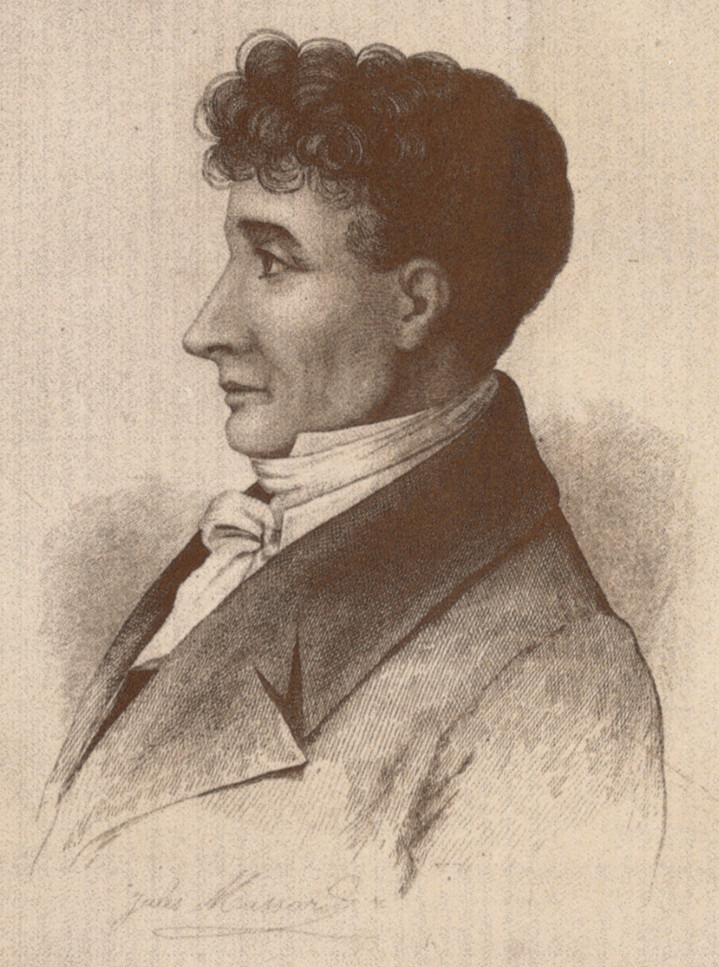
Joseph Joubert, a name often spoken with reverence among literary circles, remains one of the most profound yet understated figures in the history of French philosophy and literature. Born on May 7, 1754, in the small town of Montignac, Joubert’s life was marked by intellectual curiosity, a passion for the written word, and a contemplative nature that would eventually lead him to produce some of the most insightful and enduring reflections on the human condition. Despite his profound impact on the intellectual landscape of his time, Joubert published very little during his lifetime, making his posthumous recognition even more remarkable.
Early Life and Education
Joseph Joubert’s early years were steeped in education and religious study. At the tender age of fourteen, he began his studies at a religious college in Toulouse, a decision that would shape much of his intellectual development. The rigorous academic environment nurtured his love for learning and philosophy, eventually leading him to become a teacher at the same institution. This period of his life was crucial in forming the philosophical foundations that would later characterize his work.
The Move to Paris: A Turning Point
In 1778, Joubert made a significant move to Paris, a city that was, at the time, the epicenter of intellectual and cultural life in France. This relocation proved to be a turning point in his life, as it brought him into contact with some of the most influential thinkers of the era. One of his first notable associations was with Jean Baptiste Le Rond d’Alembert, a prominent mathematician and philosopher who co-edited the Encyclopédie with Denis Diderot.
Joubert’s relationship with Diderot would prove to be pivotal. He eventually became Diderot’s secretary, a position that not only brought him closer to the heart of the Enlightenment movement but also allowed him to form lasting friendships with other intellectual giants, including François-René de Chateaubriand. These relationships would greatly influence Joubert’s thinking and writing, further deepening his philosophical reflections.
A Life of Reflection and Correspondence
Despite his proximity to the intellectual elite of Paris, Joseph Joubert remained a deeply private individual. His life was characterized by long periods of reflection, often spent in the quiet solitude of his home in Villeneuve-sur-Yonne or in the salons of his friends. During these years, Joubert wrote extensively, although he published very little. His writings, primarily in the form of letters, diaries, and notes, were filled with reflections on philosophy, literature, and the nature of humanity.
Joubert’s style was notably aphoristic, a reflection of his belief in the power of concise, deeply thought-provoking statements. His work often explored the purposes of philosophy and literature, drawing heavily from his admiration for Platonic thought. His reflections on the nature of man, the role of emotions, and the pursuit of beauty were profound, often blending a deep emotional resonance with an elegant and refined style.
Key Philosophical Contributions
One of the central themes in Joseph Joubert’s work was the relationship between the soul and the intellect. He believed that true beauty in any form—be it poetry, eloquence, music, painting, or sculpture—arose from the depths of the soul. This belief is encapsulated in one of his most famous aphorisms: “In poetry, in eloquence, in music, in painting, in sculpture, even in reasoning, nothing is as beautiful as what comes from the soul or the bowels. The bowels, after the soul, are what is most intimate in us.”
Joubert’s reflections were not limited to abstract philosophy; he also offered insights into the practical aspects of writing and thought. He believed that the purpose of writing was not merely to communicate ideas but to capture the ephemeral and fleeting nature of human thought. This approach to writing made his work unique, as it combined philosophical depth with a poetic sensibility that resonated with readers on a deeply personal level.
The Legacy of Joseph Joubert
Joseph Joubert passed away on May 4, 1824, in Paris, just a few days shy of his 70th birthday. He was laid to rest in the Montmartre Cemetery, a fitting resting place for a man whose life had been dedicated to quiet contemplation and intellectual pursuit. Although he left behind a vast collection of unpublished writings, it was not until after his death that his work began to receive the recognition it deserved.
Following Joubert’s death, his widow entrusted all of his papers to François-René de Chateaubriand, who, recognizing the value of his friend’s work, compiled and published a selection under the title “Recueil des pensées de M. Joubert” in 1838. This publication marked the beginning of Joubert’s posthumous fame, as readers and scholars alike began to appreciate the depth and wisdom of his reflections.
The Modern Relevance of Joubert’s Thought
Over a century and a half after his death, Joseph Joubert’s work continues to resonate with readers and thinkers around the world. In 1985, the Société des Amis de Joseph Joubert (Society of Friends of Joseph Joubert) was founded, an organization dedicated to studying and promoting his work. This society has played a crucial role in preserving Joubert’s legacy and ensuring that his contributions to philosophy and literature remain accessible to future generations.
Joubert’s thoughts on the nature of the soul, the purpose of literature, and the pursuit of beauty remain as relevant today as they were in the 18th century. His belief in the importance of the inner life, and the idea that true beauty comes from within, offers a timeless perspective that continues to inspire modern readers. In an age where external achievements and material success are often prioritized, Joubert’s emphasis on the soul and the inner life serves as a reminder of the enduring value of introspection and self-reflection.
Conclusion: Joseph Joubert’s Enduring Influence
Joseph Joubert may not have been a prolific author during his lifetime, but his influence on the world of philosophy and literature cannot be overstated. His life, characterized by deep reflection, intellectual rigor, and a commitment to the inner life, offers a powerful example of the enduring value of thought and contemplation. Through his aphorisms and reflections, Joubert invites us to look beyond the surface of things and to seek out the deeper truths that lie within ourselves.
In today’s fast-paced, digitally-driven world, the quiet wisdom of Joseph Joubert offers a much-needed respite—a chance to pause, reflect, and reconnect with the deeper aspects of our humanity. His legacy, preserved through his writings and the efforts of those who continue to study and celebrate his work, serves as a testament to the enduring power of the human spirit and the timeless value of introspection.


