
Introduction
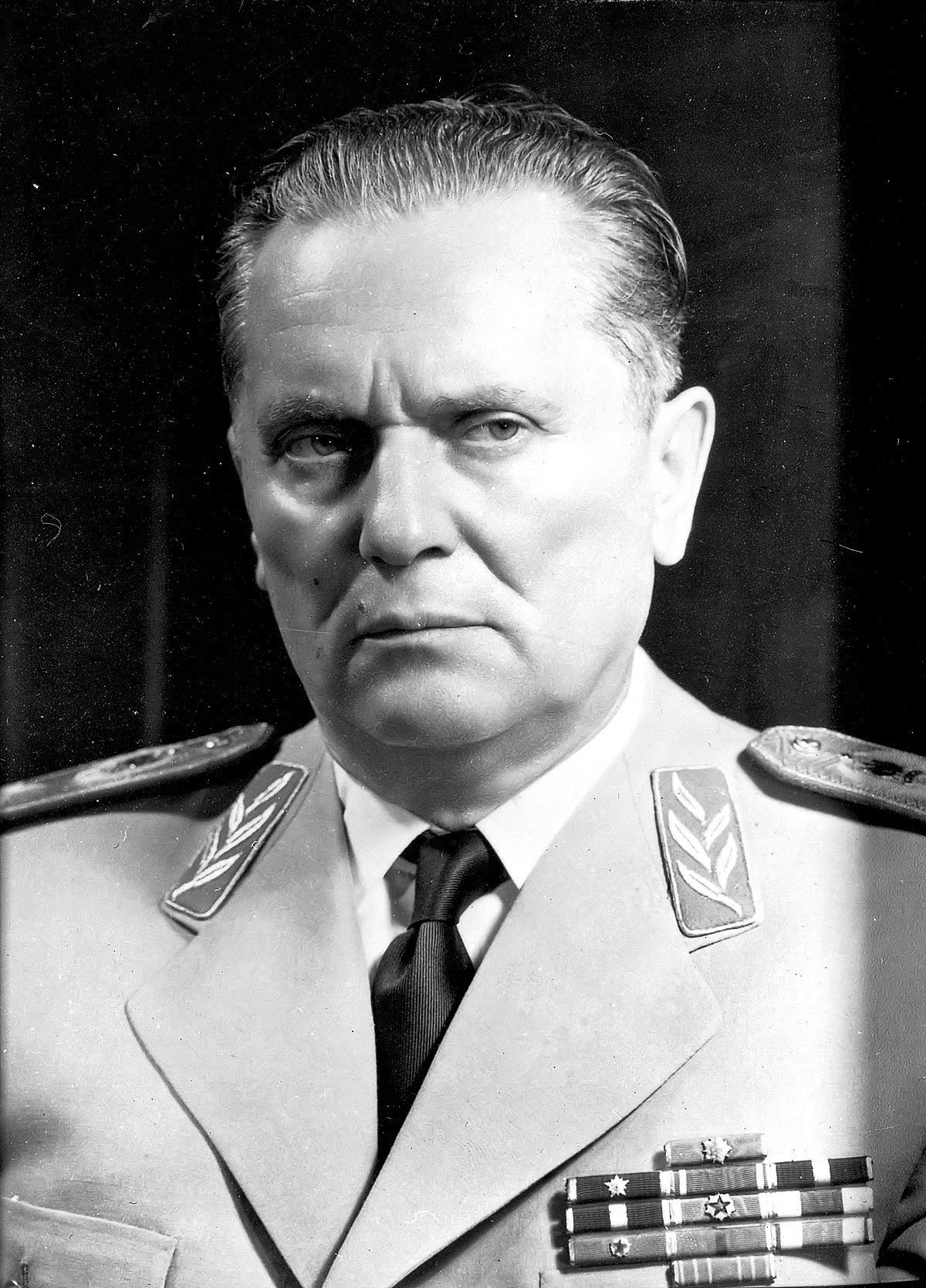
Josip Broz Tito stands as one of the most significant and complex figures of the 20th century, particularly in the context of Eastern European history. Born on May 7, 1892, in Kumrovec, Croatia, then part of the Austro-Hungarian Empire, Tito’s life journey took him from humble beginnings to becoming the leader of the Socialist Federal Republic of Yugoslavia. Tito’s legacy is marked by his role in the anti-fascist resistance during World War II, his leadership of Yugoslavia, and his unique approach to communism, which defied the influence of the Soviet Union.
Early Life and Background
Josip Broz was born into a multi-ethnic family; his father was Croatian, and his mother was Slovenian. This diverse heritage influenced Tito’s later political vision, where he emphasized the unity of Yugoslavia’s different ethnic groups. During his youth, Tito was sent to live with his maternal grandfather in Slovenia, where he attended elementary school in Kumrovec. From a young age, Tito showed a propensity for manual labor, working as an apprentice blacksmith and later in a Slovenian metallurgical factory from the age of twelve to eighteen. These early experiences in a working-class environment would shape his political views and commitment to socialism.
Military Career and World War I
Tito’s early adulthood was marked by his military service. He joined the Austro-Hungarian army, rising to the rank of Sergeant Major and later an officer. During World War I, Tito fought on the Eastern Front against Serbia, but his fate took a dramatic turn in 1914 when he was deployed to the Russian front in Galicia. There, he was severely injured during a battle in Bukovina. Following his injury, Tito’s battalion was defeated, and he was captured by Russian forces, becoming a prisoner of war.
In 1916, while imprisoned in a labor camp in the Urals, Tito began to experience the harsh realities of war and imprisonment. His spirit, however, remained unbroken. In 1917, he played a leading role in organizing a protest among the prisoners, which led to his arrest. Despite the harsh conditions, Tito managed to escape and made his way to St. Petersburg, where he became involved in the Russian Revolution, further cementing his commitment to communist ideals. This experience had a profound impact on Tito, who joined the Russian Communist Party in 1918.
Rise in Communist Politics
Upon returning to Croatia in 1920, Tito became actively involved in the nascent communist movement in Yugoslavia. He was a key participant in the foundation of the Communist Party of Yugoslavia, which took place in Zagreb that same year. During this period, Tito married a young Russian woman, Pelagia Belussova, whom he had met during his time in Russia. His marriage symbolized his deep ties to the Soviet Union and its ideology.
However, Tito’s political activities soon attracted the attention of the authorities. In 1928, he was arrested for possessing illegal firearms, a charge that highlighted the repressive environment under the Kingdom of Yugoslavia, where communists were often persecuted. Following his release from prison, Tito went underground, operating clandestinely under the pseudonym “Tito.” This alias would later become synonymous with his leadership and revolutionary activities.
World War II and the Partisan Movement
Tito’s return to Yugoslavia in 1937 marked the beginning of his rise to power. As the leader of the Communist Party of Yugoslavia, he organized and led a resistance movement against the Axis forces during World War II. His group, known as the Partisans, became one of the most effective resistance movements in Europe. Tito’s leadership was characterized by his ability to unify various ethnic groups within Yugoslavia, a feat that was crucial in maintaining the cohesion of his forces.
Tito’s Partisans gained significant support from the Allied forces, particularly after 1943, when they were recognized as the legitimate resistance movement in Yugoslavia, surpassing the royalist Chetniks. The success of the Partisans was due in large part to Tito’s strategic acumen and his ability to inspire loyalty among his fighters. By the end of the war, Tito emerged not only as a war hero but also as the undisputed leader of Yugoslavia.
Post-War Yugoslavia and Tito’s Rule
Following the end of World War II, Tito assumed leadership of the newly established Socialist Federal Republic of Yugoslavia. In 1945, under his leadership, the country promulgated a new, centralized constitution, which solidified the power of the Communist Party and laid the foundation for Tito’s long rule.
One of the most defining aspects of Tito’s leadership was his break with the Soviet Union in 1948. Unlike other Eastern European communist leaders, Tito pursued a policy of non-alignment, refusing to follow Moscow’s directives. This break from Stalin’s influence led to Yugoslavia’s expulsion from the Cominform, the organization of communist parties dominated by the Soviet Union. Tito’s decision to pursue an independent socialist path was driven by his desire to protect Yugoslavia’s sovereignty and prevent Soviet dominance.
The Tito-Stalin Split and Non-Aligned Movement
The Tito-Stalin split marked a significant moment in the Cold War. Tito’s defiance of Stalin was not just a political maneuver but a statement of Yugoslavia’s independence. Tito’s refusal to submit to Soviet control earned him both admiration and hostility within the communist bloc. Despite initial tensions, Tito later sought to normalize relations with the Soviet Union, particularly after Stalin’s death in 1953. Under the leadership of Nikita Khrushchev, relations between Yugoslavia and the Soviet Union improved, although they remained complex and often fraught with tension.
In the 1950s, Tito introduced a unique form of socialism known as “workers’ self-management,” which allowed workers to have a say in the management of their enterprises. This system was a departure from the centralized control seen in other communist states and was intended to give Yugoslav socialism a more human face. Tito’s approach to governance was pragmatic, balancing socialist principles with the need for economic development and political stability.
Tito also became a leading figure in the Non-Aligned Movement, an international organization of states that sought to remain independent of the major Cold War powers, the United States and the Soviet Union. Under Tito’s leadership, Yugoslavia pursued a policy of neutrality, building diplomatic relationships with countries across the globe, including those in the developing world. This policy of non-alignment allowed Yugoslavia to play a significant role in international diplomacy, often acting as a mediator between the East and the West.
The 1960s and 1970s: Reforms and Challenges
The 1960s were a period of reform in Yugoslavia. Tito introduced constitutional changes that aimed to decentralize power, giving more autonomy to the republics and provinces within the federation. These reforms were intended to address the growing ethnic tensions within the country and to prevent the domination of any one group. However, these changes also set the stage for future conflicts, as they highlighted the deep-seated divisions within Yugoslavia.
Despite these challenges, Tito remained a popular leader, known for his ability to maintain unity in a country with diverse ethnic and religious groups. His charisma and political acumen enabled him to navigate the complex dynamics of Yugoslav politics, although his rule was not without repression. Tito’s regime was marked by the suppression of political dissent, and his secret police were notorious for their efforts to silence opposition.
In 1974, Tito was declared President for Life, a move that cemented his control over Yugoslavia but also raised concerns about the lack of political pluralism. The same year saw the adoption of a new constitution, which further decentralized the government, granting more powers to the republics and autonomous provinces. This constitution was Tito’s attempt to balance the competing interests within Yugoslavia, but it also sowed the seeds for future instability.
Later Years and Legacy
As Tito aged, his health began to decline. In January 1980, he was hospitalized in Ljubljana due to circulatory problems in his legs. Tito passed away on May 4, 1980, marking the end of an era in Yugoslav history. His death was followed by a grand state funeral, attended by numerous heads of state and government officials from around the world, a testament to his international stature.
Tito’s legacy is complex and multifaceted. He is remembered as a unifying figure who kept Yugoslavia together during a turbulent period in its history. However, his rule was also marked by repression and the suppression of dissent. Tito’s policies of decentralization and non-alignment were innovative but ultimately contributed to the fragmentation of Yugoslavia after his death.
Conclusion: The Legacy of Josip Broz Tito
Josip Broz Tito remains a controversial figure, admired by some for his leadership and criticized by others for his authoritarian methods. His ability to maintain Yugoslav unity in the face of ethnic and political challenges was remarkable, and his defiance of Soviet control set him apart from other Eastern European leaders. Tito’s vision of a non-aligned, independent Yugoslavia was ambitious, and his efforts to balance the interests of different ethnic groups within the country were both his greatest achievement and his most significant challenge.
Today, Tito’s legacy is still debated in the Balkans and beyond. While some view him as a dictator who stifled political freedoms, others see him as a strong leader who brought stability to a region historically plagued by conflict. As history continues to assess his impact, Tito’s role in shaping the 20th century remains undeniable. His life and leadership offer valuable lessons on the complexities of nation-building, the challenges of ethnic diversity, and the dangers of authoritarianism.


