
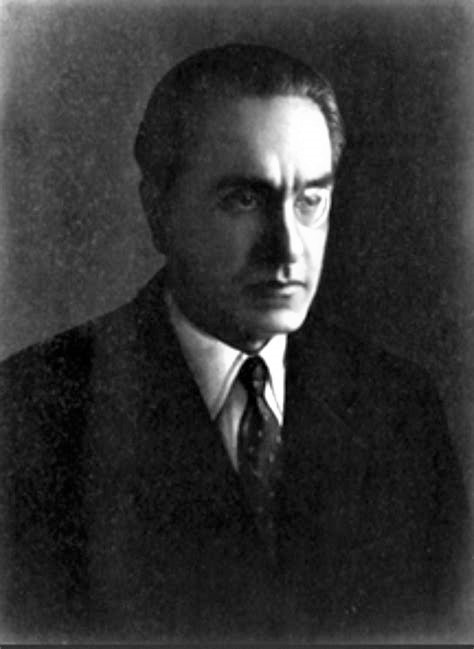
Early Life and Background
Julius Evola was born on May 19, 1898, in Rome, Italy, into a Sicilian family of noble origins. From a young age, Evola showed a deep interest in literature and philosophy, influenced by prominent figures like Gabriele D’Annunzio, Oscar Wilde, and Friedrich Nietzsche. These influences shaped his early intellectual pursuits and contributed to his unique worldview.
At the age of 19, Evola served as an artillery officer during World War I. Although he was stationed near the front lines, he did not engage in any significant military actions. The war, however, had a profound impact on him, instilling a fascination with the imperial states he was supposed to fight against. This period marked the beginning of his deep disillusionment with modern society.
Post-War Crisis and Philosophical Awakening
After the war, Evola returned to Rome, where he experienced a severe existential crisis. This period of turmoil led him to experiment with drugs, and he contemplated suicide, a path taken by some of his contemporaries, including Carlo Michelstaedter and Otto Weininger. However, his life took a drastic turn after reading a Buddhist text that provided him with a sense of spiritual awakening.
This newfound spiritual perspective prompted Evola to abandon his artistic pursuits, including painting and poetry. Between 1921 and 1922, he fully immersed himself in philosophy, eventually completing his work “Teoria e Fenomenologia dell’individuo assoluto” in 1924. This work, published in two volumes in 1927 and 1930, revealed Evola’s growing interest in Gnostic doctrines, the sacred, and the suprarational.
Involvement in Spiritualism and Early Writings
During the mid-1920s, Evola became involved in spiritualist circles in Rome, where he encountered various esoteric thinkers, including anthroposophists, Kremmerzian followers, and theosophists. His intellectual journey during this period was also marked by a controversial romantic relationship with the writer Sibilla Aleramo.
Evola’s writings from this time appeared in several publications, including “Bilychnis,” “Ultra,” “Atanor,” and “Ignis.” Interestingly, despite his emerging reputation as a right-wing thinker, he also contributed to openly antifascist journals like “Lo Stato Democratico” and “Il Mondo.” His brand of antifascism, however, was far removed from democratic ideals, emphasizing a rejection of both fascism and modernity.
By the late 1920s, Evola had become the coordinator of the Group of UR, an esoteric society. He compiled an anthology titled “Introduzione alla magia quale scienza dell’io,” which reflected his deepening interest in magic and the occult. In 1928, he published “Imperialismo pagano,” a provocative work that criticized Christianity and urged the Fascist regime to sever ties with the Catholic Church. During this period, Evola also corresponded with prominent intellectuals like Giovanni Gentile and Benedetto Croce.
The 1930s: “La Torre” and Growing Influence
The 1930s marked a significant period in Evola’s life. In collaboration with Emilio Servadio, a leading figure in Italian psychoanalysis, and other friends, Evola launched the journal “La Torre” in 1930. In its inaugural editorial, he called for a radical revolt against modern civilization, which he saw as dominated by the “insolent omnipresence of economic and social tyranny.”
Evola’s writings during this period increasingly diverged from mainstream Fascist ideology, to the point that he was compelled to employ a bodyguard while in Rome due to threats from political opponents. Despite warnings from the Fascist authorities, Evola continued his publications, leading to the forced closure of “La Torre” after its tenth issue in 1931.
Undeterred, Evola published “La tradizione ermetica” in 1931, followed by “Maschera e volto dello spiritualismo contemporaneo” in 1932. The experiences surrounding “La Torre” made it clear to Evola that, to continue his work freely, he needed protection from the Fascist regime. He found this protection in Roberto Farinacci’s daily newspaper “Il Regime Fascista” and Giovanni Preziosi’s monthly “La Vita Italiana.”
In 1934, Evola published what is now considered his most important work, “Rivolta contro il mondo moderno” (“Revolt Against the Modern World”). This book offered a cyclical interpretation of history, framed by the ancient Hindu concept of the four ages: the Golden Age, Silver Age, Bronze Age, and Iron Age. As Fascism became increasingly racist, Evola addressed the issue in his books “Il mito del sangue” and “Sintesi di dottrine della razza,” where he critiqued modern theories of eugenics and racial inheritance.
Despite facing opposition from official German circles, Evola made several trips to Germany, where he was invited to speak at various conferences.
World War II and Later Years
With the outbreak of World War II, Evola volunteered for military service, but his request was denied. Following the fall of Mussolini’s government in 1943, Evola met with the deposed dictator at Hitler’s headquarters. He subsequently supported the Italian Social Republic (RSI), a Nazi puppet state established in northern Italy. During this time, Evola published “La dottrina del risveglio,” a study on Buddhist asceticism, with Laterza in 1943.
The final years of the war saw Evola splitting his time between Germany and Austria. In April 1945, he was seriously injured in a bombing raid in Vienna, resulting in spinal injuries that left him paralyzed from the waist down. Despite several surgeries, his condition could not be improved. After three years of hospitalization, Evola was finally able to return to Rome in 1951, albeit in a state of chronic disability.
Post-War Contributions and Legacy
Despite his physical limitations, Evola remained intellectually active after the war. In 1950, he published “Orientamenti,” a work outlining the cultural and political direction he believed young people should follow. In 1953, he released “Gli uomini e le rovine,” a continuation of the ideas presented in “Orientamenti.”
Evola’s later works included “Metafisica del sesso” (1958), an exploration of the metaphysical aspects of sexuality, and “Cavalcare la tigre” (1961), a book that advised individuals on how to survive in the modern world without compromising their principles.
Living on a war disability pension, Evola continued to write for various publications and translated books. In 1963, he wrote “Il fascismo visto dalla destra,” which offered a critical analysis of Fascism from a right-wing perspective. According to Evola, Mussolini’s regime was a well-intentioned effort that ultimately failed to escape the trappings of modern ideologies.
Final Years and Death
In the late 1960s, Evola suffered from acute heart problems, which recurred in 1970. Despite these health challenges, he continued to write and give interviews. His health continued to deteriorate, leading to his death on June 11, 1974, while sitting at his worktable, gazing out at the Janiculum Hill. In accordance with his wishes, his body was cremated, and his ashes were scattered by his climbing companion, Eugenio David, in a crevice on Monte Rosa.


