
Introduction
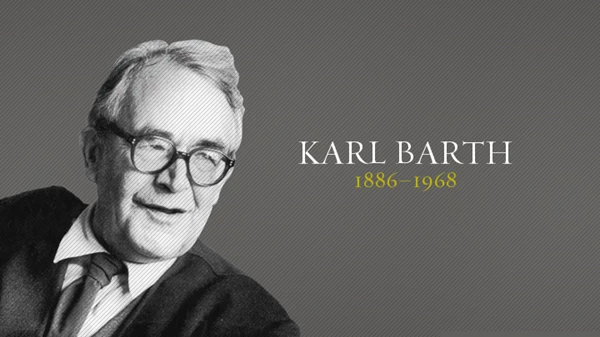
Karl Barth, born on May 10, 1886, in Basel, Switzerland, was a revolutionary figure in the realms of theology and philosophy. As a Calvinist theologian and pastor, Barth significantly influenced 20th-century Protestant thought through his works and teachings. His most famous work, “The Epistle to the Romans” (Roemerbrief), published in the early 1920s, marked the beginning of the “dialectical theology” movement, which stood in stark contrast to the liberal theology of his time. Barth’s life and works continue to be a source of profound insights and discussions within theological circles.
Early Life and Education
Karl Barth’s theological journey began with his studies at various Swiss and German universities. Under the guidance of prominent liberal theologians such as Wilhelm Herrmann and Adolf von Harnack, Barth initially embraced the prevailing liberal theological perspectives. His early education focused on historical-critical methods and the interpretation of faith as an internal psychological sentiment, heavily influenced by philosophers like Friedrich Schleiermacher and Immanuel Kant.
Influences and Break from Liberal Theology
Barth’s pastoral work, which began in 1909, exposed him to the harsh realities of poverty and the working class. This experience led to a critical reassessment of the liberal theology he had learned. The outbreak of World War I in 1914 further deepened his disillusionment, as many of his German mentors supported the war, which Barth opposed. This period marked a turning point in his theological development.
Influenced by the charismatic Blumhardt pastors, who emphasized hope and divine intervention, Barth began to envision God as a liberator and renewer of the world. His theological evolution was also shaped by his readings of Plato, who introduced him to the concept of a transcendent origin, and Fyodor Dostoevsky, who depicted the world and human existence as deeply problematic and contradictory.
The Epistle to the Romans and Dialectical Theology
Published in 1922, Barth’s “The Epistle to the Romans” was a groundbreaking work that challenged the foundations of liberal theology. The term “dialectical theology” refers to the fundamental opposition between God and the world, highlighting an irreducible qualitative difference. According to Barth, God’s relationship with humanity is characterized by paradoxes and contradictions, making it impossible to speak of God in linear, logical terms.
In this work, Barth asserted two primary “dialectical” claims about God:
- God as “Totally Other”: Barth emphasized that God is wholly different from the world, history, and humanity. This perspective places humans in a perpetual state of questioning and crisis, unable to find definitive answers or achieve reconciliation through their own efforts.
- Divine Grace: Despite this vast separation, Barth believed that God chooses to engage with humanity through an indeterminate act of grace. This divine intervention offers hope and meaning, transforming the problematic and seemingly nonsensical aspects of existence into symbols and testimonies of a higher reality.
Fides Quaerens Intellectum: Faith Seeking Understanding
By the early 1930s, Barth’s theological stance softened, seeking a more harmonious relationship between faith and reason. Inspired by Anselm of Canterbury’s “Proslogion,” Barth adopted the view that faith precedes and guides reason. He believed that intellectual understanding should stem from the acceptance of faith, rather than serving as its foundation.
In this phase, Barth acknowledged the importance of human reason in interpreting and understanding faith, emphasizing a collaborative relationship between divine grace and human intellect.
Church Dogmatics and Mature Theology
From the 1930s until his death on December 10, 1968, Barth’s work culminated in his monumental “Church Dogmatics” (Kirchliche Dogmatik), a 13-volume series that consumed over three decades of his life. This period is characterized by a greater emphasis on the relational aspects between God and humanity, crystallizing in his 1956 lecture “The Humanity of God.”
Three key themes define Barth’s mature theology:
- The Encounter between God and Humanity: Barth underscored that the core of the Christian message is about salvation, grace, and election rather than condemnation and divine wrath. He argued that while God’s transcendence remains, it is balanced by the divine initiative to engage and save humanity.
- Christocentric Focus: Barth’s theology increasingly centered on Jesus Christ as the locus of the divine-human encounter. Christ’s incarnation and resurrection affirmed the dignity of human existence and history.
- Primacy of Revelation and the Word: Barth stressed the necessity of grounding theological discourse in God’s self-revelation, particularly through Jesus Christ. He argued that philosophical systems should serve the interpretation of divine revelation, without overshadowing it.
Legacy and Influence
Karl Barth’s influence extends far beyond his lifetime, leaving an indelible mark on theology, philosophy, and the broader intellectual landscape. His rigorous challenge to liberal theology prompted a reevaluation of key theological concepts and paved the way for new approaches to understanding faith and reason. Barth’s emphasis on the transcendence of God and the primacy of divine grace continues to resonate in contemporary theological discussions.
Conclusion
Karl Barth’s life and work embody a profound journey of theological exploration and transformation. From his early education in liberal theology to his mature articulation of dialectical and relational theology, Barth’s contributions have significantly shaped modern Protestant thought. His unwavering commitment to the transcendence of God, coupled with a deep belief in divine grace, offers a compelling and enduring framework for understanding the complexities of faith and existence.
Barth’s legacy endures as a testament to the power of rigorous theological inquiry and the enduring quest to comprehend the divine-human relationship.


