
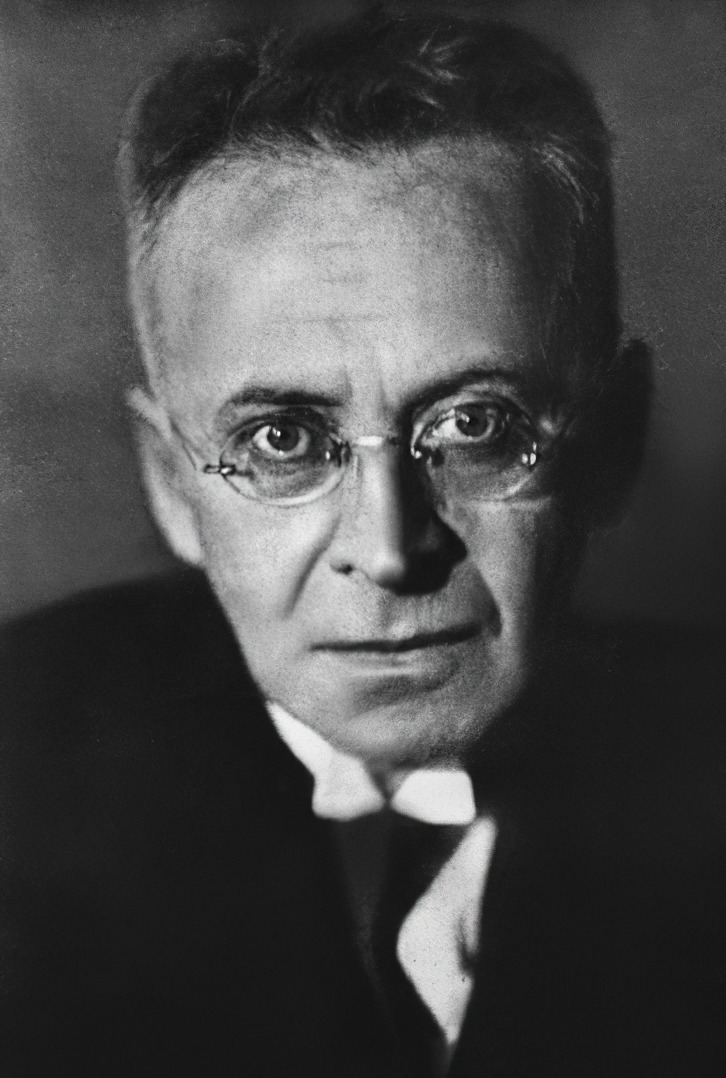
Karl Kraus was born on April 28, 1874, in Gitschin, Bohemia, a region that is now part of the Czech Republic. He emerged as one of the most influential satirists of the 20th century, writing primarily in German. His sharp wit, incisive critique of society, and unwavering dedication to satirical journalism made him a formidable figure in the literary and cultural landscape of his time. This article delves into the life, career, and enduring legacy of Karl Kraus, exploring the factors that contributed to his fame and the key moments that defined his life.
Early Life and Background
Karl Kraus was born into a wealthy Jewish family. His father, Jakob Kraus, was a paper manufacturer, and his mother, Ernestine Kantor, was known for her deep concern for her son’s delicate health. The Kraus family moved to Vienna in 1877, where young Karl was raised. His upbringing in an affluent household, coupled with his Austrian nationality and Jewish heritage, significantly influenced his worldview and later work. These elements became integral to his identity and the critical lens through which he viewed society.
Despite his privileged background, Kraus’s early life was marked by health issues. He suffered from a spinal deformity and severe myopia, which plagued him throughout his childhood. These physical challenges, combined with the premature death of his mother, left a profound impact on him, contributing to his often critical and satirical outlook on life.
Education and Early Career
Kraus’s early education in Vienna sparked his interest in the arts, particularly in poetry, music, and theater. These interests would later form the foundation of his satirical work. In 1892, Kraus enrolled at the University of Vienna to study law. However, he quickly became disillusioned with the rigidity of legal studies and shifted his focus to more humanities-oriented subjects like German literature and philosophy. Despite his intellectual curiosity, Kraus never completed his university education.
During his time at university, Kraus began to immerse himself in Vienna’s vibrant literary scene. He frequented the Café Griensteidl, a popular gathering place for writers and intellectuals. It was here that Kraus forged connections with some of Vienna’s most prominent literary figures. However, these relationships often turned sour as Kraus’s sharp tongue and uncompromising satirical style alienated many of his contemporaries.
Kraus’s breakthrough came in 1896 with the publication of his essay “Die demolierte Literatur” (“The Demolished Literature”). This work, written in response to the imminent demolition of Café Griensteidl, was a scathing critique of Vienna’s literary establishment and marked the beginning of Kraus’s rise to fame.
The Founding of “Die Fackel”
In 1899, Kraus made a bold move that would define his career: he founded the satirical magazine “Die Fackel” (“The Torch”). This publication became Kraus’s primary platform for expressing his views on a wide range of topics, including politics, culture, and morality. “Die Fackel” was unique in that it was almost entirely written by Kraus himself, especially after 1911 when he became the sole contributor.
The magazine was renowned for its fierce independence and biting satire. Kraus used “Die Fackel” to launch relentless attacks on the hypocrisy and corruption he saw in society. No one was safe from his criticism—not politicians, not intellectuals, and certainly not the media. Kraus’s targets included the Austro-Hungarian Empire, the burgeoning field of psychoanalysis, and the growing tide of nationalism in Europe.
One of Kraus’s most famous polemics was his attack on Theodor Herzl, the founder of modern political Zionism. In his 1898 essay “Eine Krone für Zion” (“A Crown for Zion”), Kraus criticized Herzl and the Zionist movement, arguing against the idea of a Jewish state. This essay exemplified Kraus’s tendency to challenge established ideas and figures, regardless of their popularity.
Public Lectures and Performances
In addition to his work as a writer and editor, Kraus was also a gifted public speaker. Between 1892 and 1936, he gave approximately 700 public lectures, where he would read from his works and perform dramatic interpretations of plays by Goethe, Shakespeare, and other literary giants. These performances were highly popular and further solidified Kraus’s reputation as a leading intellectual of his time.
Kraus’s public readings were more than mere recitations; they were theatrical events. He often accompanied his readings with musical performances, playing the piano and even singing. His ability to engage and entertain audiences through his dramatic presentations contributed to his widespread fame.
The Great War and “The Last Days of Mankind”
The outbreak of World War I in 1914 marked a turning point in Kraus’s career. Horrified by the senseless violence and destruction of the war, Kraus channeled his anger and disillusionment into his magnum opus, “Die letzten Tage der Menschheit” (“The Last Days of Mankind”). This satirical drama, which Kraus began writing in 1915 and published in its final form in 1922, is a scathing indictment of the war and those who perpetuated it.
“The Last Days of Mankind” is a sprawling, apocalyptic vision of the war, blending real-life events with fantastical elements. The play features a vast cast of characters, including two central figures: “The Grumbler,” a cynical observer of the war, and “The Optimist,” a naïve believer in the righteousness of the conflict. Through these characters, Kraus explores the absurdity and horror of the war, as well as the complicity of those who supported it.
Despite its dark subject matter, “The Last Days of Mankind” is also infused with Kraus’s trademark wit and satire. The play is considered one of the most significant works of anti-war literature and remains a powerful commentary on the human capacity for self-destruction.
Personal Life and Later Years
Kraus’s personal life was as complex and unconventional as his work. He was baptized as a Catholic in 1911 but left the Church in 1923, reflecting his ongoing struggle with religion and identity. Although he never married, Kraus had a long-term relationship with Baroness Sidonie Nádherný von Borutin, a notable figure in Viennese society. Their relationship, which began in 1913, lasted until Kraus’s death and provided him with emotional support throughout his life.
Kraus continued to write and lecture until his death in Vienna on June 12, 1936. His passing marked the end of an era in Viennese cultural life, but his legacy as a pioneering satirist and intellectual continues to resonate today.
Legacy and Influence
Karl Kraus’s impact on literature and journalism is undeniable. His work, particularly through “Die Fackel,” set new standards for satirical writing and journalistic integrity. Kraus’s fearless critique of society, combined with his mastery of language, has inspired generations of writers and thinkers.
Kraus’s influence extended beyond the literary world. He was a fierce advocate for free speech and an early critic of propaganda, themes that remain relevant in contemporary discussions about media and politics. His work continues to be studied and admired for its wit, insight, and moral clarity.
In recognition of his contributions to literature and culture, Kraus has been the subject of numerous biographies, academic studies, and even artistic tributes. One notable admirer was the writer Elias Canetti, who regularly attended Kraus’s lectures and later titled his autobiography “Die Fackel im Ohr” (“The Torch in My Ear”) in homage to Kraus’s magazine and its enduring influence.
Conclusion
Karl Kraus was a man of contradictions—a satirist who attacked both the establishment and the avant-garde, a public intellectual who often stood alone in his views, and a writer whose work transcended the boundaries of genre and form. His life and career offer a fascinating glimpse into the cultural and intellectual currents of early 20th-century Europe. As we continue to grapple with many of the same issues that Kraus addressed in his work, his legacy remains as relevant and powerful as ever.


