
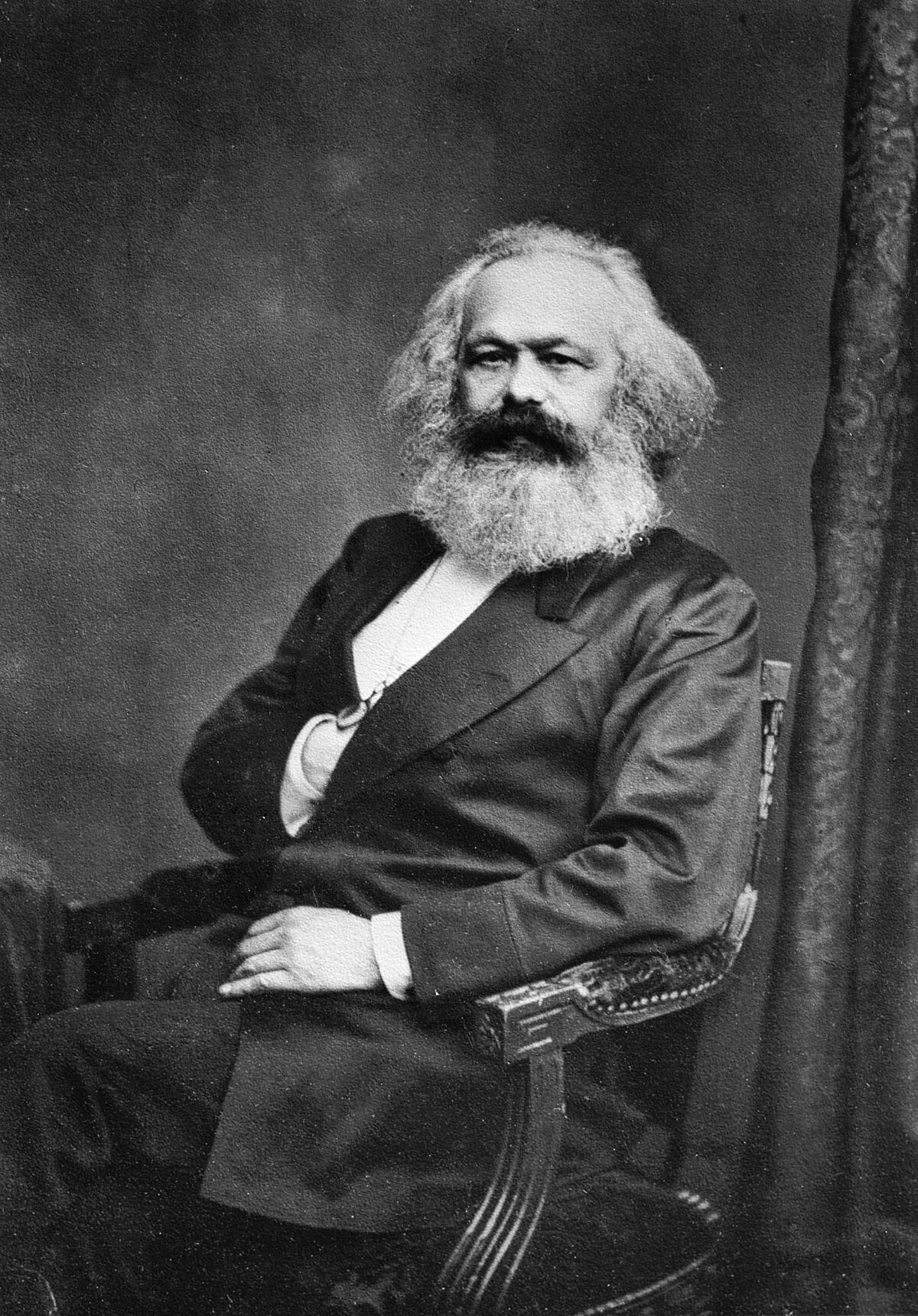
Karl Heinrich Marx, born on May 5, 1818, in the German town of Trier, is a figure whose influence has permeated nearly every aspect of modern political and economic thought. As the father of Marxism, his ideas laid the groundwork for the development of socialist and communist movements across the world. Marx’s theories on history, economics, and society have shaped countless revolutions and intellectual debates, making him one of the most significant thinkers in history. This article delves into the life of Karl Marx, exploring his age, rise to fame, key life highlights, and the enduring legacy of his work.
Early Life and Education
Karl Marx was born into a middle-class family. His father, Heinrich Marx, was a successful lawyer of Jewish descent who had converted to Christianity. His mother, Henrietta Pressburg, also came from a Jewish family. Marx was the third of nine children, and from a young age, he displayed a strong intellect and a rebellious spirit. These traits would later define his revolutionary approach to political and economic theory.
Marx’s early education took place at the Trier High School, where he showed an affinity for literature and classical studies, although he was less interested in history. His academic pursuits were shaped by his father’s expectations, who hoped Karl would follow in his footsteps and study law. Consequently, Marx enrolled at the University of Bonn in 1835 to study law. However, his time at Bonn was marked more by his involvement in student life and his penchant for the bohemian lifestyle than by his academic achievements. His participation in drinking bouts, brawls, and even a duel, which left him with a scar on his eyebrow, alarmed his family.
After a year at Bonn, Marx’s father insisted he transfer to the more rigorous University of Berlin, where he could focus on his studies. Berlin was a hub of intellectual activity, particularly influenced by the philosophy of Georg Wilhelm Friedrich Hegel. Although Hegel had died a few years before Marx’s arrival, his ideas dominated the university’s intellectual landscape. Marx was deeply influenced by Hegelian philosophy, particularly the dialectical method, which would later play a crucial role in the development of Marx’s own ideas.
While at Berlin, Marx began to drift away from his law studies, becoming increasingly interested in philosophy and literature. He wrote poetry and fell in love with Jenny von Westphalen, a woman from an aristocratic family. Their engagement, initially kept secret, was eventually accepted by both families, despite their differing social standings.
The Journey Toward Marxism
Marx’s intellectual journey took a decisive turn during his time in Berlin. He became involved with the Young Hegelians, a group of radical thinkers who sought to apply Hegelian philosophy to critique religion, politics, and society. The Young Hegelians were critical of the Prussian state and conservative religious institutions, and they pushed for democratic reforms. Marx’s involvement with this group furthered his interest in radical politics and set the stage for his later work.
In 1841, Marx completed his doctoral thesis titled “The Difference Between the Democritean and Epicurean Philosophy of Nature.” While the thesis focused on ancient Greek philosophy, it demonstrated Marx’s growing commitment to materialist thought, a perspective that emphasized the material conditions of existence over idealist notions. Despite his academic success, Marx was unable to secure a teaching position due to his radical views, which made him a controversial figure.
Turning away from academia, Marx decided to pursue a career in journalism, which he saw as a way to actively engage in political struggles. In 1842, he began writing for the “Rheinische Zeitung” (“Rhenish Gazette”), a newly founded liberal newspaper based in Cologne. Marx quickly became the editor-in-chief, and under his leadership, the newspaper adopted a more radical tone, addressing issues such as freedom of the press, economic inequality, and the plight of the working class. Marx’s articles often criticized the Prussian government, leading to increasing censorship and, eventually, the shutdown of the newspaper in 1843.
After the closure of the “Rheinische Zeitung,” Marx moved to Paris, where he continued his political activities. It was in Paris that Marx’s ideas began to crystallize into what would later be known as Marxism. He met Friedrich Engels, a fellow German radical who would become his lifelong collaborator and friend. Engels introduced Marx to the harsh realities of industrial capitalism, particularly as it existed in England, and together, they began to develop a critique of the capitalist system.
The Formation of Marxism and “The Communist Manifesto”
In Paris, Marx immersed himself in the study of political economy, history, and philosophy. He began to formulate his ideas on historical materialism, the theory that history is driven by the material conditions of life, particularly the modes of production and class relations. This theory stood in contrast to the idealist philosophies that dominated European thought at the time, which emphasized ideas and consciousness as the primary drivers of history.
One of Marx’s key works during this period was the “Economic and Philosophic Manuscripts of 1844,” in which he developed the concept of alienation. Marx argued that under capitalism, workers become alienated from their labor, the products they create, and their own humanity. This alienation is a result of the worker’s lack of control over the means of production, which are owned by capitalists who exploit labor for profit.
In 1845, Marx was expelled from France due to his revolutionary activities and moved to Brussels. It was in Brussels that Marx and Engels wrote “The German Ideology,” a work that outlined their theory of historical materialism. The book was a polemic against the Young Hegelians and other contemporary thinkers who Marx and Engels believed misunderstood the material basis of history. Although “The German Ideology” was not published during Marx’s lifetime, it marked a significant development in his thought.
The most famous work of Marx and Engels, however, is “The Communist Manifesto,” published in 1848. Commissioned by the Communist League, a group of revolutionary socialists, the manifesto presented a call to arms for the working class to rise up against the bourgeoisie. The manifesto famously begins with the declaration, “A spectre is haunting Europe—the spectre of communism.” It goes on to outline the theory of class struggle, arguing that history is the history of class conflicts, which will ultimately culminate in the overthrow of the bourgeoisie and the establishment of a classless, communist society.
“The Communist Manifesto” was a powerful and concise statement of Marx’s revolutionary ideas. It called for the abolition of private property, the centralization of the means of production, and the establishment of a proletarian dictatorship to dismantle the structures of capitalist exploitation. Although the revolutions of 1848, which swept across Europe, were largely unsuccessful, the manifesto became a foundational text for socialist and communist movements worldwide.
Exile and the Writing of “Das Kapital”
After the failed revolutions of 1848, Marx faced increasing repression from European governments. He was expelled from Belgium and then from Germany, finally settling in London in 1849. London would be Marx’s home for the rest of his life, but his years in the British capital were marked by poverty, personal tragedy, and relentless intellectual labor.
Marx’s financial situation in London was dire. Despite occasional support from Engels, who by then was managing his family’s textile business in Manchester, Marx and his family lived in abject poverty. Several of Marx’s children died in infancy due to the harsh living conditions, and Marx himself struggled with health problems exacerbated by his poverty.
Despite these challenges, Marx continued to work on his magnum opus, “Das Kapital” (“Capital”). “Das Kapital” was an ambitious project that sought to provide a comprehensive critique of the capitalist system. The first volume, published in 1867, focused on the production process of capital, examining how capital is accumulated and how labor is exploited under capitalism. Marx introduced key concepts such as surplus value, the labor theory of value, and the commodity fetishism, all of which are central to his critique of capitalism.
“Das Kapital” was a dense and challenging work, and it did not achieve widespread recognition during Marx’s lifetime. However, it laid the intellectual foundation for the later development of Marxist economics and provided a powerful analysis of the dynamics of capitalist society. Marx continued to work on subsequent volumes of “Das Kapital,” but he was only able to complete the first volume before his death. The remaining volumes were edited and published posthumously by Engels.
The Legacy of Karl Marx
Karl Marx died on March 14, 1883, in London, at the age of 64. He was buried in Highgate Cemetery, where his grave became a site of pilgrimage for socialists and communists from around the world. At his funeral, Engels delivered a eulogy, declaring, “His name will endure through the ages, and so also will his work.”
Indeed, Marx’s influence has endured long after his death. His ideas have been adapted and interpreted by a wide range of political movements, from the Bolsheviks in Russia to the Chinese Communist Party, and his writings have inspired revolutions, social reforms, and academic debates across the globe.
Marx’s legacy is complex and contested. While his analysis of capitalism remains influential, his vision of a communist society has been criticized and debated, particularly in light of the failures and atrocities committed by regimes that claimed to follow his teachings. Nonetheless, Marx’s work continues to be a touchstone for those seeking to understand and challenge the structures of power and inequality in modern society.
In the 21st century, Marx’s ideas have experienced a resurgence, particularly in the wake of the global financial crisis of 2008, which exposed the vulnerabilities and inequities of the capitalist system. Scholars, activists, and political leaders continue to grapple with Marx’s theories, debating their relevance and application in a world that has changed dramatically since Marx’s time.
Conclusion
Karl Marx was a revolutionary thinker whose ideas have had a profound impact on the world. From his early days as a radical student in Berlin to his years of exile in London, Marx dedicated his life to understanding and challenging the capitalist system. His theories on historical materialism, class struggle, and the critique of political economy have shaped the course of history and continue to influence contemporary debates on economics, politics, and society.
Marx’s life was marked by intellectual rigor, personal sacrifice, and an unwavering commitment to the cause of the working class. While his vision of a communist society remains a topic of debate, his critique of capitalism has provided a powerful framework for understanding the dynamics of power, exploitation, and inequality in the modern world.
As we continue to navigate the challenges of the 21st century, Karl Marx’s work remains as relevant as ever, offering insights into the structures that shape our lives and the possibilities for building a more just and equitable society.


