
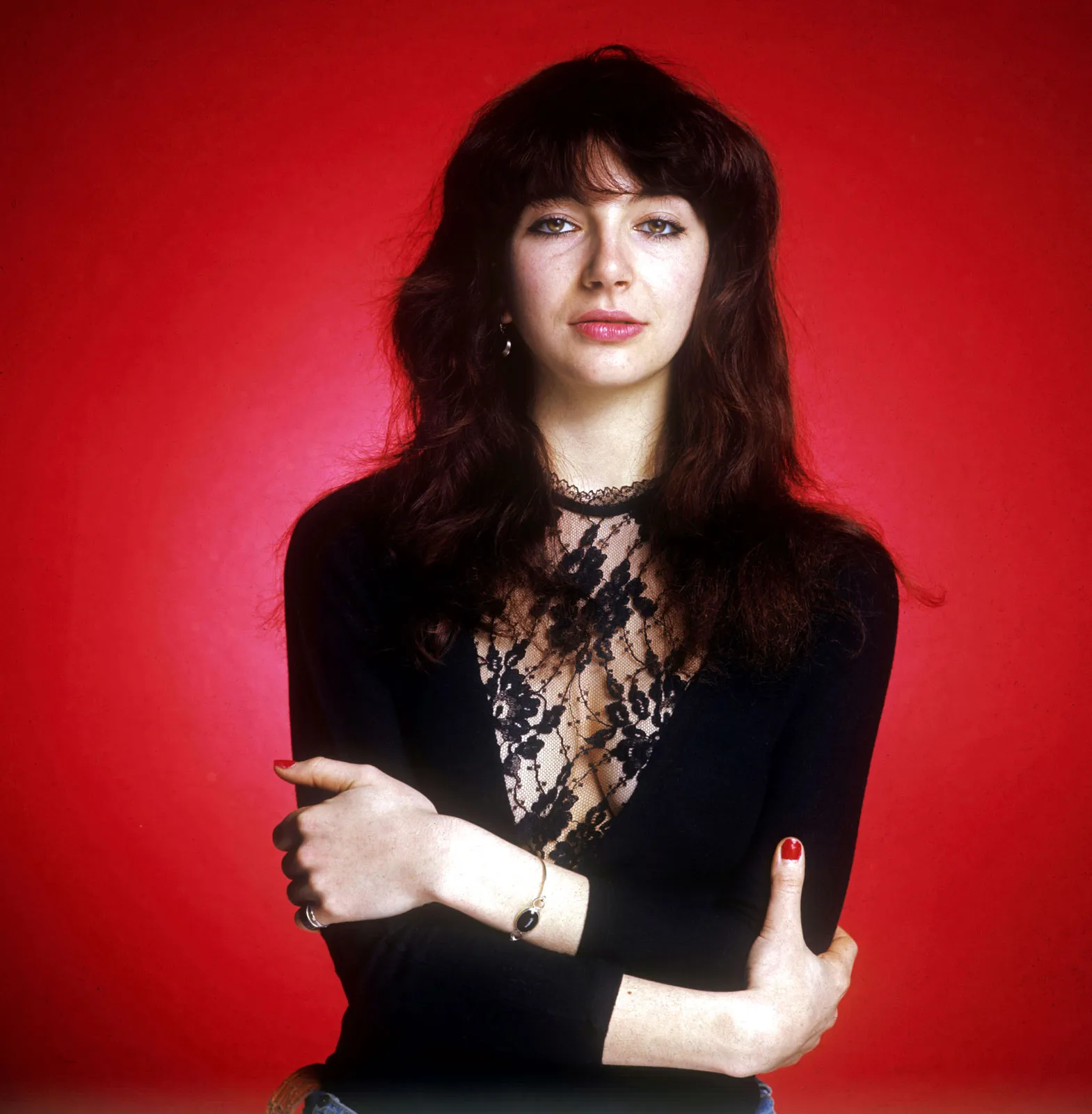
Kate Bush, born Catherine Bush on July 30, 1958, in Welling, Kent, England, is an iconic figure in the world of music. Renowned for her eclectic and avant-garde approach to music, Bush has had a profound impact on the music industry, influencing countless artists with her unique blend of art rock, experimental music, and lyrical depth. From her groundbreaking debut in the late 1970s to her reclusive yet impactful later years, Kate Bush’s career is a testament to artistic integrity and innovation.
Early Life and Influences
Kate Bush was born into a creative and musically inclined family. Her father, Robert Bush, was a general practitioner and an amateur pianist, while her mother, Hannah Bush, was an Irish dancer. Growing up in a household that valued artistic expression, Kate was exposed to music from a young age. She began learning the piano at the age of 11 and soon started composing her own music. Her early compositions, influenced by her Catholic upbringing and love for literature, reflected a depth and maturity that belied her years.
Bush’s early exposure to a wide array of artistic influences played a crucial role in shaping her unique sound. She was particularly inspired by the works of David Bowie, Pink Floyd, and the British progressive rock scene of the 1970s. However, it was her encounter with David Gilmour of Pink Floyd that would prove pivotal in her career.
Discovery by David Gilmour and Early Career
In the mid-1970s, a family friend passed a demo tape of Kate Bush’s early recordings to David Gilmour, the guitarist of Pink Floyd. Gilmour was immediately struck by the raw talent and originality of the young artist and decided to help her professionally record some of her songs. These recordings led to Bush signing a contract with EMI Records when she was just 16 years old.
Despite securing a record deal, EMI decided to delay Bush’s debut to allow her to develop her skills further. During this time, she attended mime classes and dance lessons, which would later become integral to her highly theatrical stage performances. She also formed the KT Bush Band, performing in pubs and small venues around London, honing her craft and building her confidence as a performer.
Breakthrough with “Wuthering Heights”
In 1978, at the age of 19, Kate Bush released her debut single, “Wuthering Heights,” inspired by the classic Emily Brontë novel of the same name. The song, with its haunting melody and Bush’s ethereal voice, quickly became a sensation. It topped the UK Singles Chart, making Bush the first female artist to achieve a number one hit in the UK with a self-written song. The success of “Wuthering Heights” was unprecedented, and it catapulted Bush into the limelight.
Her debut album, The Kick Inside, released shortly after, was a commercial and critical success, featuring songs she had written as a teenager. The album showcased her distinctive blend of literary themes, complex melodies, and innovative production techniques. Tracks like “The Man with the Child in His Eyes” and “Them Heavy People” further established her as a unique voice in the music industry.
Artistic Evolution and Control
Following the success of her debut, EMI pressured Bush to quickly release a follow-up album, Lionheart (1978). Although it produced the hit single “Wow,” Bush was dissatisfied with the album, feeling that it had been rushed to capitalize on her newfound fame. This experience led her to take greater control over her music and career, a move that would define her future work.
In 1980, Bush released Never for Ever, an album that marked a significant shift in her artistic direction. It was the first of her albums to feature extensive use of synthesizers and was also the first album by a British female solo artist to top the UK Albums Chart. Songs like “Babooshka” and “Army Dreamers” showcased her expanding sonic palette and lyrical depth, exploring themes of identity, war, and love with a maturity that set her apart from her peers.
Bush’s desire for artistic control led her to establish her own publishing company, Kate Bush Music, allowing her to have complete creative freedom over her work. This move was rare for a female artist at the time and highlighted her determination to maintain artistic integrity in an industry often dominated by commercial interests.
The Dreaming and Hounds of Love
By the early 1980s, Kate Bush had established herself as a formidable and innovative artist, but it was her 1982 album The Dreaming that truly cemented her reputation as an avant-garde musician. Often described as her most experimental work, The Dreaming was a commercial risk. It featured unconventional song structures, complex time signatures, and a wide array of influences ranging from traditional Irish music to aboriginal Australian sounds. The album’s title track, “Sat in Your Lap,” and “There Goes a Tenner” were critically acclaimed but confused many listeners, leading to mixed reviews. However, The Dreaming has since been recognized as a groundbreaking album that pushed the boundaries of pop music.
Bush’s next album, Hounds of Love (1985), is widely regarded as her masterpiece. Divided into two distinct halves, the album’s first side featured accessible pop songs like “Running Up That Hill” and “Cloudbusting,” while the second half, titled “The Ninth Wave,” was a conceptual suite that told the story of a woman drifting alone at sea. Hounds of Love was a commercial triumph, reaching number one on the UK Albums Chart and receiving critical acclaim worldwide. The album’s innovative use of the Fairlight CMI synthesizer, along with Bush’s meticulous production, set a new standard for art pop and cemented her status as one of the most influential artists of her generation.
Retreat from the Spotlight and Later Work
Following the success of Hounds of Love, Kate Bush retreated from the public eye, choosing to focus on her music rather than the demands of fame. She released The Sensual World in 1989, an album that continued to explore complex themes and showcased her growing interest in traditional and world music. The album’s title track was inspired by James Joyce’s Ulysses, and Bush’s ability to weave literary references into her music became one of her trademarks.
In 1993, Bush released The Red Shoes, an album that was accompanied by a short film titled The Line, the Cross and the Curve, which she directed and starred in. While the album received mixed reviews, it included notable tracks like “Rubberband Girl” and “Moments of Pleasure.” After The Red Shoes, Bush largely withdrew from the music scene, leading to speculation and rumors about her personal life.
During her time away from the spotlight, Bush became a mother, giving birth to her son Bertie in 1998. Her focus on family life contributed to her long absence from the music industry, with her next album, Aerial, not appearing until 2005. Aerial was a double album that was well-received by critics, who praised its ambitious scope and intricate compositions. The album featured tracks like “King of the Mountain” and “Nocturn,” which highlighted Bush’s enduring creativity and her ability to evolve as an artist.
Return to Live Performance and Legacy
One of the most surprising developments in Kate Bush’s career came in 2014 when she announced her return to live performance after a 35-year hiatus. The series of concerts, titled “Before the Dawn,” took place at the Hammersmith Apollo in London and were met with overwhelming demand, selling out within minutes. The performances were hailed as a triumph, blending music, theater, and visual art in a way that only Bush could achieve. The success of “Before the Dawn” reaffirmed her status as a legendary live performer, despite her long absence from the stage.
Kate Bush’s influence on music cannot be overstated. Her willingness to experiment with sound, structure, and storytelling has inspired countless artists across genres, from Tori Amos and Björk to Florence Welch and St. Vincent. Bush’s work is often cited for its emotional depth, innovative production, and lyrical sophistication, making her a pioneer in the art pop and alternative music scenes.
Honors and Recognition
Throughout her career, Kate Bush has received numerous accolades for her contributions to music. In 2013, she was awarded the title of Commander of the Order of the British Empire (CBE) by Queen Elizabeth II for her services to music. Bush has also been nominated for several BRIT Awards and has won an Ivor Novello Award for Outstanding Contribution to British Music. Despite her aversion to the limelight, these honors reflect the lasting impact of her work on the music industry and popular culture.
Conclusion
Kate Bush’s career is a testament to the power of artistic integrity and the importance of following one’s creative instincts. From her early success with “Wuthering Heights” to her later work, Bush has consistently pushed the boundaries of what popular music can achieve. Her influence continues to be felt across the music industry, and her legacy as a groundbreaking artist remains firmly intact. Whether through her innovative use of technology, her deeply personal lyrics, or her captivating performances, Kate Bush has earned her place as one of the most important and influential musicians of the modern era.


