
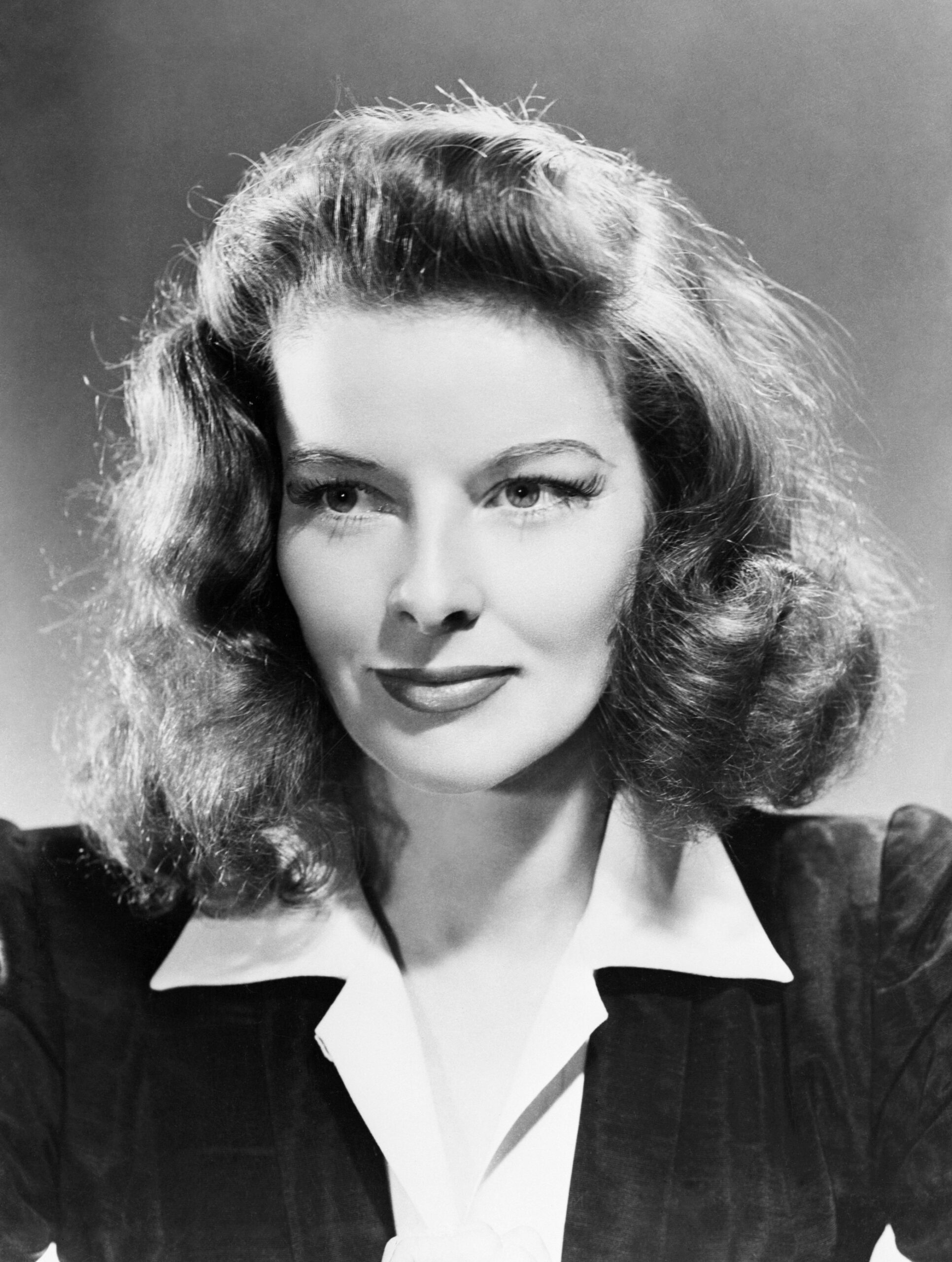
Katharine Hepburn, an icon of American cinema, was born on May 12, 1907, in Hartford, Connecticut. Known for her fiercely independent spirit and groundbreaking roles, Hepburn’s career spanned more than six decades, making her one of the most revered actresses in Hollywood history. Her life story is one of resilience, determination, and a relentless pursuit of excellence, both on and off the screen.
Early Life: A Foundation of Strength and Independence
Hepburn was born into a well-to-do family, which played a significant role in shaping her character and career. Her father, Thomas Norval Hepburn, was a prominent urologist, while her mother, Katharine Martha Houghton, was a staunch advocate for women’s rights and a leading suffragette. This progressive upbringing instilled in Hepburn a sense of independence and a strong will, qualities that would define her both personally and professionally.
Hepburn’s early life was marked by a tragic event that deeply affected her: the suicide of her older brother, Tom, when she was just 14 years old. This loss had a profound impact on her, leading to a period of introspection and shaping her complex emotional depth. Despite this, she was encouraged by her mother to pursue her interests and passions, which included acting—a path she began to explore during her time at Bryn Mawr College.
The Beginnings of a Stellar Career
Hepburn’s acting career began on the stage, where she quickly established herself as a talent to be reckoned with. After graduating from Bryn Mawr College in 1928, she took on various roles in stock theater companies. However, her initial foray into the world of acting was not without its challenges. Her first Broadway appearance in the play The Warrior’s Husband (1932) garnered mixed reviews, and her unconventional style was not immediately embraced by critics or audiences.
Nevertheless, Hepburn’s determination paid off when she caught the attention of Hollywood producers. In 1932, she made her film debut in A Bill of Divorcement, starring opposite John Barrymore. The film was a success, and Hepburn’s performance was widely praised, marking the beginning of a legendary film career. Her unique blend of intelligence, wit, and strength set her apart from the more traditional actresses of the time.
Rise to Fame: The Iconic Roles of the 1930s
Hepburn’s ascent to stardom was swift. In 1933, she won her first Academy Award for Best Actress for her performance in Morning Glory. This was the first of four Oscars she would win throughout her career, a record that still stands. Hepburn’s success in the 1930s was marked by a series of roles that showcased her versatility and depth as an actress.
One of her most notable roles during this period was in Little Women (1933), directed by George Cukor. Hepburn’s portrayal of Jo March, a strong-willed and independent young woman, resonated with audiences and critics alike. The role was a perfect fit for Hepburn, who often played characters that mirrored her own personality—independent, determined, and unapologetically herself.
Another significant role was in Bringing Up Baby (1938), a screwball comedy where Hepburn starred alongside Cary Grant. Although the film was not a commercial success at the time, it has since become a classic, celebrated for its wit and Hepburn’s comedic timing. This film also demonstrated Hepburn’s ability to excel in a wide range of genres, from drama to comedy.
The 1940s: A Decade of Reinvention and Resurgence
The 1940s brought new challenges for Hepburn. Despite her early successes, a series of box office failures led to her being labeled as “box office poison” by the Hollywood press. Undeterred, Hepburn took control of her career in a way that was almost unheard of for actresses at the time. She bought out her contract with RKO Pictures and returned to the stage, where she starred in the play The Philadelphia Story.
Hepburn’s performance in The Philadelphia Story was a critical and commercial triumph, and she quickly secured the film rights, ensuring that she would star in the movie adaptation. Released in 1940, the film was a massive success and is now considered one of the greatest romantic comedies of all time. Hepburn’s portrayal of Tracy Lord, a wealthy socialite with a sharp tongue and a soft heart, solidified her status as one of Hollywood’s leading ladies. The film also marked the beginning of her long and fruitful collaboration with director George Cukor.
A Legendary Partnership: Katharine Hepburn and Spencer Tracy
In 1942, Hepburn starred alongside Spencer Tracy in Woman of the Year, the first of nine films they would make together. Their on-screen chemistry was undeniable, and it quickly became apparent that the two shared a deep bond off-screen as well. Tracy and Hepburn’s partnership was one of the most celebrated in Hollywood, both professionally and personally.
Their films together, including Adam’s Rib (1949) and Pat and Mike (1952), often explored themes of gender equality and featured strong, independent female characters—roles that suited Hepburn perfectly. Their relationship, however, was complicated by Tracy’s existing marriage and his struggles with alcoholism. Despite these challenges, Hepburn remained devoted to Tracy until his death in 1967. Their final film together, Guess Who’s Coming to Dinner (1967), earned Hepburn her second Academy Award for Best Actress.
The Later Years: A Career of Enduring Success
Hepburn’s career did not wane with age; rather, it evolved. In the 1960s and 1970s, she continued to take on challenging roles that demonstrated her range as an actress. In 1968, she won her third Oscar for her role as Eleanor of Aquitaine in The Lion in Winter, a performance that showcased her ability to portray complex, powerful women.
In the 1980s, Hepburn remained active in both film and television. She won her fourth and final Academy Award for her role in On Golden Pond (1981), opposite Henry Fonda. The film was a critical and commercial success, and Hepburn’s performance as Ethel Thayer, a strong yet vulnerable woman facing the challenges of aging, resonated with audiences of all ages.
Throughout her career, Hepburn was known for her refusal to conform to Hollywood norms. She famously eschewed the glamorous lifestyle associated with movie stars, preferring instead to live simply and privately. She was also known for her distinctive fashion sense, often wearing trousers at a time when it was considered unconventional for women. Hepburn’s style and independence made her a feminist icon and a role model for generations of women.
Historical Context and Cultural Impact
Katharine Hepburn’s career must be understood within the broader context of Hollywood’s Golden Age, a period that spanned from the 1920s to the 1960s. This era was marked by the dominance of major film studios and the rise of the star system, where actors and actresses were often typecast into specific roles. Hepburn, however, defied these conventions. She chose her roles carefully, often portraying strong, complex women who challenged societal norms.
Hepburn’s influence extended beyond the silver screen. Her portrayal of independent women in films during the 1930s and 1940s coincided with significant social changes in the United States, including the women’s suffrage movement and World War II, when women entered the workforce in unprecedented numbers. Hepburn’s characters often reflected these societal shifts, making her a symbol of empowerment for many women.
Moreover, Hepburn’s career longevity and her ability to adapt to different genres and roles set her apart from many of her contemporaries. In an industry where actresses often found their opportunities diminishing as they aged, Hepburn continued to take on challenging and varied roles well into her 70s and 80s, proving that talent and determination could overcome the industry’s ageism.
Katharine Hepburn’s Legacy
Katharine Hepburn passed away on June 29, 2003, at the age of 96, leaving behind a legacy that is unparalleled in Hollywood. Over the course of her nearly 50-year career, she won four Academy Awards and received 12 nominations, a record that still stands today. Hepburn’s contributions to cinema have been recognized with numerous accolades, including the American Film Institute naming her the greatest female star of classic Hollywood cinema.
Hepburn’s legacy is not only defined by her awards and accolades but also by the impact she had on the roles available to women in film. She broke the mold of the traditional Hollywood starlet, paving the way for future generations of actresses to take on more diverse and substantive roles. Her fearless approach to both her career and her life continues to inspire actors, filmmakers, and audiences alike.
In conclusion, Katharine Hepburn’s life and career are a testament to the power of perseverance, talent, and staying true to oneself. She was a trailblazer who redefined what it meant to be a Hollywood star, and her influence can still be felt in the film industry today. Hepburn’s story is one of triumph over adversity, and her enduring appeal ensures that she will remain an icon of American cinema for generations to come.


