
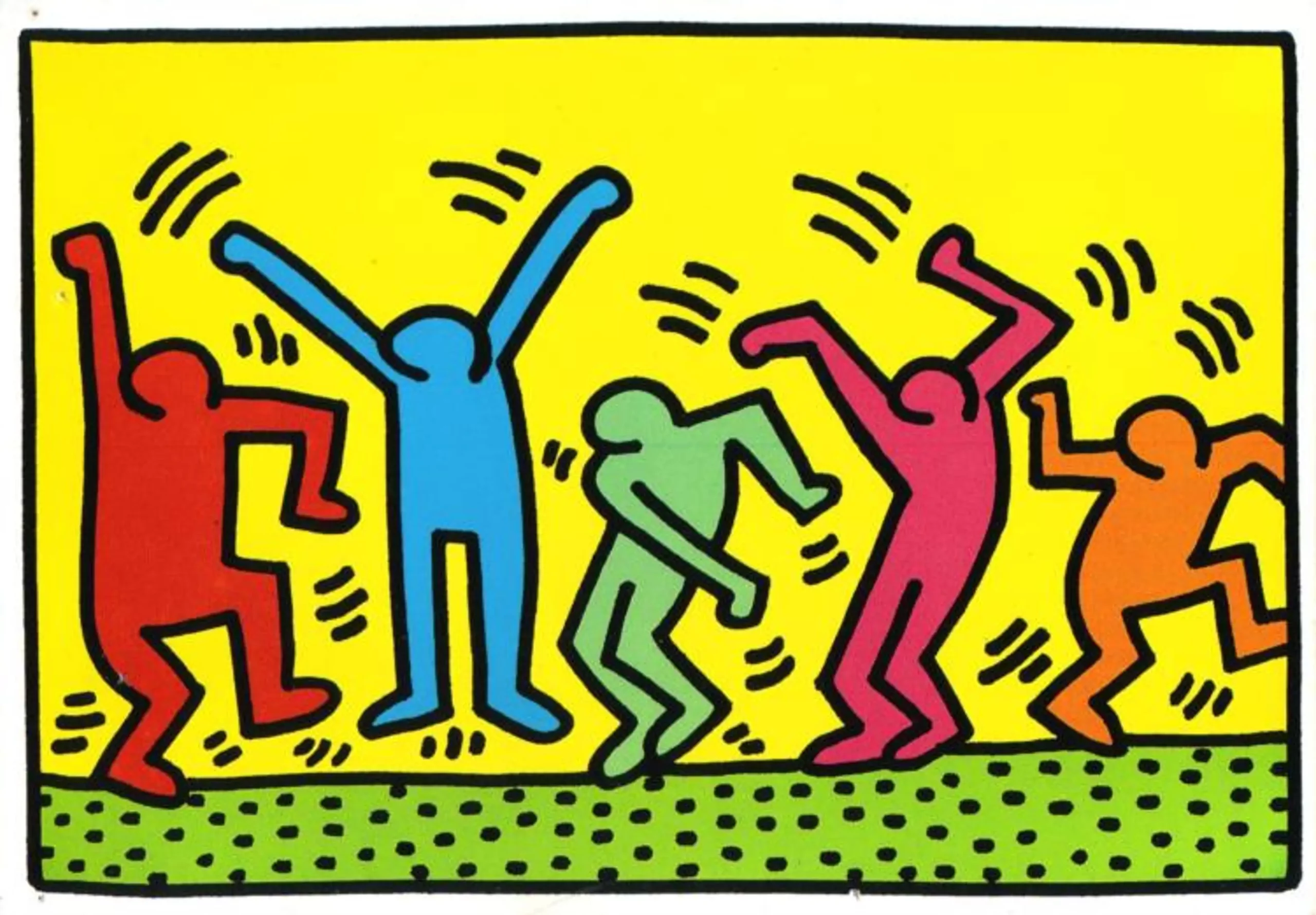
Keith Haring, an iconic figure in the neo-pop art movement, is celebrated as one of the most influential artists of his generation. Born on May 4, 1958, in Kutztown, Pennsylvania, Haring’s journey from a small-town boy to a global art phenomenon is a testament to his extraordinary talent and unyielding spirit.
Early Life and Artistic Beginnings
Keith Haring was the eldest of four children born to Joan and Allen Haring. From a young age, he exhibited a remarkable artistic talent that set him apart. After completing high school, Haring enrolled at the Ivy School of Professional Art in Pittsburgh. However, his formal education was just the beginning of his artistic journey.
In 1976, Haring embarked on a cross-country journey across the United States, hitchhiking to various cities. This journey, inspired by the counterculture movement and the remnants of the hippie era, was a turning point in his life. It allowed him to immerse himself in the diverse art scenes across the country, providing him with a broader perspective on American art. This period of exploration and self-discovery was crucial in shaping his unique style.
Upon returning to Pittsburgh, Haring enrolled at the University of Pittsburgh, where he had his first significant exhibition at the Pittsburgh Arts and Crafts Center. This early exposure to the art world was a precursor to the fame that would follow.
The Rise of a Street Art Icon
Haring’s move to New York City in 1978 marked the beginning of his ascent in the art world. He enrolled at the School of Visual Arts (SVA), where he quickly became immersed in the vibrant, underground art scene of New York. The city’s streets, subways, and clubs became his canvas, and his bold, graphic style began to take shape.
Haring’s work was heavily influenced by the street culture of New York, which was experiencing a creative renaissance at the time. His early works, often executed in public spaces, such as subway stations, were characterized by their accessibility and immediacy. He used chalk to draw his now-iconic figures—simple, cartoonish, yet deeply expressive—on blank advertising panels in the subway. These figures, with their thick black lines and dynamic movement, became synonymous with Haring’s style and quickly gained attention.
His public art made him a beloved figure in the city, resonating with both the art community and the general public. The simplicity and directness of his work allowed it to communicate on multiple levels, from playful, surface-level enjoyment to deeper, more complex social commentary.
Breakthrough and International Fame
Haring’s first major solo exhibition took place in 1982 at the Tony Shafrazi Gallery in New York. This exhibition was a critical and commercial success, firmly establishing him as a leading figure in the contemporary art world. Over the next few years, Haring’s work was exhibited in major galleries and museums around the world, including in Europe and Japan.
In 1986, Haring opened the Pop Shop in New York, a store that sold merchandise featuring his artwork. The Pop Shop was a revolutionary concept at the time, blurring the lines between art and commerce. It allowed people from all walks of life to own a piece of his art, further solidifying his commitment to making art accessible to everyone. Haring saw the Pop Shop as an extension of his work, a way to democratize art and bring it into everyday life.
By this time, Haring was not just an artist; he was a global phenomenon. His work was celebrated for its vibrant energy, its joyous embrace of life, and its unflinching engagement with social issues. He was a fixture in the New York art scene, collaborating with other iconic figures like Andy Warhol and Jean-Michel Basquiat, both of whom he admired deeply.
Social Activism Through Art
While Haring’s art is often celebrated for its aesthetic appeal, it is equally important to recognize his work’s social and political dimensions. Haring was deeply committed to using his art as a tool for social change. He was an outspoken advocate for numerous causes, including LGBTQ+ rights, the fight against apartheid, and AIDS awareness.
Haring was diagnosed with AIDS in 1988, a time when the disease was still heavily stigmatized and misunderstood. Rather than retreating from public life, Haring became even more vocal in his activism. He used his art to raise awareness about the disease, creating works that were both deeply personal and universally resonant.
In 1989, Haring established the Keith Haring Foundation. The foundation was dedicated to supporting organizations that worked with children and those involved in the fight against AIDS. Through his foundation, Haring ensured that his legacy would continue to impact the causes he cared about long after his death.
The Artistic Legacy of Keith Haring
Haring’s work has had a lasting impact on the art world and beyond. His distinctive style, characterized by bold lines, vibrant colors, and dynamic figures, has become iconic. His art, which often features themes of love, unity, and social justice, continues to resonate with audiences around the world.
Haring’s influence can be seen in the proliferation of street art in public spaces. His approach to art—making it accessible, engaging, and socially relevant—has inspired countless artists. His work has also had a significant impact on popular culture, with his imagery appearing on everything from clothing to album covers.
The Commercialization of Keith Haring’s Art
Haring was acutely aware of the commercial potential of his work, and he embraced it in a way that few artists had done before. He understood that art and commerce were not mutually exclusive and that by embracing commercial opportunities, he could reach a broader audience.
The success of the Pop Shop was just one example of Haring’s savvy approach to the business side of art. He also licensed his images for use on a wide range of products, from posters to clothing. This not only provided him with financial security but also allowed him to maintain a high level of creative control over how his work was used.
Haring’s embrace of commercialization was not without its critics, but he viewed it as a natural extension of his work. He believed that by making his art available to the masses, he was fulfilling his mission of making art truly democratic.
The Enduring Relevance of Keith Haring
Keith Haring passed away on February 16, 1990, at the age of 31. Despite his relatively short life, his impact on the art world and popular culture is immeasurable. His work continues to be celebrated for its boldness, its vibrancy, and its unyielding commitment to social justice.
Today, Haring’s art can be found in major museums and public spaces around the world. His foundation continues to support the causes he cared about, ensuring that his legacy of activism and compassion lives on.
In many ways, Keith Haring was a visionary who saw the potential of art to transcend traditional boundaries and to communicate powerful messages to a global audience. His work, with its universal themes and accessible style, remains as relevant today as it was during his lifetime.
Keith Haring’s life and career are a testament to the power of art to inspire, to challenge, and to change the world. His legacy is not just in the images he created, but in the way he lived his life—with passion, with purpose, and with an unshakeable belief in the power of creativity.


