
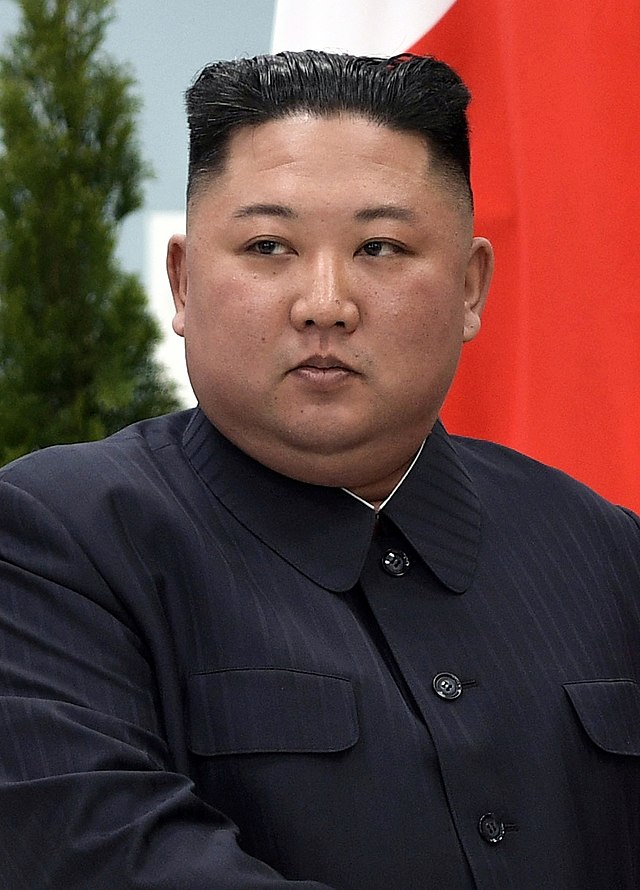
Kim Jong-un, born on January 8, 1984, in Pyongyang, North Korea, is one of the most enigmatic and controversial figures on the global stage today. As the Supreme Leader of North Korea, a position he has held since the death of his father, Kim Jong-il, in 2011, Kim Jong-un has made headlines for his aggressive nuclear policies, unpredictable behavior, and the tight control he exercises over his nation’s political and social life. Despite the global attention, much about Kim Jong-un’s early life and personal history remains shrouded in mystery, contributing to his complex and often misunderstood persona.
Early Life and Education: A Shrouded Beginning
The early life of Kim Jong-un is characterized by a significant degree of mystery and speculation. Born into the ruling Kim dynasty, which has governed North Korea since its establishment in 1948, Kim Jong-un’s upbringing was marked by privilege, secrecy, and intense political indoctrination. Official North Korean sources have been notoriously opaque about the details of his early years, and much of what is known comes from defectors, intelligence reports, and a few confirmed accounts from those who interacted with him during his time abroad.
Kim Jong-un is believed to be the second of three children born to Kim Jong-il and his consort Ko Yong-hui. His exact birth date has been a subject of some debate, with some sources suggesting he was born on July 5, 1984, or even earlier. However, the January 8 date is most widely accepted.
During his formative years, Kim Jong-un was sent to Switzerland for schooling, a practice not uncommon among the North Korean elite. He attended the International School of Berne under the pseudonym “Chol-Park,” where he is said to have been a shy and reserved student. Despite his attempts to maintain a low profile, he reportedly showed a keen interest in basketball, particularly admiring the NBA and its stars like Michael Jordan. This passion for basketball would later influence his diplomacy, most notably in his friendship with former NBA star Dennis Rodman.
While in Switzerland, Kim Jong-un is believed to have attended the Liebefeld Steinhölzli School in Köniz, where he assumed the name “Pak-un.” His education in Switzerland ended abruptly in the autumn of 2000, when he returned to North Korea to continue his studies privately, focusing on military and political training. It is reported that he graduated from Kim Il-sung University, named after his grandfather, the founder of North Korea, and later from the Kim Il-sung Military Academy, further cementing his path to leadership.
The Road to Power: Succession and Consolidation
Kim Jong-un’s rise to power was meticulously orchestrated by his father, Kim Jong-il, who saw in him the qualities necessary to maintain the Kim dynasty’s grip on North Korea. In 2009, reports from the South Korean news agency Yonhap indicated that Kim Jong-un had been designated as the successor to his ailing father, overtaking his older half-brother, Kim Jong-nam, who had fallen out of favor.
The official confirmation of Kim Jong-un’s status as heir apparent came on September 27, 2010, when he was appointed as a general of the North Korean People’s Army, despite his lack of military experience. This appointment was part of a broader strategy to position him as the future leader, including his election to the Central Committee of the Workers’ Party of Korea and his elevation to vice-chairman of the Central Military Commission.
Kim Jong-un’s visibility increased significantly following these appointments, as he began to appear more frequently alongside his father at public events and military inspections. This period was marked by a careful campaign to bolster his image as a strong and capable leader, drawing on the legacy of his grandfather, Kim Il-sung, who remains a revered figure in North Korea.
The transition to power was completed on December 17, 2011, when Kim Jong-il passed away. The North Korean state television swiftly announced that Kim Jong-un would be the new leader, referring to him as the “Great Successor.” This seamless transfer of power underscored the dynastic nature of North Korean politics, with Kim Jong-un becoming the third member of his family to lead the country.
Leadership and International Tensions
Since assuming power, Kim Jong-un has pursued a leadership style that combines his father’s ruthless control with his grandfather’s charismatic image. He quickly moved to consolidate his power by eliminating potential rivals within the North Korean elite. One of the most notable actions in this regard was the execution of his uncle, Jang Song-thaek, in December 2013, who was accused of plotting a coup. This move sent a clear message to both domestic and international audiences that Kim Jong-un was firmly in control and would tolerate no dissent.
Under Kim Jong-un’s leadership, North Korea has significantly advanced its nuclear weapons program, conducting multiple nuclear tests and launching numerous ballistic missiles. These actions have led to increased tensions with the international community, particularly with the United States and South Korea. In March 2013, Kim Jong-un escalated these tensions by threatening a nuclear attack on both countries, a move that alarmed global powers and underscored the volatility of the situation on the Korean Peninsula.
Despite international sanctions and widespread condemnation, Kim Jong-un has continued to prioritize the development of nuclear weapons as a central pillar of his regime’s security strategy. This stance is rooted in the belief that nuclear capabilities are essential for deterring external aggression and ensuring the survival of the North Korean state. The regime’s official policy, known as the “byungjin” line, emphasizes the simultaneous development of the economy and the nuclear arsenal.
Diplomatic Overtures and Strategic Shifts
In a surprising turn of events, Kim Jong-un initiated a series of diplomatic overtures in 2018 that marked a departure from his previously aggressive posture. This shift began with a historic meeting between Kim Jong-un and South Korean President Moon Jae-in in April 2018 at the Demilitarized Zone (DMZ). The meeting, which included symbolic gestures such as crossing the military demarcation line together, raised hopes for a potential reconciliation between the two Koreas.
This diplomatic momentum continued with a groundbreaking summit between Kim Jong-un and U.S. President Donald Trump in Singapore in June 2018. The summit was the first-ever meeting between a sitting U.S. president and a North Korean leader, and it resulted in a joint statement in which Kim Jong-un committed to working toward the denuclearization of the Korean Peninsula. While the statement was largely symbolic and lacked concrete details, it represented a significant shift in North Korea’s approach to international relations.
Despite the initial optimism, subsequent negotiations between North Korea and the United States have faced significant challenges. A second summit between Kim Jong-un and Trump in Hanoi, Vietnam, in February 2019 ended abruptly without an agreement, highlighting the deep-seated mistrust and divergent objectives of the two sides. North Korea’s insistence on the lifting of sanctions in exchange for partial denuclearization has been a major sticking point, and the diplomatic process has since stalled.
Domestic Policy and Human Rights Record
Domestically, Kim Jong-un’s rule has been marked by a combination of economic reforms and continued repression. In an effort to modernize North Korea’s economy, Kim has introduced limited market-oriented reforms, allowing for greater private enterprise and foreign investment. These changes have led to modest improvements in living standards for some North Koreans, particularly in the capital, Pyongyang. However, the benefits of these reforms have been unevenly distributed, with much of the country still grappling with poverty and food insecurity.
Kim Jong-un’s regime has also maintained a tight grip on political dissent and has been widely condemned for its human rights abuses. The United Nations and various human rights organizations have documented extensive violations, including widespread censorship, arbitrary detention, torture, and public executions. The regime’s control over information is nearly absolute, with citizens facing severe penalties for accessing foreign media or expressing dissenting views.
One of the most chilling aspects of Kim Jong-un’s rule is the use of political prison camps, where thousands of perceived enemies of the state are subjected to brutal conditions, including forced labor, starvation, and torture. These camps serve as a stark reminder of the regime’s capacity for repression and its determination to eliminate any potential threats to its authority.
The Future of Kim Jong-un’s Leadership
As Kim Jong-un continues to navigate the complexities of ruling one of the world’s most isolated and militarized states, the future of his leadership remains uncertain. His pursuit of nuclear weapons has brought North Korea to the brink of conflict with the international community, while his tentative steps toward diplomacy have yet to yield significant results. Domestically, his attempts at economic reform are constrained by the need to maintain the regime’s control over the population, creating a delicate balancing act that will define his leadership in the years to come.
Kim Jong-un’s legacy is likely to be shaped by his ability to manage these challenges while maintaining the stability of his regime. Whether he will be remembered as a leader who brought North Korea into the global fold or as one who further entrenched its isolation remains to be seen. What is clear, however, is that Kim Jong-un’s impact on the Korean Peninsula and the world at large will continue to be felt for years to come.
Conclusion: Kim Jong-un’s Global Impact
Kim Jong-un stands as one of the most complex and consequential figures in modern geopolitics. His leadership of North Korea has been marked by a relentless pursuit of nuclear capabilities, an unpredictable approach to international diplomacy, and a ruthless consolidation of power at home. As the world watches his next moves, Kim Jong-un’s actions will continue to shape the security dynamics of the Korean Peninsula and influence global peace and stability.
Understanding Kim Jong-un’s life, his motivations, and his strategic objectives is crucial for policymakers and analysts who seek to navigate the challenges posed by North Korea. His leadership style, rooted in the legacy of his father and grandfather, blends traditional authoritarianism with a modern twist of calculated unpredictability. As he charts the future of North Korea, Kim Jong-un’s decisions will have profound implications not only for his nation but for the international community as a whole.


