
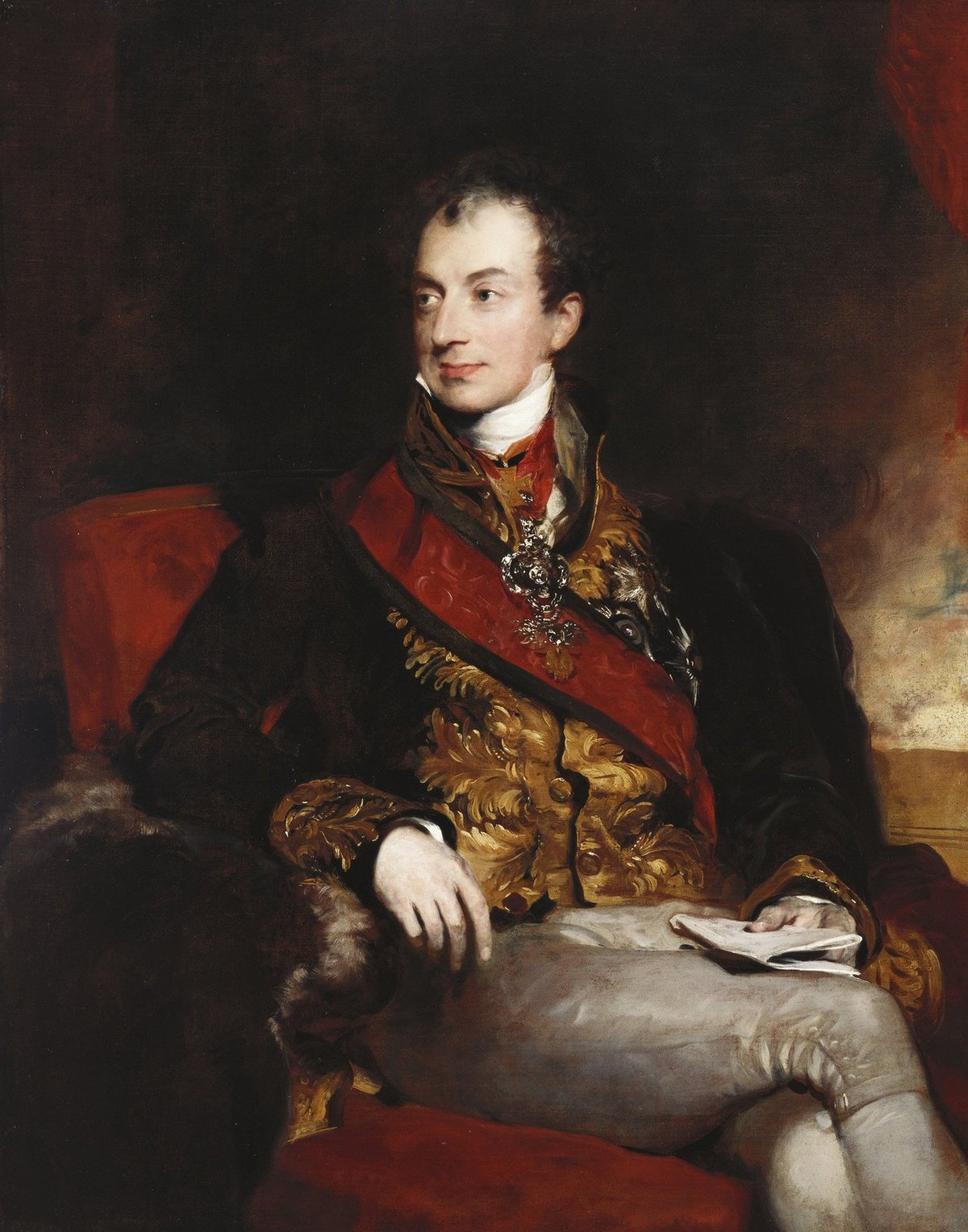
Klemens Wenzel Nepomuk Lothar von Metternich, born on May 15, 1773, in Coblenz, Austria, stands as one of the most influential and controversial statesmen in European history. His life and career were marked by a relentless pursuit of stability and power, which he achieved through a blend of diplomacy, strategic marriages, and political maneuvering. Metternich’s legacy is deeply entwined with the fate of Europe during the 19th century, particularly in the post-Napoleonic era. This article delves into the life of Klemens von Metternich, examining his age, rise to fame, and the key highlights that have defined his role in shaping European history.
Early Life and Education: A Foundation in Diplomacy
Klemens von Metternich was born into a family of minor nobility in Coblenz, a town in the Rhineland region of the Holy Roman Empire. His father, Franz George Karl von Metternich, was a diplomat and the Imperial Chamberlain, which provided young Klemens with an early exposure to the intricacies of European politics. His mother, Maria Beatrix von Kageneck, was also from a noble lineage, ensuring that Metternich was well-connected from birth.
Metternich’s education was extensive and cosmopolitan, reflecting the needs of a future diplomat. He studied at the University of Strasbourg and later at the University of Mainz, where he focused on law and diplomacy. This education equipped him with the knowledge and skills necessary to navigate the complex political landscape of Europe.
Early Career: Diplomatic Beginnings
Metternich’s early career was shaped by his father’s influence and his own ambition. In 1801, at the age of 28, he was appointed as the Austrian envoy to the Electorate of Saxony. His diplomatic acumen quickly became evident, and in 1803, he was appointed as the Austrian ambassador to the Kingdom of Prussia. It was here that Metternich began to establish his reputation as a skilled diplomat. His most notable achievement during this period was convincing Prussia to join the Third Coalition against Napoleon Bonaparte in 1805, a testament to his persuasive abilities and strategic thinking.
In 1806, Metternich was appointed as the Austrian ambassador to France, a position that placed him at the heart of European power politics. His tenure in Paris coincided with the height of Napoleon’s power, and Metternich’s ability to navigate this volatile environment further solidified his reputation as a master diplomat.
The Rise to Power: The Napoleonic Wars and Aftermath
Metternich’s influence grew significantly after the Austrian defeat at the Battle of Wagram in 1809. The defeat led to the signing of the Treaty of Schönbrunn, which imposed harsh terms on Austria. Metternich, who had been appointed as Austria’s Foreign Minister just before the battle, was tasked with negotiating these terms. Although the treaty was humiliating for Austria, Metternich’s handling of the situation impressed Emperor Francis II, who increasingly relied on him for guidance.
In 1810, Metternich orchestrated the marriage between Napoleon and Archduchess Marie Louise, the daughter of Emperor Francis II. This union was intended to solidify peace between France and Austria, but it also served Metternich’s strategic interests by binding Austria to the dominant power in Europe. However, the alliance with Napoleon was short-lived. By 1812, as Napoleon’s ambitions became increasingly untenable, Metternich began to distance Austria from France.
Metternich’s most significant contribution to European history came in the years following Napoleon’s disastrous invasion of Russia in 1812. Sensing an opportunity, Metternich brokered the Treaty of Reichenbach in 1813, aligning Austria with Russia and Prussia against France. This alliance played a crucial role in Napoleon’s eventual defeat.
The Congress of Vienna: Architect of a New Europe
The defeat of Napoleon in 1814 set the stage for the Congress of Vienna, a diplomatic gathering aimed at restoring order to a continent ravaged by years of war. Metternich was one of the principal architects of the Congress, and his influence over the proceedings was profound. The Congress sought to reestablish the balance of power in Europe, ensuring that no single nation could dominate the continent as France had under Napoleon.
Metternich’s vision for Europe was rooted in conservatism and a desire to maintain stability through a balance of power. He championed the restoration of the old monarchies and sought to suppress the burgeoning forces of nationalism and liberalism, which he viewed as threats to the established order. The outcome of the Congress of Vienna largely reflected Metternich’s ideals, with the map of Europe redrawn to create a stable geopolitical framework that would endure for much of the 19th century.
The Holy Alliance, a coalition of Russia, Prussia, and Austria, emerged from the Congress as a tool for maintaining the conservative order in Europe. Metternich played a key role in forming this alliance, which was ostensibly based on Christian principles but in practice served as a means of suppressing revolutionary movements across the continent.
The Metternich System: Conservatism and Repression
Following the Congress of Vienna, Metternich became the dominant figure in European diplomacy, a position he would hold for the next three decades. His approach, often referred to as the “Metternich System,” was characterized by a commitment to conservatism, a focus on maintaining the status quo, and a determination to suppress revolutionary movements.
Metternich’s policies were particularly evident in his handling of the German Confederation, a loose association of German states established by the Congress of Vienna. He sought to maintain Austria’s influence within the Confederation and worked tirelessly to prevent the spread of liberal and nationalist ideas that threatened the existing order. His efforts were exemplified by the Carlsbad Decrees of 1819, which imposed strict censorship and limited academic freedom in the German states.
In Italy, Metternich’s influence was similarly conservative. He supported the restoration of the old ruling families and worked to suppress the growing nationalist movements that sought to unify the Italian peninsula. His repressive measures, including the use of Austrian troops to quell uprisings, ensured that the status quo was maintained, but they also fueled resentment that would eventually lead to the revolutions of 1848.
The Revolutions of 1848: The Fall of Metternich
By the mid-19th century, the forces of nationalism and liberalism that Metternich had worked so hard to suppress began to gather momentum. The revolutions of 1848, which swept across Europe, marked the beginning of the end for Metternich’s influence.
In March 1848, revolution broke out in Vienna, driven by demands for greater political freedom and national self-determination. Metternich, who had long been the symbol of conservative repression, became the target of popular anger. Realizing that his position was untenable, Metternich resigned as Foreign Minister on March 13, 1848, and fled to England.
Metternich’s resignation marked the collapse of the conservative order he had worked to maintain for so long. The revolutions of 1848, although ultimately suppressed, signaled the beginning of a new era in European politics, one in which the ideas of nationalism and liberalism would play an increasingly central role.
Later Life and Legacy: The End of an Era
After his resignation, Metternich lived in exile in England for several years before being allowed to return to Austria in 1851. Although he was granted access to the imperial court, his influence had waned significantly. The new emperor, Franz Joseph I, was more interested in pursuing a course of modernization and reform, and Metternich’s conservative views were increasingly out of step with the times.
Klemens von Metternich died on June 11, 1859, at the age of 86. His death marked the end of an era in European diplomacy. Metternich had been one of the most powerful and influential figures in Europe for nearly half a century, and his policies had shaped the continent in profound ways.
Metternich’s legacy is complex. On one hand, he is remembered as a master diplomat who successfully preserved the balance of power in Europe for decades. His efforts to maintain stability in the aftermath of the Napoleonic Wars helped to prevent another large-scale conflict on the continent for nearly a century. On the other hand, his commitment to conservatism and his repressive policies have been criticized for stifling political and social progress in Europe.
Metternich’s life and career continue to be the subject of extensive study and debate. His role in shaping the course of European history cannot be understated, and his influence on the development of modern diplomacy remains significant. Whether viewed as a hero of stability or a villain of repression, Klemens von Metternich remains one of the most important figures in European history.
Conclusion: The Enduring Influence of Klemens von Metternich
Klemens von Metternich was a statesman of immense influence, whose policies and decisions had a profound impact on the course of European history. His commitment to conservatism, his mastery of diplomacy, and his strategic vision for Europe shaped the continent in ways that continue to be felt today. While his legacy is controversial, with critics pointing to his repressive measures and resistance to change, there is no denying the significance of his contributions to the stability of Europe in the 19th century.
As we look back on the life of Klemens von Metternich, it is clear that he was a man who understood the complexities of power and the importance of maintaining order in a turbulent world. His efforts to balance the competing interests of Europe’s great powers helped to prevent further conflicts and ensured a period of relative peace and stability in the decades following the Napoleonic Wars. In this sense, Metternich’s legacy is one of both triumph and tragedy, a reflection of the delicate balance between power, order, and freedom.


