
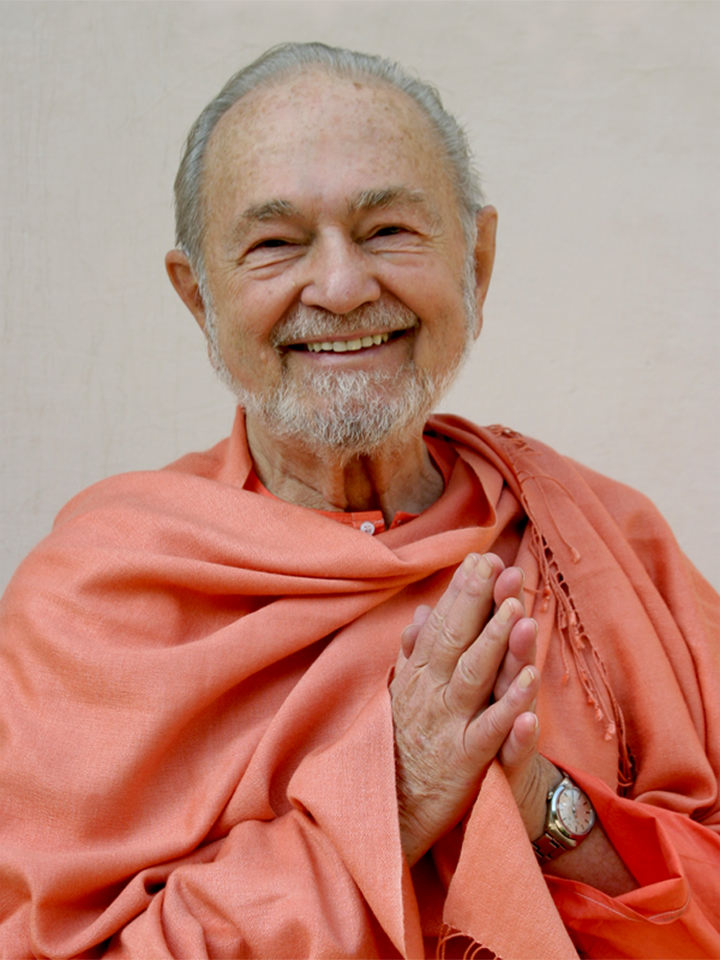
Swami Kriyananda, born James Donald Walters on May 19, 1926, in Teleajen, Romania, was a spiritual leader, author, and musician known for his deep commitment to spreading the teachings of Paramhansa Yogananda. Kriyananda’s life was marked by a relentless pursuit of spiritual truth, his efforts to build communities based on yogic principles, and his dedication to sharing the practice of Kriya Yoga with the world. His journey from a young man seeking God to becoming a revered spiritual teacher is a story of transformation, resilience, and unwavering faith.
Early Life and Spiritual Awakening
James Donald Walters was born into an American family living in Romania due to his father’s work as a geologist with the Esso Oil Company. His early life was characterized by an international upbringing, with his family moving between Romania, Switzerland, the United Kingdom, and the United States. This exposure to diverse cultures and environments laid the groundwork for Walters’ open-minded approach to life and spirituality.
As a young man, Walters was intellectually gifted and pursued higher education at Haverford College and later Brown University. However, he felt a growing discontent with the conventional path of academic success. In 1948, while in New York City, Walters encountered a book that would change his life forever—Autobiography of a Yogi by Paramhansa Yogananda. This book, which chronicled the spiritual journey of Yogananda and his teachings on Kriya Yoga, resonated deeply with Walters and ignited a spiritual awakening.
Driven by an insatiable desire to seek God and a deep connection with Yogananda’s teachings, Walters left his academic pursuits just a semester short of graduation. He embarked on a cross-country journey by bus, ultimately arriving in California, where he sought out Yogananda to become his disciple. This pivotal moment marked the beginning of a new chapter in Walters’ life, one that would see him transform into Swami Kriyananda.
Discipleship and Formation of Kriyananda
Walters met Yogananda at the Self-Realization Fellowship (SRF) temple in Hollywood and was accepted as a disciple. He moved to the SRF’s headquarters on Mount Washington in Los Angeles, where he lived with other monks and immersed himself in spiritual study and practice. Under Yogananda’s guidance, Walters was initiated into Kriya Yoga, a spiritual practice aimed at achieving direct communion with God.
In a short time, Walters rose to prominence within the SRF community, being appointed to leadership roles and given the responsibility to write articles for the SRF’s magazine. His deep dedication to the teachings of Yogananda and his ability to communicate these teachings effectively made him a respected figure within the community. Between 1948 and 1952, Walters meticulously recorded his conversations with Yogananda, capturing the essence of his master’s teachings. These notes would later be published in books such as The Essence of Self-Realization and Conversations with Yogananda, providing invaluable insights into Yogananda’s wisdom.
The death of Yogananda in 1952 was a turning point in Walters’ life. It left him with a profound sense of responsibility to carry forward his guru’s mission. He took the monastic name Kriyananda, signifying his commitment to the path of Kriya Yoga and spiritual service.
Expansion of Teachings and the Ananda Community
In the years following Yogananda’s death, Kriyananda became increasingly active in spreading the teachings of Kriya Yoga. He traveled extensively, lecturing, teaching, and writing books on spirituality. His outreach extended beyond the United States to countries such as Canada, Mexico, the United Kingdom, France, Switzerland, Italy, Australia, Fiji, New Zealand, and India.
However, Kriyananda’s journey was not without challenges. In 1960, he was elected Vice President of the Board of Directors of the SRF, but by 1962, he was asked to resign from the organization. The reasons cited included allegations of personal ambition and attempting to position himself as a new guru, charges that Kriyananda vehemently denied. This period of turmoil did not deter him; instead, it propelled him to establish his own spiritual community.
In 1968, near Nevada City, California, Kriyananda founded the Ananda World Brotherhood Colony, a spiritual community based on Yogananda’s vision of cooperative communities where individuals could live a simple life dedicated to spiritual growth. The community grew, and Kriyananda established several other Ananda communities and centers around the world, including The Expanding Light Yoga and Meditation Retreat.
Kriyananda’s efforts extended to the field of education as well. In 1973, he developed the Education for Life system, which focused on the holistic development of children, emphasizing spiritual and moral education alongside academic learning. Schools based on this system were established in several locations, including Seattle, Palo Alto, and Portland.
Challenges and Controversies
The 1980s and 1990s were tumultuous times for Kriyananda. In 1981, he entered into marriage, which was unconventional for a swami, leading to controversy within the spiritual community. He renounced his monastic vows publicly during his second marriage in 1985 and reverted to using his birth name, James Donald Walters. These actions led to criticism and confusion among his followers and peers.
However, after his second divorce, Kriyananda returned to his monastic life, resuming his vows and the name Kriyananda in 1995. This period of his life reflects the complexities and challenges of living a spiritual path while navigating personal and societal expectations.
Despite these challenges, Kriyananda continued his spiritual work with renewed vigor. He moved to Italy in 1996, where he established the Ananda center in Assisi, Umbria, which became a hub for his teachings in Europe. In 2003, he relocated to India, where he worked to spread the teachings of Yogananda and establish a new Ananda community in Gurgaon, near Delhi.
Later Years and Legacy
Kriyananda’s later years were marked by his efforts to adapt and expand the teachings of Yogananda for a new era, which he believed was the Dwapara Yuga—a time of spiritual awakening and change. He introduced reforms to the monastic order, including allowing swamis to marry and requiring that new swamis be ordained by at least three others, rather than just one.
In addition to these reforms, Kriyananda introduced the concept of the Nayaswami, meaning “new swami,” to reflect the evolving nature of spiritual life in the modern world. These changes were part of his broader vision to make spirituality more accessible and relevant to contemporary society.
Kriyananda continued to be active in his mission until his final years. He appeared regularly on Indian television channels such as Sadhna TV and Aastha TV, where he reached millions of viewers with his teachings on meditation, yoga, and spiritual living. In 2009, at the age of 83, Kriyananda moved to Pune, India, where he established another spiritual community and continued his work.
Swami Kriyananda passed away on April 21, 2013, in his home in Assisi, Italy. His legacy lives on through the Ananda communities worldwide, the numerous books he authored, and the thousands of individuals who have been inspired by his teachings. His remains were later taken to Ananda Village, where they were interred, ensuring that his spirit continues to be a guiding light for those on the spiritual path.
Conclusion
Swami Kriyananda’s life was a testament to his unwavering commitment to spiritual growth and service. From his early days as James Donald Walters to his transformation into a global spiritual leader, Kriyananda’s journey was marked by a deep dedication to the teachings of Paramhansa Yogananda and the practice of Kriya Yoga. Despite the challenges and controversies he faced, Kriyananda’s contributions to spiritual communities, education, and the spread of yoga and meditation practices have left a lasting impact on the world.
Kriyananda’s life highlights the power of perseverance, faith, and the pursuit of spiritual truth. His legacy continues to inspire those seeking a deeper connection with the divine and a life of purpose and fulfillment. As we reflect on Kriyananda’s life and teachings, we are reminded of the timeless wisdom that transcends cultural and temporal boundaries, guiding us toward a higher understanding of ourselves and our place in the universe.


