
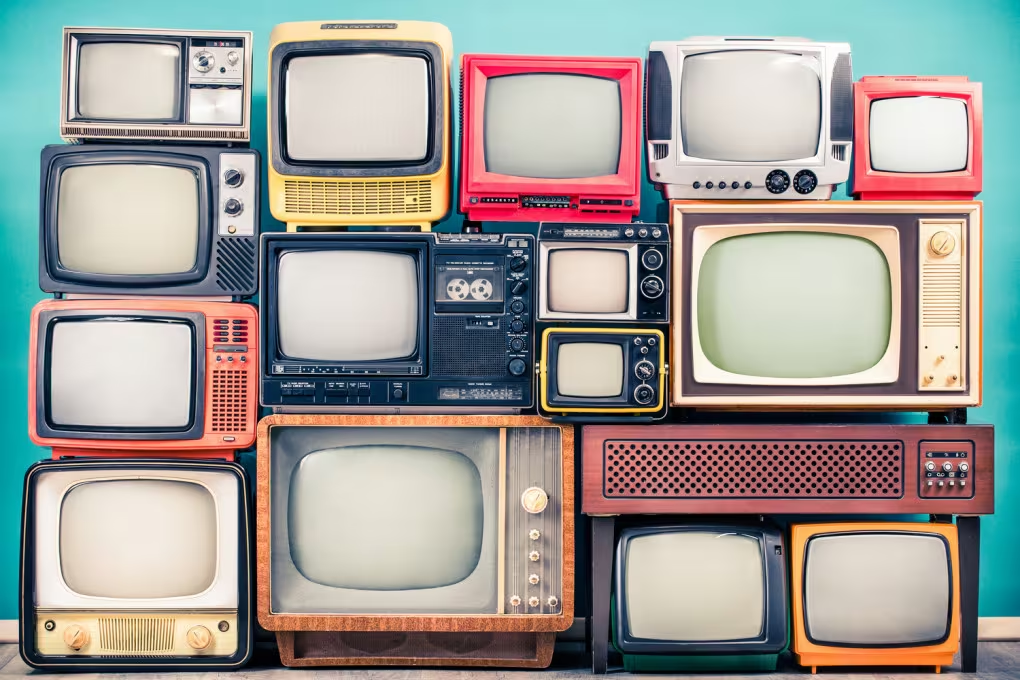
Television, or “La Televisione” as it is known in Italian, is one of the most influential mediums in the history of communication. From its early beginnings as an experimental technology to its current status as a global force in entertainment, education, and news, television has played a critical role in shaping modern society. This article explores the history, impact, and evolution of television, providing detailed insights and explanations that highlight its significance.
The Origins of Television: A Journey from Experimentation to Reality
The story of television begins much earlier than many might expect. The roots of this revolutionary technology can be traced back to 1817, when Swedish chemist Jöns Jacob Berzelius discovered selenium, a chemical element with unique properties. Selenium’s ability to conduct electricity increases with exposure to light, a phenomenon known as photoconductivity. This discovery laid the groundwork for future innovations in the field of electronic imaging.
In 1875, American inventor G.R. Carey took the first significant step toward creating a primitive form of television. He constructed a device that used photoelectric cells to capture and transmit images. Carey’s invention featured a support with multiple photoelectric cells connected to an array of light bulbs. By focusing the device on a subject and using a lens, the cells could trigger the bulbs to light up in a pattern that roughly outlined the subject. Although rudimentary, this early experiment demonstrated the potential for transmitting visual information electronically.
The Pioneers of Television Technology
As the 19th century gave way to the 20th, numerous inventors and scientists built upon these early experiments, gradually refining the technology that would eventually become television. One of the most significant breakthroughs occurred in 1929 when Russian-born inventor Vladimir Zworykin, working at Westinghouse Laboratories in Pittsburgh, developed the cathode ray tube (CRT). This invention was crucial in the transition from experimental imaging devices to a practical television system.
Zworykin’s CRT, also known as the iconoscope, was a type of camera tube that converted light into an electronic signal. This development was revolutionary because it allowed for the electronic transmission of images, mimicking the way the human eye perceives the world. Four years later, in 1933, Zworykin introduced the kinescope, a device that could reproduce images on a screen. These innovations were fundamental in the creation of television as we know it today.
The Birth of Television Broadcasting
The 1930s saw the first television broadcasts, a monumental step forward in the evolution of the medium. In 1935, Germany launched the first regular television program, marking the beginning of the medium’s public availability. However, it was in the United Kingdom in 1936 that television truly began to take shape as a regular service. The British Broadcasting Corporation (BBC), a public entity by law, initiated the world’s first regular high-definition (for the time) television service. The BBC’s early programming included news, drama, and live events, setting the standard for television content.
In the United States, television was still in its infancy during this period, with experimental broadcasts beginning in the late 1930s. However, it wasn’t until after World War II that television became a mass medium in America. The war had accelerated technological advancements, and by the late 1940s, commercial television networks were established, including NBC, CBS, and ABC.
The Arrival of Television in Italy
Italy’s journey into the world of television began later than in the United States and the United Kingdom. The country’s first foray into television broadcasting occurred on April 12, 1952, with the inauguration of a production center in Milan, located on Corso Sempione. This center was equipped with two studios and a television transmitter, laying the foundation for what would become a significant cultural force in Italy.
On January 3, 1954, RAI (Radiotelevisione Italiana), the Italian public broadcasting company, officially began regular television broadcasts. This marked the beginning of a new era in Italian media, with RAI playing a central role in the cultural and social development of post-war Italy. The inaugural program was a broadcast of Carlo Goldoni’s play “L’osteria della posta,” which signaled the start of a long and storied tradition of Italian television.
The Golden Age of Television
The 1950s and 1960s are often referred to as the “Golden Age of Television,” particularly in the United States. This period saw the rise of television as the dominant form of entertainment and information, surpassing radio and print media. In the U.S., television became the primary medium through which people received news, enjoyed entertainment, and connected with the broader world.
Popular shows like “I Love Lucy,” “The Twilight Zone,” and “The Ed Sullivan Show” became cultural touchstones, drawing millions of viewers each week. Television news also grew in importance, with iconic broadcasts such as Edward R. Murrow’s reports on the McCarthy hearings and the coverage of the Kennedy assassination in 1963. These programs demonstrated the power of television to inform and influence public opinion.
In Italy, television played a similar role in shaping the post-war culture. RAI’s programming included a mix of drama, variety shows, and news, which became integral to Italian life. Shows like “Lascia o Raddoppia?” and “Canzonissima” became cultural phenomena, drawing large audiences and becoming a part of the national conversation.
Television as a Cultural Force
As television matured, it became more than just a medium for entertainment; it became a powerful cultural force. Television shows, news broadcasts, and advertisements all contributed to shaping societal values, trends, and opinions. The medium’s ability to reach vast audiences made it a tool for both cultural dissemination and political influence.
In the United States, the 1960s and 1970s saw television play a pivotal role in the Civil Rights Movement, the Vietnam War, and the Watergate scandal. Coverage of these events brought them into the living rooms of Americans, influencing public perception and political discourse. The famous 1960 presidential debates between John F. Kennedy and Richard Nixon, which were televised, are often cited as a turning point in American politics, demonstrating the power of television to sway public opinion.
In Italy, television also played a significant role in the country’s social and political landscape. RAI, as the national broadcaster, was instrumental in promoting Italian culture and language, particularly through educational programs aimed at reducing illiteracy. Additionally, television served as a platform for political discourse, with televised debates and news programs becoming key sources of information for the Italian public.
The Evolution of Television Technology
The technology behind television has evolved significantly since its inception. The transition from black-and-white to color broadcasts in the 1960s was a major milestone, enhancing the viewing experience and expanding the medium’s visual possibilities. The introduction of remote controls, video recording devices, and later, cable television, further transformed the way people consumed television content.
The late 20th and early 21st centuries brought even more dramatic changes. The advent of digital television, high-definition (HD) broadcasting, and flat-screen displays revolutionized the viewing experience. Digital technology allowed for clearer images, better sound quality, and the ability to broadcast multiple channels simultaneously. High-definition television (HDTV) provided viewers with a much sharper and more vibrant picture, making television content more immersive than ever before.
In the 21st century, the rise of the internet and streaming services has once again transformed the television landscape. Platforms like Netflix, Hulu, and Amazon Prime Video have disrupted traditional television models, offering viewers the ability to watch what they want, when they want, without the constraints of broadcast schedules. This shift has led to the phenomenon of “binge-watching,” where viewers consume entire seasons of a show in one sitting, fundamentally changing the way television is consumed.
Television in the Modern Era
Today, television remains a central part of global culture, but it faces new challenges and opportunities in the digital age. The rise of streaming services has led to a decline in traditional television viewership, particularly among younger audiences. However, television has adapted by embracing new technologies and distribution methods.
Smart TVs, which integrate internet connectivity and streaming capabilities, have become increasingly popular, allowing viewers to access a wide range of content from traditional broadcast channels to online streaming services. This convergence of television and internet technology has blurred the lines between the two, creating a more dynamic and interactive viewing experience.
Despite the challenges posed by digital media, traditional television still holds significant influence, particularly in live events such as sports, news, and reality shows. The global appeal of events like the Super Bowl, the Olympic Games, and the Eurovision Song Contest demonstrates the enduring power of television to bring people together and create shared cultural experiences.
The Future of Television
As we look to the future, television is likely to continue evolving in response to technological advancements and changing viewer habits. The integration of artificial intelligence, virtual reality, and augmented reality into television programming could create entirely new forms of content and interactive experiences. Additionally, the continued growth of streaming services and on-demand viewing will likely drive further innovation in content creation and distribution.
However, the fundamental appeal of television—its ability to tell stories, inform, and entertain—will remain unchanged. Whether through traditional broadcasts or digital platforms, television will continue to be a central part of our lives, shaping how we see the world and connecting us to a broader global community.
Conclusion: The Enduring Legacy of Television
Television, or “La Televisione,” has come a long way since its early days as an experimental technology. From the discovery of selenium in the 19th century to the rise of digital streaming in the 21st, television has continually adapted to meet the needs and desires of its audience. Along the way, it has become one of the most influential and enduring mediums in the history of communication.
As we move further into the digital age, television’s role in society may continue to evolve, but its impact on culture, politics, and daily life is undeniable. The “magic box” that once brought the world into our living rooms now connects us in ways that early pioneers like Carey and Zworykin could have only imagined. As we continue to watch, learn, and be entertained by this remarkable medium, television’s legacy as a cultural and technological force will undoubtedly endure for generations to come.


