
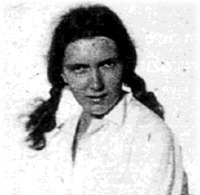
Lalla Romano, born Graziella Romano on November 11, 1906, in Demonte, Italy, is one of the most distinguished figures in Italian literature. A writer, poet, journalist, and painter, Romano’s multifaceted career spanned several decades, leaving a profound impact on Italian culture. Her works, known for their introspective nature and exploration of human emotions, continue to be celebrated for their depth and elegance. In this article, we explore the life, age, fame, and key highlights of Lalla Romano, delving into the nuances of her literary contributions, her influence on Italian literature, and her enduring legacy.
Early Life and Educational Background
Lalla Romano was born into an old and respected Piedmontese family. Her maternal lineage included notable figures, such as her great-uncle, the famous mathematician Giuseppe Peano. This intellectual heritage undoubtedly influenced Romano’s upbringing, fostering a deep appreciation for education and the arts.
Romano’s early years were marked by a profound interest in the arts, particularly painting. Even as a child, she showed a remarkable talent for visual expression, a passion that would later manifest in both her writing and her painting. She completed her classical studies at the Liceo Silvio Pellico in Cuneo and subsequently enrolled at the University of Turin, where she studied under the tutelage of prominent intellectuals, including Lionello Venturi, Annibale Pastore, and Ferdinando Neri.
Her time at the University of Turin was transformative. It was here that Romano was introduced to a circle of influential contemporaries, such as Mario Soldati, Franco Antonicelli, Carlo Dinisotti, Arnaldo Momigliano, and Cesare Pavese. These relationships played a crucial role in shaping her literary style and intellectual pursuits. Romano was particularly influenced by Pavese, who left a lasting impression on her both personally and professionally. She described him in her diary as “a young man with glasses, pale, thin,” a portrayal that hints at the deep admiration and curiosity she had for him.
Early Literary and Artistic Pursuits
Lalla Romano’s academic journey was not limited to literature alone. On the advice of her mentor, Lionello Venturi, she also enrolled in the painting school of Felice Casorati and spent time in the studio of painter Giovanni Guarlotti. This period of artistic exploration was critical in developing her unique style, which blended visual and literary art forms. Romano’s frequent trips to Paris during this time exposed her to the vibrant cultural life of the Latin Quarter, further enriching her artistic sensibilities.
In 1928, Romano graduated with honors from the University of Turin, submitting a thesis on the poets of the “Dolce Stil Novo,” a style of Italian poetry from the late 13th century. After completing her studies, she briefly worked at a library in Cuneo before moving to Turin with her husband, Innocenzo Monti, and their son. While in Turin, she taught art history at a middle school and continued to nurture her passion for poetry and painting. Some of her early artworks were even exhibited in collective shows, showcasing her talent in visual arts.
World War II and Resistance Involvement
The outbreak of World War II was a turning point in Lalla Romano’s life. During the war, she moved back to Cuneo, where she became actively involved in the Italian Resistance. Romano joined the “Giustizia e Libertà” movement, led by Livio Bianco, and played a significant role in the “Gruppi di Difesa della Donna,” an organization dedicated to defending women’s rights during the war. Her involvement in the Resistance was not just political but also deeply personal, as she sought to protect her family and contribute to the fight against fascism.
It was during this tumultuous period that Romano received encouragement from the esteemed poet Eugenio Montale, who praised her poetry and urged her to publish her work. In 1941, she made her literary debut with a collection of poems published by Frassinelli after being initially rejected by Einaudi. This rejection, however, only fueled her determination. In a bold move, Romano sent a freshly printed copy of her book to Giulio Einaudi, inscribing it with the words, “To those who did not want to publish this book.” This defiance would become a hallmark of her literary career, as she consistently pushed boundaries and challenged the status quo.
Post-War Years and the Rise to Literary Fame
After the war, Lalla Romano relocated to Milan to reunite with her husband, who had become a senior official at Banca Commerciale Italiana. In Milan, Romano resumed her teaching career and began to explore prose writing. The 1950s marked the beginning of her journey as a novelist, with the publication of several significant works.
Her first novel, “Maria,” published in 1953, was met with critical acclaim. The novel, which explores the complex relationship between a servant and her mistress, was lauded by literary critic Gianfranco Contini as a small masterpiece. However, her friend Cesare Pavese offered a harsher critique, expressing his frustration with what he perceived as a focus on mundane domestic stories. Despite this, “Maria” established Romano as a serious literary voice in post-war Italy.
Romano’s second novel, “Tetto Murato,” published in 1957, further solidified her reputation. The novel tells the story of Ada, a woman of strong moral character, and delves into themes of personal integrity and societal expectations. Around this time, Romano also published a collection of poems titled “L’autunno” and a travel diary, “Diario di Grecia,” reflecting her diverse literary interests.
However, it was the publication of her novel “Le parole tra noi leggere” in 1969 that brought Lalla Romano widespread recognition. The novel, which won the prestigious Premio Strega, is a deeply personal exploration of Romano’s relationship with her son, a rebellious and nonconformist young man. The title, taken from a verse by Montale, captures the delicate and often strained communication between mother and son. The novel resonated with readers and critics alike, particularly as it addressed themes of generational conflict and youth rebellion, which were highly relevant in the social context of the late 1960s.
Later Career and Contributions to Italian Literature
Following the success of “Le parole tra noi leggere,” Lalla Romano continued to produce a steady stream of literary works. In 1973, she published “L’ospite,” a novel that further explored the complexities of human relationships. Throughout the 1970s and 1980s, Romano also contributed to various Italian newspapers, including “Il Giorno,” “Il Corriere della Sera,” and “Il Giornale Nuovo.” Her journalistic work reflected her keen observations on contemporary society, culture, and politics.
Romano’s literary output during this period was characterized by a deepening introspection and a focus on the inner lives of her characters. Her writing, often autobiographical in nature, was marked by a quiet intensity and a meticulous attention to detail. Romano’s prose is celebrated for its clarity, precision, and emotional depth, qualities that have earned her a lasting place in the canon of Italian literature.
Despite facing significant health challenges in her later years, including progressive blindness, Romano remained committed to her craft. She continued to write with the assistance of her companion, Antonio Ria, who provided unwavering support as her condition worsened. Romano’s final work, “Diario ultimo,” was left unfinished at the time of her death in 2001 but was later published posthumously by Ria in 2006, commemorating the centenary of her birth.
Personal Life and Legacy
Lalla Romano’s personal life was marked by a deep intellectual curiosity and a commitment to both her family and her artistic pursuits. Her marriage to Innocenzo Monti, though private, was a source of stability and support throughout her life. Together, they navigated the challenges of war, political upheaval, and the demands of raising a family.
Romano’s legacy extends beyond her literary achievements. She is remembered as a pioneering figure who challenged traditional gender roles and expectations in both her personal life and her writing. Her involvement in the Italian Resistance and her contributions to feminist discourse are integral to understanding her broader impact on Italian culture.
Romano’s works continue to be studied and celebrated for their exploration of themes such as identity, memory, and the complexities of human relationships. Her ability to convey profound emotional truths through simple, yet evocative language has influenced generations of writers and readers.
Conclusion
Lalla Romano’s life and career are a testament to the power of perseverance, intellectual curiosity, and artistic integrity. From her early days as a painter and poet to her emergence as one of Italy’s most respected novelists, Romano’s contributions to literature and culture are undeniable. Her works, rich in emotional depth and historical context, offer a window into the complexities of the human experience and continue to resonate with readers today.
As we reflect on Romano’s legacy, it is clear that her influence extends far beyond the confines of her own time. She remains a vital figure in Italian literature, a woman who used her voice to explore the nuances of life, love, and identity. Lalla Romano’s star continues to shine brightly, ensuring that her place in literary history is both secure and celebrated.


