
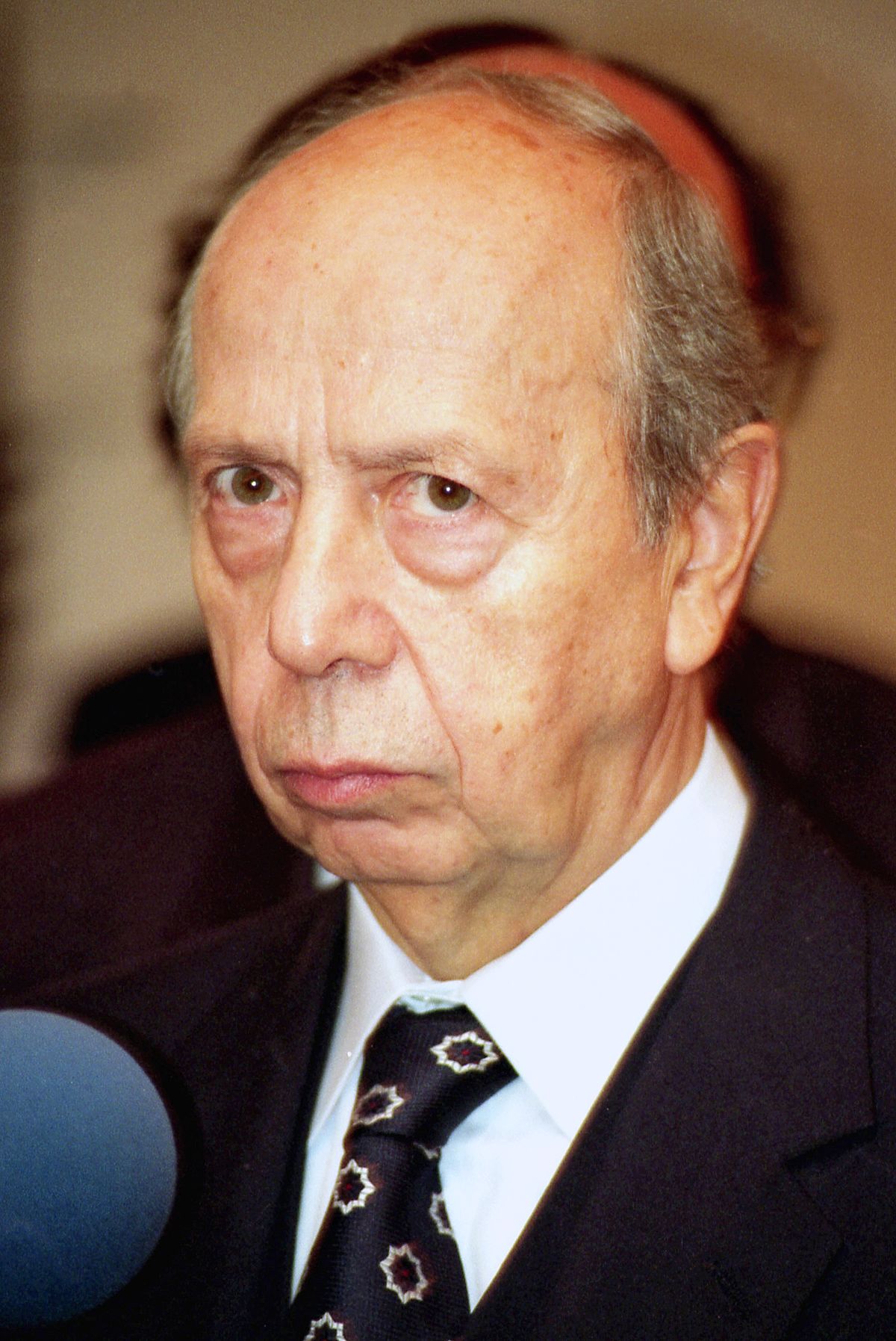
Lamberto Dini, born on March 1, 1931, in Florence, Italy, is a prominent Italian economist and politician who has played a crucial role in shaping Italy’s economic and political landscape over several decades. With a career that spans academia, international finance, and national politics, Dini is perhaps best known for his tenure as Prime Minister of Italy and his pivotal role in economic reforms, particularly in the pension sector. This article delves into the life, career, and achievements of Lamberto Dini, exploring his rise to prominence and his enduring influence on Italian and European affairs.
Early Life and Education
Lamberto Dini was born into a modest family in Florence. His father worked as a fruit vendor, which meant that Dini’s upbringing was far from privileged. However, his parents placed a strong emphasis on education, and Dini excelled academically from a young age. He completed his secondary education in Florence with distinction before enrolling at the University of Florence, where he pursued a degree in economics and commerce. He graduated in 1954, laying the foundation for a career that would eventually see him become one of Italy’s most respected economists.
Dini’s academic ambitions took him beyond Italy. After completing his degree, he moved to the United States to further his studies at the University of Minnesota and the University of Michigan. These experiences in the U.S. not only deepened his understanding of economics but also exposed him to the global financial system, which would prove invaluable in his later career.
Career in International Finance
Dini’s career in finance began in earnest when he joined the International Monetary Fund (IMF) in 1959. His work at the IMF marked the start of a long and distinguished career in international finance. By 1976, Dini had risen to the position of Executive Director for Italy, Greece, Malta, and Portugal, reflecting his expertise and the trust placed in him by the Italian government.
During his time at the IMF, Dini was involved in numerous key negotiations and financial programs, helping to stabilize economies and manage debt crises. His work earned him a reputation as a highly capable economist with a deep understanding of both macroeconomic theory and the practicalities of international finance.
Leadership at the Bank of Italy
In 1979, Dini returned to Italy to take up a senior position at the Bank of Italy. Appointed by then-Prime Minister Francesco Cossiga, Dini became the Director General of the Bank, succeeding Carlo Azeglio Ciampi, who was appointed Governor of the Bank. Dini’s role at the Bank of Italy placed him at the heart of the country’s economic policy-making during a period of significant economic challenges, including high inflation and the need for structural reforms.
Dini’s tenure at the Bank of Italy was marked by his efforts to stabilize the Italian economy and implement policies that would support sustainable growth. His expertise in international finance also proved valuable as Italy navigated its role within the broader European economic framework.
From 1993 to 1994, Dini also served as one of the vice-presidents of the Bank for International Settlements (BIS), further cementing his status as a key figure in global finance. His leadership during this period was crucial as Europe grappled with the economic implications of the Maastricht Treaty and the preparations for the introduction of the Euro.
Transition to Politics and Ministerial Role
Lamberto Dini’s transition from finance to politics came in the early 1990s, a period of significant political upheaval in Italy. In 1994, following the collapse of the First Republic and the rise of Silvio Berlusconi, Dini was appointed Minister of the Treasury in Berlusconi’s first government. His appointment was seen as a move to bring technocratic expertise into a government that faced immense economic challenges.
As Minister of the Treasury, Dini played a key role in managing Italy’s public finances, working to reduce the budget deficit and stabilize the economy. However, Berlusconi’s government was short-lived, and when it collapsed in early 1995, Dini was tasked with forming a new government.
Prime Minister of Italy
In January 1995, President Oscar Luigi Scalfaro asked Lamberto Dini to form a caretaker government to lead Italy through a period of political instability. Dini accepted the challenge, forming a government composed entirely of technocrats and non-parliamentary ministers. His primary mandate was to stabilize the country and prepare it for new elections, but his government also achieved significant reforms, particularly in the pension system.
One of Dini’s most notable achievements as Prime Minister was the reform of Italy’s pension system. The Dini Pension Reform of 1995 transitioned the country’s pension scheme from a retributive system, where pensions were based on final salary, to a contributive system, where pensions are calculated based on contributions made throughout a worker’s career. This reform was crucial in addressing the long-term sustainability of Italy’s pension system and was seen as a necessary step to ensure the country’s economic stability.
Dini’s government, while not without its challenges, was largely successful in achieving its goals. It remained in power until the general elections in April 1996, after which Dini returned to a more traditional political role.
Political Career Post-Premiership
Following his tenure as Prime Minister, Lamberto Dini remained an influential figure in Italian politics. In the 1996 general elections, Dini aligned himself with the center-left coalition known as “L’Ulivo,” led by Romano Prodi. He ran with his own political list, the “Lista Dini,” and was elected to the Italian Parliament.
Dini served as Minister of Foreign Affairs in the Prodi government and in subsequent governments led by Massimo D’Alema and Giuliano Amato. His time as Foreign Minister was marked by Italy’s active role in international diplomacy, particularly within the European Union and in the Balkans, where Italy played a key role in the peace process following the Yugoslav Wars.
Dini’s experience and expertise in both finance and international relations made him a valuable asset in these governments. He was involved in shaping Italy’s foreign policy during a period of significant change, as the European Union expanded and Italy sought to assert its influence on the global stage.
In 2001, following the election of Silvio Berlusconi’s center-right coalition, Dini was elected to the Italian Senate. During this period, he served as Vice President of the Senate and was actively involved in legislative processes, particularly those related to foreign affairs and economic policy.
Role in the European Union and Legacy
Lamberto Dini’s influence extended beyond Italy, particularly through his work in the European Union. From 2002 to 2003, he was a delegate to the Convention on the Future of Europe, which was responsible for drafting the Constitution of the European Union. His contributions to this process were significant, particularly in the areas of economic governance and the integration of EU policies.
Dini’s political career continued into the mid-2000s, during which he remained a central figure in Italian politics. He was re-elected to the Senate in 2006 as part of the “Margherita” group and served as President of the Senate’s Foreign Affairs Committee. However, his political alignment shifted over time. Initially supportive of the formation of the Democratic Party (PD), Dini eventually distanced himself from the center-left and founded a new political group, the “Liberal Democrats,” alongside Natale D’Amico, Daniela Melchiorre, Giuseppe Scalera, and Italo Tanoni.
Dini’s political journey is a testament to his ability to adapt and respond to the changing political landscape of Italy. His legacy is marked by his role in key economic reforms, his leadership during a period of political instability, and his contributions to both Italian and European politics.
Personal Life and Controversies
Lamberto Dini’s personal life, like his professional career, has been the subject of public interest. He is married to Donatella Pasquali Zingone, who inherited significant wealth from her first husband, a prominent businessman. However, their marriage has not been without controversy. In 2007, Donatella was convicted of fraudulent bankruptcy related to a financial scandal involving the company SIDEMA Srl. Although she was sentenced to two years and four months in prison, she did not serve time due to an amnesty granted under the 2006 indult law.
Despite this scandal, Dini’s reputation as a technocrat and his contributions to Italy’s political and economic stability remain largely intact. His expertise and leadership have left a lasting impact on Italy’s financial and political institutions.
Conclusion
Lamberto Dini’s career is a remarkable example of how expertise in economics and finance can translate into effective political leadership. From his early days at the IMF to his role as Prime Minister of Italy, Dini demonstrated a commitment to public service and a deep understanding of the complexities of both national and international finance. His reforms, particularly in the pension system, have had a lasting impact on Italy, ensuring the sustainability of the country’s social welfare programs.
As a politician, Dini navigated Italy through some of its most challenging periods, providing stability and guiding the country towards economic reform. His influence extended beyond Italy’s borders, contributing to the development of the European Union and shaping Italy’s role in international affairs.
Today, Lamberto Dini is remembered as a key figure in Italy’s post-war history, a leader who brought technocratic expertise to the highest levels of government and who left a legacy of reform and stability.


