
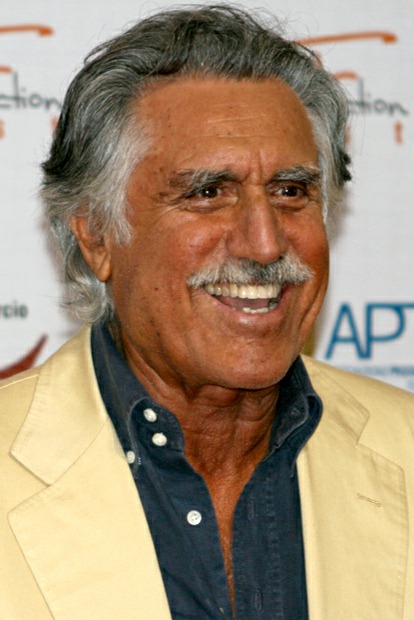
Lando Buzzanca, born Gerlando Buzzanca on August 24, 1935, in Palermo, Italy, was a prominent actor who became one of the defining faces of Italian cinema, particularly known for his contributions to the genre of “commedia all’italiana” (Italian-style comedy). His career, which spanned several decades, was marked by a distinctive blend of humor, satire, and a keen portrayal of the Italian everyman. Buzzanca’s ability to embody the archetype of the “average Italian” from the southern regions during Italy’s economic boom made him a beloved figure both in Italy and abroad.
Early Life and Beginnings
Born into a modest family in Palermo, Lando Buzzanca’s early life was far removed from the glitz and glamour of the film industry. He grew up in a traditional Sicilian environment, which later influenced his portrayal of various stereotypical characters from the region. His interest in acting began early, and at the age of 16, he left his hometown and moved to Rome to pursue his dream of becoming an actor.
The move to Rome was not easy for the young Buzzanca. He initially took on various odd jobs, including working as a waiter and a mover, while trying to break into the film industry. His persistence paid off when he began securing minor roles as an extra in films. These small roles, while not glamorous, provided Buzzanca with invaluable experience and exposure to the film industry.
Breakthrough and Early Success
Buzzanca’s breakthrough came in the early 1960s when he started gaining recognition for his comedic talent and his ability to portray the “average Italian.” His first significant role was in Pietro Germi’s Divorzio all’italiana (Divorce Italian Style, 1961), a film that won an Academy Award for Best Original Screenplay. Although Buzzanca’s role was not the lead, his performance caught the attention of directors and audiences alike.
Following this, Buzzanca starred in La parmigiana (1963), directed by Antonio Pietrangeli, and Sedotta e abbandonata (1964), also directed by Pietro Germi. In these films, Buzzanca began to hone the persona that would make him famous: the southern Italian man grappling with the complexities of modern life, often in humorous or exaggerated situations. His portrayal of the Italian everyman—provincial, often naive, but always resilient—resonated with audiences, particularly during a time when Italy was experiencing significant social and economic changes.
The Height of Fame: The 1960s and 1970s
The 1960s and 1970s were the peak years of Lando Buzzanca’s career. During this period, he became synonymous with the genre of commedia all’italiana, a style of film that combined humor with social commentary, often focusing on the contradictions and challenges of Italian society during its post-war transformation.
Buzzanca starred in a series of successful films that cemented his status as a leading actor in Italian cinema. Films like Don Giovanni in Sicilia (1967), Il merlo maschio (1971), and Homo Eroticus (1971) showcased his talent for blending comedy with deeper, often satirical, reflections on Italian masculinity, sexuality, and social norms.
One of Buzzanca’s most iconic roles was in Il merlo maschio, directed by Pasquale Festa Campanile. In this film, Buzzanca played the role of a man obsessed with photographing his wife, played by Laura Antonelli, in compromising situations. The film was a success both in Italy and abroad, and it became one of the defining examples of the “commedia sexy all’italiana” subgenre, which combined erotic elements with humor.
Buzzanca’s ability to parody and critique the societal expectations of Italian men made him a unique figure in Italian cinema. His characters often found themselves caught between traditional values and the rapidly changing mores of the 1960s and 1970s. This tension was a central theme in many of his films, making his work not only entertaining but also a reflection of the broader cultural shifts occurring in Italy at the time.
International Recognition
Lando Buzzanca’s appeal was not limited to Italy. His films found audiences in various countries, including France, Spain, Greece, Switzerland, Japan, and Israel. In these countries, Buzzanca became an emblem of the Italian “provincialotto” (provincial man), a character who was charming, somewhat naive, but ultimately endearing.
His portrayal of the quintessential Italian man—elegant yet slightly bumbling, virile yet sensitive—resonated with international audiences who were fascinated by the stereotypes and realities of Italian life. Buzzanca’s success abroad highlighted the universality of his characters and the themes explored in his films, such as the clash between tradition and modernity, the absurdities of social conventions, and the complexities of human relationships.
Notable Roles and Collaborations
Throughout his career, Lando Buzzanca worked with some of the most renowned directors in Italian cinema. His collaborations with directors like Pietro Germi, Dino Risi, Antonio Pietrangeli, and Lucio Fulci led to some of the most memorable performances in his filmography.
In Sedotta e abbandonata (1964), Buzzanca played the role of the inept brother of Stefania Sandrelli’s character, showcasing his ability to infuse humor into tragic or dramatic situations. This film, directed by Pietro Germi, is considered one of the masterpieces of Italian cinema, and Buzzanca’s performance contributed significantly to its success.
Another notable role was in All’onorevole piacciono le donne (1972), directed by Lucio Fulci. In this satirical comedy, Buzzanca portrayed a character based on the real-life Italian politician Emilio Colombo, bringing his trademark humor and mimicry to the role. His ability to caricature real-life figures added a layer of social commentary to his performances, making them not only entertaining but also thought-provoking.
Buzzanca’s versatility as an actor was evident in his ability to switch between different genres and roles. Whether playing the astute yet foolish character in L’arbitro (1974), the sexually frustrated professor in L’uccello migratore (1972), or the prehistoric man in Quando le donne avevano la coda (1970), Buzzanca consistently brought a unique blend of physical comedy, sharp wit, and emotional depth to his roles.
Decline and Later Career
As the 1980s progressed, the popularity of the commedia all’italiana genre began to wane, and with it, Buzzanca’s star power also diminished. However, he continued to work in film and television, taking on roles that allowed him to explore different aspects of his craft.
In the late 1980s and 1990s, Buzzanca appeared in films like Secondo Ponzio Pilato (1988) and Il popolo degli uccelli (1999). These roles, while not as commercially successful as his earlier work, demonstrated his continued commitment to acting and his ability to adapt to changing trends in the film industry.
Buzzanca also made a successful transition to television, where he appeared in various TV movies and series. His performance in the TV movie Mio Figlio (2005), directed by Luciano Odorisio, earned him praise and introduced him to a new generation of viewers. Despite the changes in the industry and his advancing age, Buzzanca remained a beloved figure in Italian entertainment.
Legacy and Death
Lando Buzzanca passed away on December 18, 2022, in Rome, at the age of 87. His death marked the end of an era for Italian cinema, as he was one of the last surviving stars of the golden age of commedia all’italiana. His legacy, however, lives on through the numerous films and television shows that continue to entertain and inspire audiences.
Buzzanca’s career is a testament to the enduring appeal of humor and satire in exploring the complexities of society. His characters, often caught between the old and the new, the traditional and the modern, reflected the challenges faced by many Italians during a period of rapid change. His ability to portray these struggles with humor and empathy made him a beloved figure not only in Italy but also around the world.
Today, Lando Buzzanca is remembered as one of the greats of Italian cinema—a versatile actor who brought to life the joys, sorrows, and absurdities of the Italian experience. His work continues to be celebrated for its wit, charm, and insight into the human condition, ensuring that his contributions to cinema will not be forgotten.


