
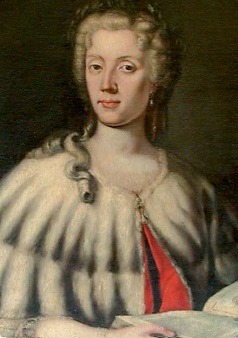
Introduction
Laura Bassi, born Laura Maria Caterina Bassi Veratti on October 29, 1711, in Bologna, Italy, was a pioneering physicist and academic. She is celebrated as one of the first women in the world to earn a university chair and one of Italy’s first female graduates. Her remarkable achievements in a male-dominated field during the 18th century highlight her exceptional intellect and determination. This article delves into Laura Bassi’s life, academic journey, and enduring legacy, providing a comprehensive overview of her contributions to science and education.
Early Life and Education
Childhood and Family Background
Laura Bassi was born in Bologna, which was part of the Papal States during her time. Her parents, Giuseppe Bassi, a doctor of law, and Maria Rosa Cesari, were originally from Scandiano in Reggio Emilia. Recognizing her exceptional intellectual abilities at a young age, her family provided her with a private education, a rarity for women of her era.
Initial Education
Laura Bassi’s education was overseen by Gaetano Tacconi, a professor of biology, natural history, and medicine. Tacconi, impressed by her talents, requested permission from her family to teach her subjects typically reserved for male students in colleges and universities. These subjects included logic, metaphysics, physics, and psychology. Under Tacconi’s guidance, Bassi excelled in her studies, demonstrating an extraordinary aptitude for the sciences.
Academic Milestones
At the age of twenty, Laura Bassi defended 49 theses successfully, aiming to become one of the first women in Europe to receive a doctoral degree. She achieved this milestone on April 17, 1732. Her accomplishments did not go unnoticed, and she quickly became a celebrated figure in academic circles.
Recognition and Career
Earning Her Doctorate
On May 12, 1732, just a few weeks after defending her theses, the University of Bologna awarded Laura Bassi a doctorate in philosophy. This significant event was facilitated by Cardinal Prospero Lambertini, who later became Pope Benedict XIV. The university also granted her a free lectureship in philosophy, making her a part of the college of doctors of philosophy.
Securing a Chair in Philosophy
Laura Bassi’s academic journey continued to flourish. On June 27, 1732, she discussed a thesis in natural philosophy, securing another free lectureship. By October 29, she had received an honorary chair in philosophy from the Senate, along with a stipend of 500 lire. This was a remarkable achievement, especially considering the societal constraints on women at the time.
Teaching and Contributions to Science
Limited Teaching Opportunities
Despite her prestigious position, Laura Bassi faced significant limitations due to her gender. She was permitted to teach only on special occasions, often in the presence of high-ranking officials and visiting dignitaries. One notable instance was her inaugural lecture on December 17, 1732, held in the anatomical theater of the Archiginnasio of Bologna.
Public Engagements
From 1734 onwards, Bassi was invited to participate in the annual ceremony of the Anatomia Pubblica. These events provided her with platforms to showcase her expertise and engage with the academic community.
Marriage and Family
In 1738, Laura Bassi married Giuseppe Veratti, a physician and lecturer in particular physics at the university. Veratti supported her academic pursuits, promising not to hinder her studies. Together, they had eight children, five of whom survived into adulthood. The couple collaborated on various scientific endeavors, further enhancing their contributions to the field of physics.
Papal Recognition
In 1745, Pope Benedict XIV appointed Laura Bassi as an academician in the Benedettina Academy, despite opposition from her male colleagues. This position came with an annual pension of 100 lire and underscored the pope’s recognition of her academic prowess. He created a 25th seat in the academy specifically for her, highlighting her exceptional status.
Experimental Physics Courses
In 1749, Laura Bassi and her husband began offering courses in experimental physics at their home. This was the only academic-level experimental physics course in Bologna at the time, attracting university students and garnering public recognition for its utility. As a result, the Senate increased her stipend to 1000 lire, one of the highest salaries at the university during that period.
Later Years and Legacy
Advanced Teaching Roles
By 1766, Laura Bassi had begun teaching experimental physics to students at the Collegio Montalto in Bologna. Her dedication to education and her research earned her widespread respect and admiration. In 1776, she achieved a significant milestone by being appointed professor of experimental physics at the Institute of Sciences. At the age of 64, she finally experienced a teaching role without gender-based restrictions.
Death and Posthumous Recognition
Laura Bassi passed away in Bologna on February 20, 1778, at the age of 66. Her death marked the end of an era for a pioneering woman who had broken numerous barriers in the academic world.
Contributions to Science and Thought
Embracing Newtonian Physics
Laura Bassi was a proponent of Isaac Newton’s theories and sought to apply them across various fields of research, particularly in electrical physics. Along with her husband, she became one of Italy’s foremost experts in this area. She maintained correspondence and collaboration with prominent scientists such as Alessandro Volta, Giovanni Battista Beccaria, Jean Antoine Nollet, and Felice Fontana. Her cousin, Lazzaro Spallanzani, who became a notable biologist, was also one of her students.
Mastery of Languages
Bassi was fluent in French, using it to communicate with visitors and during experimental demonstrations. Her linguistic skills further facilitated her interactions with international scholars and dignitaries.
Honors and Memorials
Educational Institutions
Laura Bassi’s legacy is honored through various educational institutions named after her. In Bologna, a linguistic, social sciences, and musical high school bears her name. In Austria, the Quality Engineering Centre of Expertise at the University of Innsbruck and the Centre of Visual Analytics Science and Technology at the Technical University of Vienna are named in her honor. Additionally, a state high school in Sant’Antimo, Naples, offers several programs including scientific, human sciences, applied sciences, and linguistic courses under her name.
Astronomical Honors
Bassi’s contributions to science are also recognized in astronomy. A crater on Venus and the asteroid 15742 Laurabassi are named after her, commemorating her impact on the scientific community.
Modern Tributes
In 2019, Italy named its first icebreaker for oceanographic research after Laura Bassi. In 2021, Google commemorated her on April 17, celebrating the day she received her doctoral degree.
Conclusion
Laura Bassi’s extraordinary life and career stand as a testament to her intellectual brilliance and relentless determination. As one of the first women to break into the male-dominated world of academia, she paved the way for future generations of female scientists. Her contributions to physics, her role as an educator, and her ability to overcome societal barriers continue to inspire and resonate today. Laura Bassi’s legacy remains a beacon of excellence and perseverance in the history of science and education.


