
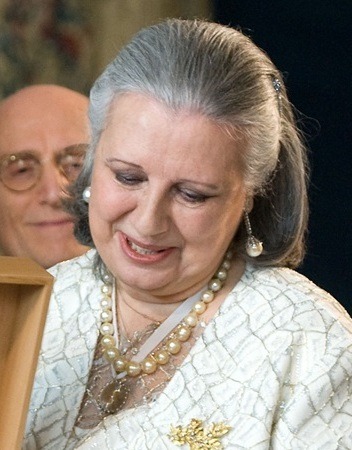
Laura Biagiotti, a name synonymous with luxury, elegance, and Italian fashion, was born in Rome on August 4, 1943. Her life story is one of dedication, creativity, and a relentless pursuit of excellence. Over the decades, she became one of the most influential figures in the global fashion industry, earning the title “Queen of Cashmere” and leaving a lasting legacy that continues to inspire new generations of designers and fashion enthusiasts.
Early Life and Introduction to Fashion
Laura Biagiotti’s journey into the world of fashion began in an unconventional way. Initially, her passion was not fashion but archaeology, a field she pursued academically by enrolling in the Faculty of Letters at the Sapienza University of Rome. However, her life took a different turn when she started working in her family’s textile company, which specialized in producing haute couture garments for prominent fashion houses like Barocco, Schuberth, and Capucci.
Despite her academic inclinations, Biagiotti’s creative instincts drew her towards fashion. In 1965, she made a pivotal decision to create her own fashion line. Collaborating with designer Angelo Tarlazzi, she launched her first collection of women’s clothing. By 1966, she was already making a name for herself with her prêt-à-porter collection for Schuberth.
The Rise of the “Queen of Cashmere”
The early 1970s marked a significant period in Biagiotti’s career. She acquired MacPherson, a cashmere company, and began designing a line of garments that would set the standard for luxury and comfort. Her use of cashmere, a fabric traditionally reserved for more casual or utilitarian garments, in high fashion was revolutionary. By 1972, she had presented her first solo fashion show, which was met with critical acclaim. The New York Times famously dubbed her the “Queen of Cashmere,” a title that would stick with her for the rest of her life.
Biagiotti’s approach to fashion was as practical as it was elegant. She was known to test the comfort and wearability of her designs on herself and her team before they ever hit the runway. This dedication to quality and user experience was a key factor in her enduring success.
Expanding the Brand: The 1980s and 1990s
The 1980s were a decade of expansion and innovation for Laura Biagiotti. She launched her first men’s line in 1987, followed by the creation of a women’s line catering to fuller figures, known as Laura Più, and a children’s line, Laura Biagiotti Junior. Her ability to diversify while maintaining the core principles of her brand—elegance, quality, and comfort—cemented her reputation as a versatile and forward-thinking designer.
Biagiotti’s personal life was as grand as her fashion empire. She lived and worked in an 11th-century castle in the Roman countryside, which she painstakingly restored to its former glory. This castle became the symbol of her brand, with its four turrets serving as the logo of her fashion house.
One of the most notable achievements of her career came in 1988 when Biagiotti became the first Italian designer to hold a fashion show in China. The event, held in Beijing, featured thirty models from the People’s Republic of China showcasing 125 of Biagiotti’s most iconic designs. This historic event not only highlighted her creative prowess but also underscored her role in bridging cultural and fashion worlds.
Recognition and Awards
The 1990s were a period of global recognition for Laura Biagiotti. In 1992, she was named “Woman of the Year” in New York for her contributions to enhancing the prestige of Italian fashion worldwide. A year later, she received the “Marco Polo” trophy in Beijing, further solidifying her international influence.
In 1995, Biagiotti achieved another milestone when she was invited to hold a fashion show at the Kremlin in Moscow. This event was a cultural bridge between Italy and Russia, showcasing the rich heritage of Italian fashion to a new audience. In the same year, she was honored with the title of “Cavaliere del Lavoro” by Italian President Oscar Luigi Scalfaro. This prestigious award recognized her contributions to the fashion industry and her role in promoting the “Made in Italy” brand globally.
The Legacy of Laura Biagiotti
Throughout the 1990s and 2000s, Laura Biagiotti’s brand continued to flourish. The launch of her fragrance “Roma” in 1994 was a testament to her deep connection to her roots. The fragrance, dedicated to the Eternal City, became a global success, selling over 30 million bottles worldwide.
Her fashion empire, built alongside her husband, Dr. Gianni Cigna, included not only clothing but also a wide range of licensed products, from eyewear to perfumes. By 1993, the brand’s global revenue exceeded $250 million, with flagship stores in major cities such as Rome, Milan, Paris, New York, and Tokyo.
Biagiotti was not just a fashion designer; she was a cultural ambassador. In the early 1980s, she restored the Marco Simone Castle, turning it into a national monument and the headquarters of her fashion house. She also founded the Marco Simone Golf Club, a 36-hole course that hosted the 51st Italian Open in 1994. This endeavor combined her love for fashion, history, and sports, further enhancing her legacy.
In 1997, after the passing of her husband, Biagiotti established the Biagiotti Cigna Foundation in his honor. The foundation’s collection of 170 works by the Futurist master Giacomo Balla became a significant cultural asset, reflecting Biagiotti’s deep appreciation for art and her desire to preserve Italy’s cultural heritage.
The 21st Century: A New Era
As the fashion industry evolved in the 21st century, so did Laura Biagiotti. In 2002, the Italian postal service issued a stamp in her honor, commemorating her 30-year career. Two years later, she was elected to the board of the National Chamber of Italian Fashion, further solidifying her influence within the industry.
In 2007, she received a special Golden Lion for Fashion at the Venice Film Festival, a fitting recognition for a designer who had become a symbol of Italian elegance. In 2011, she was awarded the America Award by the Italy-USA Foundation at the Chamber of Deputies, highlighting her global impact.
Laura Biagiotti’s life and career came to a close in May 2017 when she passed away at the age of 73 after suffering a cardiac arrest. Her daughter, Lavinia Biagiotti Cigna, who had been working alongside her mother for years, took over the management of the fashion house, ensuring that the brand’s legacy would continue.
Conclusion
Laura Biagiotti was more than just a fashion designer; she was a cultural icon, a business mogul, and a pioneer in the fashion industry. Her dedication to quality, her innovative use of cashmere, and her ability to bridge different cultures through fashion have left an indelible mark on the world. Her legacy continues through the work of her daughter and the enduring popularity of the Laura Biagiotti brand.
Biagiotti’s story is a testament to the power of creativity, hard work, and a deep connection to one’s roots. She remains an inspiration for aspiring designers and a symbol of Italian luxury and elegance.


