
Introduction
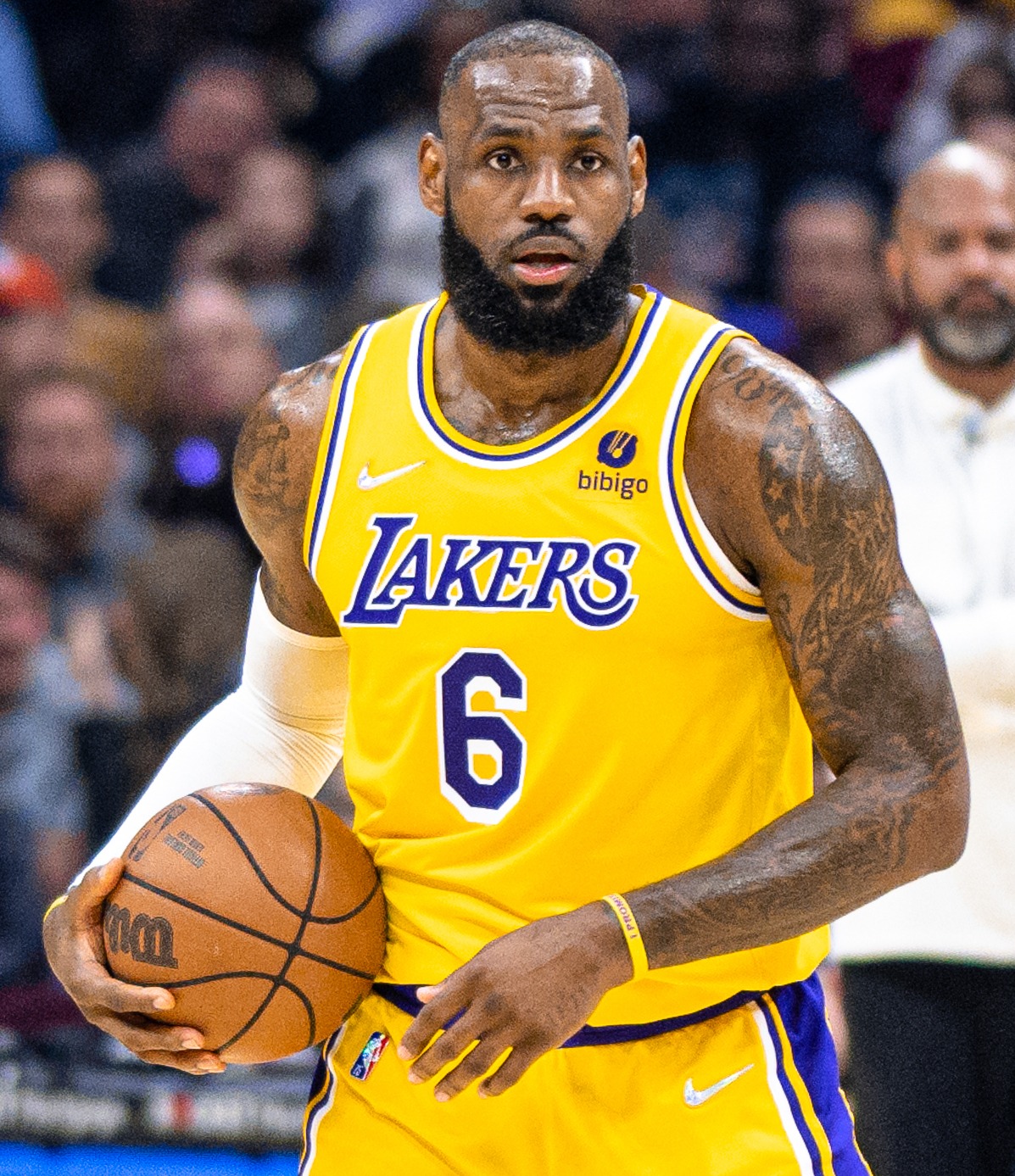
LeBron James, often hailed as one of the greatest basketball players of all time, has carved out a legacy that transcends the court. Born on December 30, 1984, in Akron, Ohio, LeBron’s journey from a challenging childhood to becoming a global sports icon is nothing short of inspirational. Known for his unmatched athleticism, basketball IQ, and leadership both on and off the court, LeBron’s influence extends far beyond sports. This article explores the life, fame, and highlights of LeBron James, delving into his career achievements, personal milestones, and the impact he has had on the world.
Early Life and Rise to Fame
LeBron Raymone James was raised by his single mother, Gloria James, in Akron, Ohio. From a young age, it was evident that LeBron possessed a rare talent for basketball. His early life was marked by instability, as Gloria struggled to find steady work and housing. Despite these challenges, LeBron found solace in basketball, and his extraordinary skills quickly became apparent.
In 1999, LeBron enrolled at St. Vincent-St. Mary High School, where he joined the basketball team. He led the team to the Ohio State Division III title in his freshman year, posting an impressive record of 23 wins and just one loss. His sophomore year saw a repeat performance, as LeBron averaged over 25 points per game and earned the title of “Mr. Basketball for Ohio.” It wasn’t long before the national spotlight found him.
The Chosen One: Entering the NBA
LeBron’s dominance on the high school basketball court garnered widespread attention. In February 2002, he graced the cover of Sports Illustrated with the headline “The Chosen One.” This moniker would follow him throughout his career, adding to the mythos surrounding his prodigious talent.
In 2003, LeBron declared for the NBA Draft, where he was selected as the first overall pick by the Cleveland Cavaliers. His debut against the Sacramento Kings was nothing short of spectacular, scoring 25 points and delivering 9 assists. Over the course of his rookie season, LeBron averaged 20.9 points per game, making him only the third rookie in NBA history—alongside Oscar Robertson and Michael Jordan—to achieve at least 20 points, 5 rebounds, and 5 assists per game. He was unanimously named NBA Rookie of the Year, further solidifying his status as a future superstar.
Ascending to Greatness: The Cleveland Cavaliers Years
LeBron’s early years with the Cavaliers were marked by personal achievements and growing pains for the team. In the 2005-2006 season, LeBron averaged over 31 points per game and was awarded the All-Star Game MVP. The following season, he led the Cavaliers to their first-ever NBA Finals appearance, although they were swept by the San Antonio Spurs.
Despite the loss, LeBron’s performance was a testament to his growing influence in the league. His ability to dominate games, both as a scorer and a facilitator, drew comparisons to NBA legends like Magic Johnson and Michael Jordan. By 2008, he had won his second All-Star Game MVP and was named the NBA’s Most Valuable Player (MVP) for the regular season, leading the Cavaliers to a league-best record of 66-16.
However, success in the regular season did not translate into an NBA championship. The Cavaliers repeatedly fell short in the playoffs, most notably losing to the Orlando Magic in the 2009 Eastern Conference Finals and to the Boston Celtics in the 2010 Eastern Conference Semifinals. These disappointments set the stage for one of the most controversial decisions in sports history.
The Decision: Moving to Miami
In 2010, LeBron James became a free agent, and his decision regarding his future team became a media spectacle. In a televised special titled “The Decision,” LeBron announced that he would be joining the Miami Heat, famously stating, “I’m taking my talents to South Beach.” The move was met with widespread criticism, particularly from Cleveland fans who felt betrayed by their hometown hero.
Despite the backlash, LeBron’s move to Miami marked the beginning of a new chapter in his career. Teaming up with Dwyane Wade and Chris Bosh, LeBron formed a “super team” that dominated the NBA for the next four years. In his first season with the Heat, LeBron led the team to the NBA Finals, where they were defeated by the Dallas Mavericks. However, this loss only fueled LeBron’s determination.
Miami Heat: Championship Glory
The 2011-2012 season was a turning point for LeBron James. He elevated his game to new heights, leading the Miami Heat to a dominant regular season and a successful playoff run. In the Finals, the Heat defeated the Oklahoma City Thunder, giving LeBron his first NBA championship. He was named Finals MVP, a testament to his leadership and all-around performance.
LeBron continued his dominance in the 2012-2013 season, leading the Heat to a 27-game winning streak, the second-longest in NBA history. The Heat returned to the NBA Finals, where they faced the San Antonio Spurs in a hard-fought seven-game series. LeBron’s heroics, including a 37-point, 12-rebound performance in Game 7, secured his second consecutive championship and Finals MVP award.
The following year, LeBron and the Heat reached the Finals for the fourth consecutive time, but they were defeated by the Spurs in a decisive five-game series. After the loss, LeBron decided to return to Cleveland, a move that was met with widespread approval from fans and the media.
The Return to Cleveland: Redemption and Legacy
LeBron’s return to Cleveland in 2014 was a homecoming that carried immense expectations. He was determined to bring an NBA championship to his hometown, a feat that had never been accomplished before. In his first season back, LeBron led the Cavaliers to the NBA Finals, but the team was severely hampered by injuries to key players. The Cavaliers lost to the Golden State Warriors in six games.
The 2015-2016 season was one for the history books. LeBron and the Cavaliers faced off against the Warriors once again in the NBA Finals. After falling behind 3-1 in the series, the Cavaliers staged a miraculous comeback, winning three consecutive games to claim the championship. LeBron’s performance in Game 7, where he recorded a triple-double, including the now-iconic chase-down block on Andre Iguodala, earned him his third Finals MVP award. The victory fulfilled LeBron’s promise to bring a championship to Cleveland, solidifying his legacy as one of the greatest players in NBA history.
The Los Angeles Lakers: A New Chapter
In 2018, LeBron James made another major career move by signing with the Los Angeles Lakers. His decision to join the storied franchise was seen as both a basketball and a business decision, as it positioned him in the entertainment capital of the world. In his first season with the Lakers, the team struggled with injuries and failed to make the playoffs, leading some to question whether LeBron could still lead a team to a championship.
LeBron silenced his critics in the 2019-2020 season. Partnering with Anthony Davis, LeBron led the Lakers to the best record in the Western Conference. The season was interrupted by the COVID-19 pandemic, but the NBA resumed play in a “bubble” environment in Orlando, Florida. LeBron’s leadership was on full display as he guided the Lakers to the NBA Finals, where they defeated the Miami Heat in six games. LeBron was named Finals MVP for the fourth time, becoming the first player in NBA history to win the award with three different teams.
Off the Court: Business Ventures and Social Activism
LeBron James’s influence extends far beyond basketball. He has become a successful businessman, with ventures in entertainment, media, and endorsements. LeBron is a co-founder of SpringHill Company, a media conglomerate that produces films, television shows, and digital content. His production company, SpringHill Entertainment, has been involved in projects such as the Space Jam sequel and the hit TV show The Wall.
In addition to his business endeavors, LeBron has been a vocal advocate for social justice and education. In 2018, he opened the I PROMISE School in Akron, Ohio, a public school designed to provide education and resources for at-risk children. LeBron’s commitment to philanthropy and social change has earned him widespread praise and recognition, including being named to Time magazine’s list of the 100 most influential people in the world.
LeBron has also used his platform to speak out on issues of racial inequality and police brutality. He has been a prominent voice in the Black Lives Matter movement and has consistently advocated for social and political change. His willingness to address controversial issues has made him a leader both on and off the court.
Personal Life and Legacy
LeBron James’s personal life has been marked by stability and success. He married his high school sweetheart, Savannah Brinson, in 2013, and the couple has three children: LeBron Jr. (Bronny), Bryce Maximus, and Zhuri. LeBron has often spoken about the importance of family and credits Savannah with being his rock and support system throughout his career.
LeBron’s legacy in the NBA is secure. He is widely regarded as one of the greatest players of all time, and his impact on the game is undeniable. As of 2024, LeBron continues to play at an elite level, and his pursuit of more championships and records shows no signs of slowing down.
Conclusion
LeBron James is more than just a basketball player; he is a cultural icon, a philanthropist, and a leader. His journey from the streets of Akron to the pinnacle of professional sports is a story of talent, hard work, and determination. Whether on the court, in the boardroom, or in the community, LeBron’s influence is felt around the world. As he continues to build on his already remarkable legacy, there is no doubt that LeBron James will be remembered as one of the most significant figures in the history of sports and beyond.


