
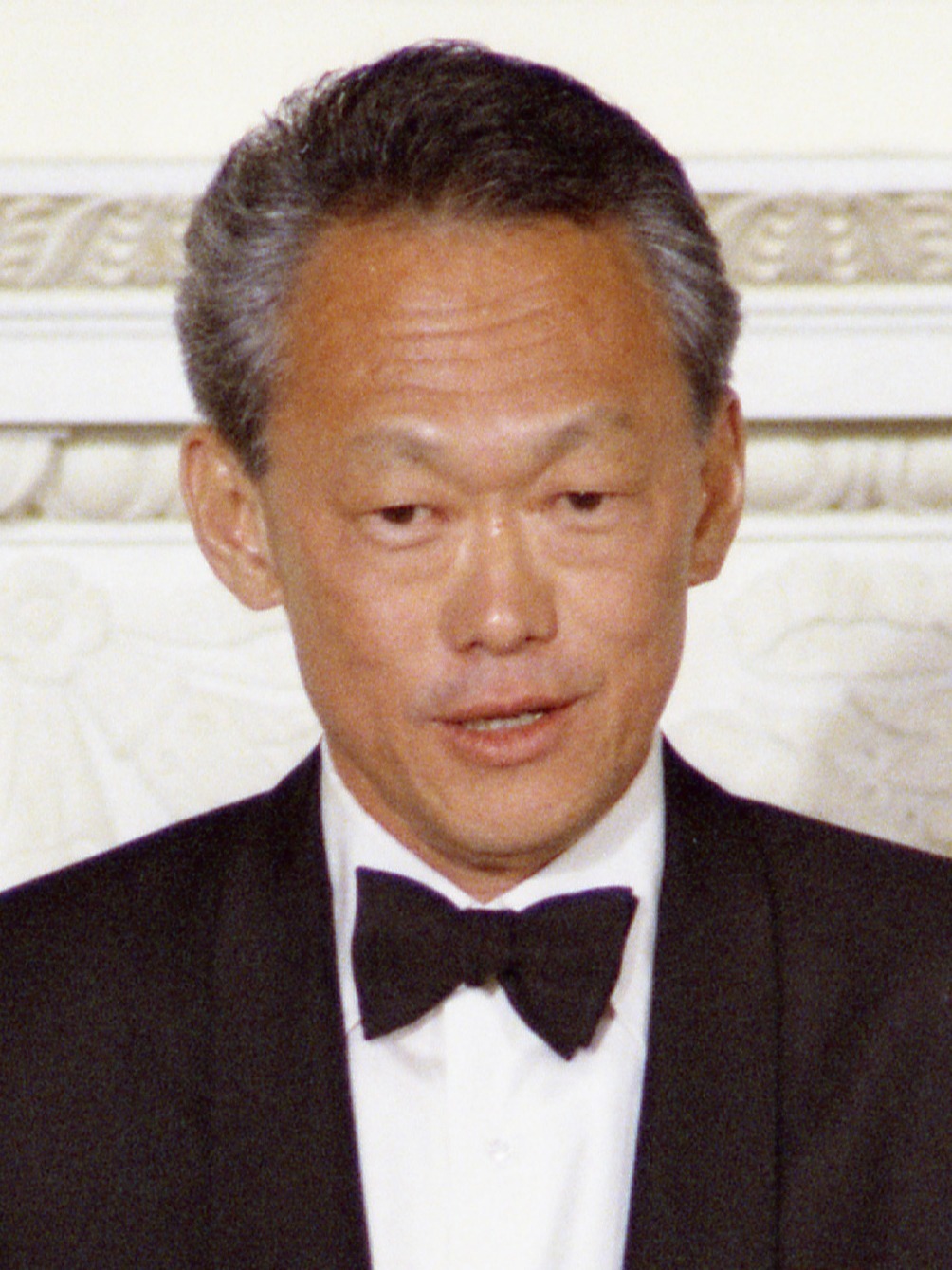
Lee Kuan Yew, born on September 16, 1923, in Singapore, is widely regarded as the founding father of modern Singapore. As the first Prime Minister of the Republic of Singapore, serving from 1959 to 1990, Lee played a pivotal role in transforming Singapore from a small, struggling British colony into a prosperous, global financial hub. His tenure was marked by economic development, strict governance, and a focus on education and infrastructure. Lee’s legacy is complex, encompassing both the remarkable success of Singapore and the controversies surrounding his authoritarian style of leadership.
Early Life and Education
Lee Kuan Yew was born into a middle-class Chinese family in Singapore, during a period when the island was a British colony. His grandfather had migrated to Singapore from China, and the family was part of the Straits Chinese community, which had adopted many aspects of British culture. Lee was educated at prestigious institutions, attending Raffles Institution in Singapore, where he excelled academically.
The Japanese occupation of Singapore during World War II had a profound impact on Lee Kuan Yew. The brutality of the occupation left a lasting impression on him, instilling in him a determination to see Singapore thrive as an independent nation. After the war, Lee won a scholarship to study law at Fitzwilliam College, Cambridge, where he graduated with first-class honors. His time in the UK exposed him to Western political thought, which would influence his approach to governance.
The Road to Independence
Upon returning to Singapore, Lee Kuan Yew became involved in politics, joining the Progressive Party. However, he soon became disillusioned with the party’s moderate stance and decided to form his own political group. In 1954, he co-founded the People’s Action Party (PAP) with a group of like-minded individuals, including Toh Chin Chye and Goh Keng Swee. The PAP was a left-leaning party that sought to end British colonial rule and achieve self-governance for Singapore.
Lee quickly emerged as a charismatic and determined leader, capable of uniting diverse factions within the party. His legal training and eloquence made him a formidable negotiator and speaker. Under his leadership, the PAP won the 1959 elections, and Lee became the first Prime Minister of Singapore. One of his first challenges was to address the internal security threats posed by communist insurgents and ethnic tensions.
Lee Kuan Yew was a firm believer in the idea of merging Singapore with the Federation of Malaya, believing that this would provide economic benefits and ensure the survival of the island nation. In 1963, Singapore joined the newly formed Malaysia, which also included Malaya, Sabah, and Sarawak. However, the union was short-lived. The merger was fraught with tension, particularly over issues of racial and religious identity. In 1965, Singapore was expelled from Malaysia, an event that Lee described as one of the most traumatic moments of his life.
Building a Nation: Economic and Social Policies
Following the separation from Malaysia, Lee Kuan Yew was faced with the enormous task of building a viable and prosperous independent nation. Singapore had no natural resources, a small domestic market, and a diverse population of Chinese, Malays, and Indians with different cultural and religious backgrounds. Lee’s approach was pragmatic and often ruthless; he believed that strong leadership and economic growth were essential for the survival of the fledgling state.
Under Lee’s leadership, the Singaporean government pursued a strategy of rapid industrialization, attracting foreign investment through a combination of low taxes, minimal corruption, and a highly disciplined workforce. The government also implemented stringent social policies aimed at promoting social cohesion and public order. Housing, education, and healthcare were prioritized, with the government taking an active role in providing these services.
One of Lee’s most notable achievements was the establishment of the Housing Development Board (HDB), which provided affordable public housing to the majority of Singaporeans. This policy not only improved living conditions but also helped to foster a sense of national identity and unity. The emphasis on education also paid off, with Singapore developing a world-class education system that emphasized science, technology, and meritocracy.
Lee Kuan Yew was also known for his belief in “Asian values,” which he argued were more suitable for Singapore than Western-style democracy. He believed in a strong, paternalistic government that emphasized community over individual rights. This philosophy justified many of the government’s more authoritarian measures, such as strict controls on the press, limitations on political opposition, and the use of defamation lawsuits to silence critics.
International Relations and Regional Leadership
Lee Kuan Yew was not only a leader of Singapore but also a significant figure in global politics. He was highly regarded by world leaders for his insights on governance and international relations. Lee maintained close relationships with leaders from both the West and Asia, including Richard Nixon, Deng Xiaoping, and Margaret Thatcher, who famously referred to him as one of the “few people who have changed the course of history.”
Under Lee’s leadership, Singapore developed a reputation as a reliable and neutral player in international affairs. The country’s strategic location at the crossroads of major shipping routes made it a key player in global trade. Lee was also a strong advocate for regional cooperation, playing a crucial role in the establishment of the Association of Southeast Asian Nations (ASEAN) in 1967. His vision for ASEAN was one of regional stability and economic cooperation, which he believed were essential for the prosperity of Southeast Asia.
Lee’s pragmatic approach to foreign policy was evident in his dealings with larger neighbors such as Indonesia and Malaysia. He worked to maintain peaceful and cooperative relations with these countries, despite historical tensions. Lee also advocated for the importance of maintaining good relations with both China and the United States, recognizing the need for a balanced approach in an increasingly multipolar world.
Controversies and Criticisms
Despite his many achievements, Lee Kuan Yew’s legacy is not without controversy. His leadership style has often been described as authoritarian, and his government was known for its intolerance of political dissent. Opposition leaders were frequently sued for defamation, bankrupted, or imprisoned, effectively silencing any significant challenge to PAP’s dominance. The media in Singapore was also tightly controlled, with the government owning or influencing most major news outlets.
Critics have argued that Lee’s emphasis on order and stability came at the expense of personal freedoms and political plurality. His government implemented strict laws against public protests, limited freedom of speech, and imposed heavy penalties for even minor offenses, leading to accusations of creating a “nanny state.” The Internal Security Act, which allowed for detention without trial, was used to curb political opposition and maintain social order, further fueling concerns about human rights.
However, Lee and his supporters have argued that these measures were necessary to ensure Singapore’s survival and prosperity in a challenging geopolitical environment. They point to the country’s economic success, low crime rates, and high standard of living as evidence that his policies were effective and justified.
Legacy and Impact
Lee Kuan Yew stepped down as Prime Minister in 1990, after serving for 31 years, making him one of the longest-serving leaders in modern history. He was succeeded by Goh Chok Tong, under whom Lee served as Senior Minister until 2004. After Goh’s tenure, Lee’s son, Lee Hsien Loong, became Prime Minister, and Lee Kuan Yew took on the role of Minister Mentor, continuing to influence Singaporean politics until his retirement in 2011.
Lee Kuan Yew passed away on March 23, 2015, at the age of 91. His death marked the end of an era in Singaporean history, and he was mourned not only in Singapore but also around the world. World leaders paid tribute to him, acknowledging his role in transforming Singapore into a global success story.
Today, Lee Kuan Yew’s legacy is evident in every aspect of Singaporean life. The city-state’s efficient government, world-class infrastructure, and high standard of living are often cited as examples of his successful leadership. However, debates about the cost of Singapore’s success—particularly in terms of individual freedoms and political rights—continue to this day.
Lee’s impact extends beyond Singapore. His ideas on governance, particularly his emphasis on meritocracy, pragmatism, and strong government, have influenced leaders in Asia and beyond. While his methods have been both lauded and criticized, there is no denying that Lee Kuan Yew’s vision and determination played a crucial role in shaping the modern world.
Conclusion
Lee Kuan Yew’s life was a remarkable journey from a young lawyer in colonial Singapore to one of the most influential statesmen of the 20th century. His leadership transformed Singapore from a struggling island nation into a prosperous, modern state. While his legacy is complex, encompassing both great achievements and significant controversies, there is no doubt that Lee Kuan Yew’s impact on Singapore and the world will be felt for generations to come.
His story is a powerful reminder of the impact that visionary leadership, combined with a deep understanding of the challenges and opportunities of the time, can have on a nation and its people. As Singapore continues to navigate the challenges of the 21st century, the lessons of Lee Kuan Yew’s leadership will remain a guiding force for the country and its leaders.


