
Introduction
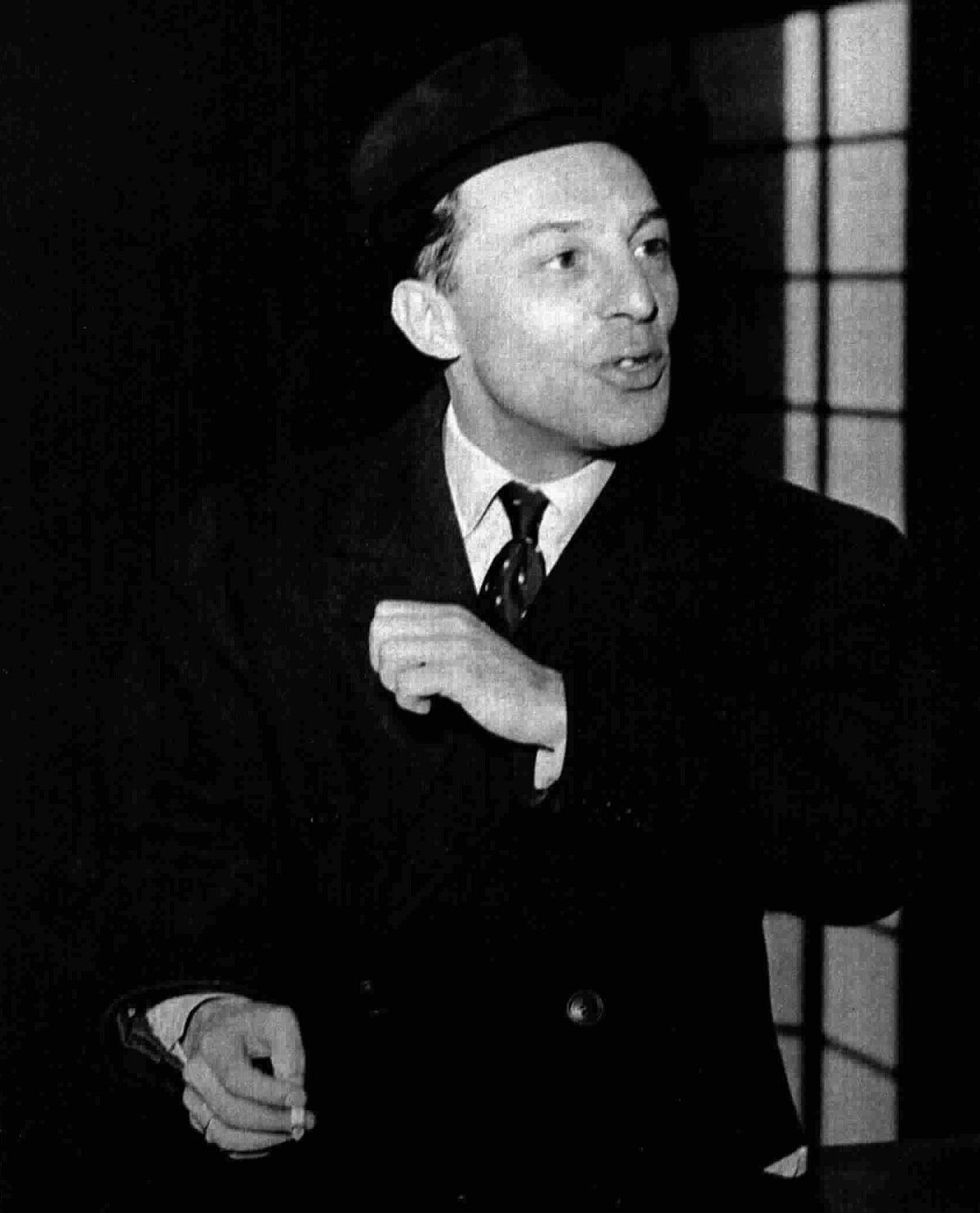
Leo Longanesi, an influential figure in Italian journalism and culture, was born on August 30, 1905, in Bagnacavallo, a small town in the Ravenna province of Italy. His life and career spanned a period marked by profound political and social changes, and his legacy remains a subject of great interest. Longanesi was not only a journalist but also an editor, publisher, and artist. His multifaceted contributions to Italian culture, particularly during the Fascist regime, continue to provoke discussions regarding his complex persona and ideological stance. This article explores the life, fame, and key highlights of Leo Longanesi’s career, delving into the nuances and historical context that shaped his legacy.
Early Life and Background
Leo Longanesi was born into a well-to-do family. His father, Paolo Longanesi, hailed from a prosperous family of landowners, while his mother, Angela Marangoni, also belonged to a family with deep roots in land ownership. At the age of six, Leo moved with his family to Bologna, where he spent much of his formative years. Bologna, a city known for its vibrant intellectual life, provided a fertile ground for Longanesi’s early interests in journalism and politics.
Longanesi’s early life coincided with the rise of Fascism in Italy. Like many young people of his time, he became involved in the Fascist movement. His early exposure to the regime, coupled with the fervent nationalist atmosphere, led to his initial fascination with the figure of Benito Mussolini. This period marked the beginning of Longanesi’s complex relationship with Fascism—a relationship that would evolve over the years, reflecting both his support for certain aspects of the regime and his critique of others.
Entry into Journalism
Longanesi enrolled in the Faculty of Law at the University of Bologna, but it was his burgeoning interest in journalism that would define his career. He began contributing to various magazines and soon started founding his own publications. Among the earliest of these were “È permesso?”, “Il toro,” and “Il Dominio.” His sharp wit and insightful commentary quickly garnered attention, and by the age of twenty, Longanesi had secured the directorship of “L’assalto,” the official newspaper of the Fascist Federation of Bologna.
However, Longanesi’s tenure at “L’assalto” was short-lived. He was removed from his position after publishing an article critical of a senator, demonstrating early on his willingness to challenge authority—a trait that would characterize much of his career. Despite his deepening involvement with Fascism, Longanesi was not afraid to assert the independence of art and culture from political ideology. This stance would later become a defining feature of his most famous publication, “L’Italiano.”
The Rise of “L’Italiano” and Cultural Influence
In 1926, Longanesi founded “L’Italiano,” a cultural magazine that became a platform for some of Italy’s most prominent writers and intellectuals. Despite its initial alignment with Fascist ideals, “L’Italiano” maintained a certain degree of editorial independence, focusing on the importance of culture and art beyond the confines of political dogma. Contributors to the magazine included Vincenzo Cardarelli, Giovanni Comisso, and Mino Maccari—figures who would leave a lasting impact on Italian literature and culture.
One of the most controversial episodes in Longanesi’s life occurred in 1931 when he was involved in an assault on the renowned conductor Arturo Toscanini. Toscanini, a vocal critic of Fascism, had refused to perform the Fascist anthem “Giovinezza” at a concert. The incident highlighted the tension between Longanesi’s support for the regime and his advocacy for cultural autonomy—a tension that would continue to shape his career.
The Birth of “Omnibus” and Innovation in Journalism
In 1937, with the support of Benito Mussolini, Longanesi founded “Omnibus,” Italy’s first national newsmagazine. The publication was groundbreaking in its format, combining serious journalism with lighter, more accessible content—a precursor to the modern newsmagazine. Published by Angelo Rizzoli, “Omnibus” enjoyed significant success and introduced a new style of journalism to Italy. However, its irreverent tone and Longanesi’s bold editorial choices eventually drew the ire of the Fascist censors, leading to its suspension in 1939.
Despite the setback, Longanesi’s influence on Italian journalism was profound. He was not only a pioneer in the creation of the modern newsmagazine but also a mentor to a generation of Italian journalists. His approach to journalism—marked by a blend of sharp satire, cultural commentary, and political critique—set a new standard for the industry.
Art and Design: A Multitalented Creative
Longanesi’s talents extended beyond journalism. He was also a skilled artist and designer, though his work in these fields was often marked by a certain disorderliness. His drawings, frequently inspired by traditional almanacs, dream books, and playing cards, were featured in various exhibitions, including the Decennial Exhibition of the Fascist Revolution in Rome (1932), the XIX Venice Biennale (1934), and the Drawing Exhibition in Berlin (1937). In 1941, Longanesi held a solo exhibition at the Galleria Barbaroux in Milan, further establishing his reputation as a multifaceted artist.
Longanesi’s artistic output, like his journalism, was characterized by a playful yet incisive critique of contemporary society. His drawings often contained satirical elements, reflecting his broader approach to cultural and political commentary.
A Shift in Ideology and Post-War Contributions
The fall of Fascism in 1943 marked a turning point in Longanesi’s life. As the regime collapsed, Longanesi quickly distanced himself from his earlier support of Mussolini, writing an article in “Il Messaggero” that celebrated the newfound freedom. This ideological shift was indicative of Longanesi’s pragmatism—a quality that allowed him to navigate the turbulent political landscape of post-war Italy.
In 1945, Longanesi moved to Milan, where he founded the publishing house Longanesi & Co. The publishing house played a crucial role in post-war Italian literature, introducing Italian readers to authors like Ernest Hemingway, Alberto Moravia, and Dino Buzzati. Longanesi’s publishing endeavors were marked by the same eclecticism that had characterized his earlier work, with a focus on both highbrow literature and more popular genres, such as detective fiction.
Longanesi also launched two influential magazines during this period: “Il Borghese” and “Oggi.” “Il Borghese,” a biweekly magazine, became known for its critical stance toward the post-war political establishment. Under Longanesi’s direction, the magazine featured sharp political satire and commentary, with Longanesi himself contributing provocative editorials and cover illustrations. The magazine’s influence was such that its style of photography—marked by a critical and often ironic perspective—came to be known as “borghese photography.”
Legacy and Final Years
Leo Longanesi’s life was cut short on September 27, 1957, when he suffered a fatal heart attack at the age of 52. At the time of his death, he was still actively involved in his various publishing and journalistic ventures. His death marked the end of an era in Italian journalism, but his influence continued to be felt long after.
Longanesi’s legacy is complex and multifaceted. He was a man of contradictions—a fervent supporter of Fascism who also championed the independence of art and culture; a pioneer of modern journalism who was unafraid to challenge authority; an artist whose work reflected both a deep engagement with traditional forms and a sharp critique of contemporary society.
Perhaps the most enduring aspect of Longanesi’s legacy is the generation of journalists he mentored. Figures like Indro Montanelli, who would go on to become one of Italy’s most respected journalists, were profoundly influenced by Longanesi’s approach to journalism. Montanelli, in fact, co-authored a biography of Longanesi with Marcello Staglieno in 1984, further cementing Longanesi’s place in the pantheon of Italian journalism.
Conclusion
Leo Longanesi’s life and career offer a window into a turbulent period in Italian history. His contributions to journalism, art, and publishing were significant, and his influence continues to be felt in Italy and beyond. Longanesi’s story is one of innovation, courage, and complexity—a story that reflects the broader struggles and contradictions of 20th-century Italy. As we look back on his life, it is clear that Longanesi was not just a man of his time, but a figure whose ideas and achievements continue to resonate in our own.


