
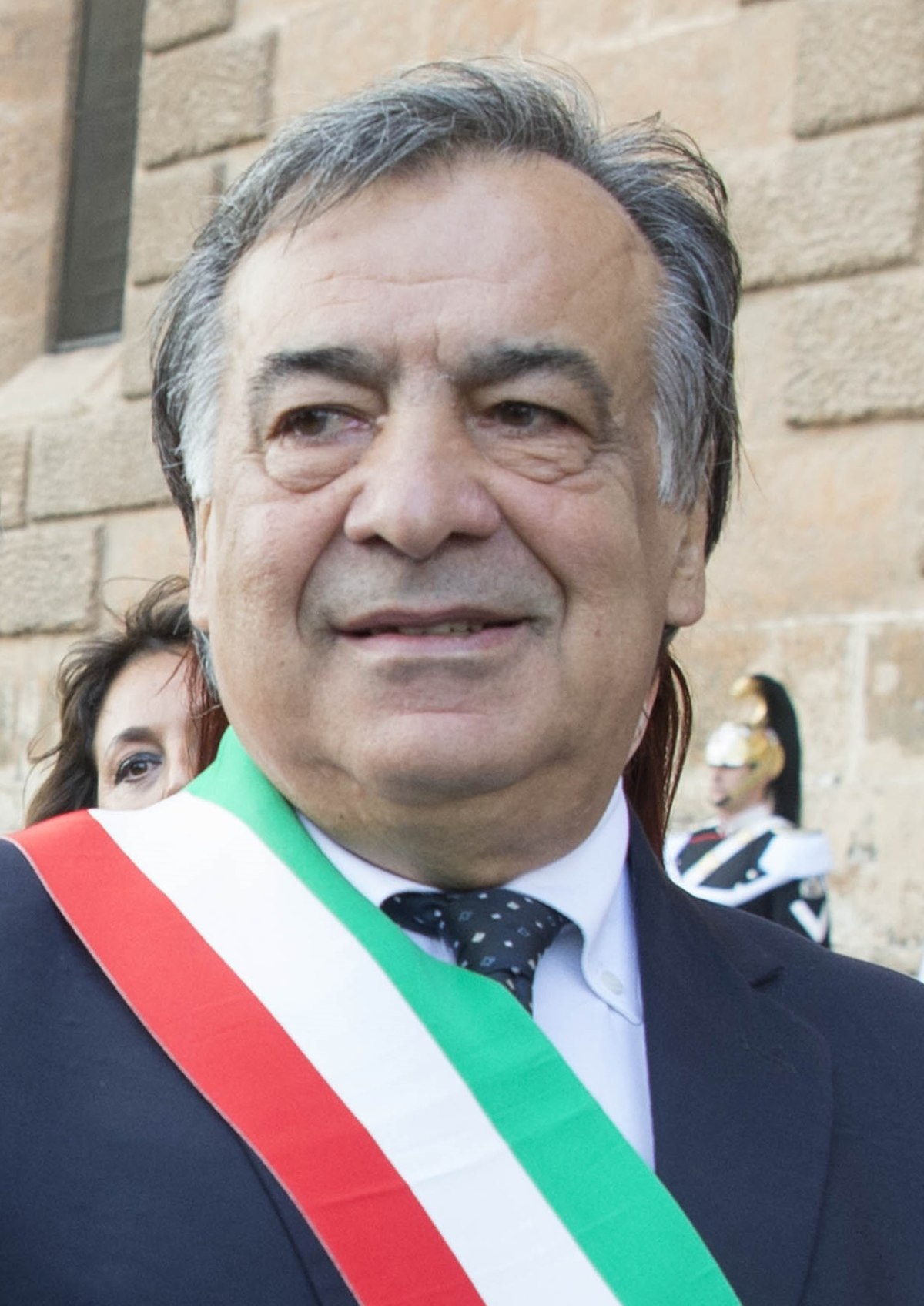
Leoluca Orlando, born on August 1, 1947, in Palermo, Italy, is a prominent Italian politician, best known for his multiple terms as the mayor of Palermo. Throughout his career, Orlando has been a pivotal figure in the fight against the Mafia and corruption in Sicily, advocating for social justice, transparency, and administrative efficiency. His efforts have earned him a reputation as a reformer and a symbol of the Sicilian Renaissance.
Early Life and Education
Leoluca Orlando was born into a Sicily that was, and to some extent remains, deeply entangled in the influence of the Mafia. However, his upbringing and education set him on a path that would lead to his lifelong fight against this pervasive problem. Orlando spent several years studying in Germany and England, experiences that broadened his worldview and exposed him to different political and social systems.
Upon returning to Italy, Orlando pursued a legal career, becoming a cassation lawyer and a professor of regional public law at the University of Palermo. His academic contributions included numerous articles and monographs on public law, which helped establish his reputation as a respected scholar. Despite his academic achievements, it was in the political arena that Orlando truly made his mark.
The Political Rise and “The Sicilian Spring”
Leoluca Orlando’s political career began in earnest when he served as the legal advisor to Piersanti Mattarella, the President of the Sicilian Region, from 1978 to 1980. This role provided Orlando with a close-up view of the challenges faced by Sicily, particularly the pervasive influence of the Mafia in politics and society. Mattarella’s assassination in 1980 by the Mafia only strengthened Orlando’s resolve to combat organized crime.
Orlando was elected to the Palermo City Council in 1980, marking the start of his long-standing involvement in the city’s governance. His first significant leadership role came in 1985 when he was elected mayor of Palermo. This period marked the beginning of what is often referred to as “La Primavera di Palermo” or “The Sicilian Spring.” This era was characterized by a deep moral and institutional renewal in the city, driven by Orlando’s efforts to restore public trust and combat corruption.
Under Orlando’s leadership, Palermo began to shed its image as a Mafia stronghold. He focused on revitalizing the city’s social fabric by improving public services, restoring historic neighborhoods, and promoting a culture of legality. His administration also made significant strides in increasing transparency and efficiency within the local government, aiming to dismantle the entrenched networks of corruption and organized crime.
Founding of the “Movement for Democracy – The Network”
In the early 1990s, Leoluca Orlando founded the “Movimento per la Democrazia – La Rete” (Movement for Democracy – The Network), a political party that positioned itself as a strong advocate against corruption and Mafia influence in Italian politics. The party gained traction as it resonated with a population increasingly frustrated by the corruption scandals that plagued Italy during this period, culminating in the nationwide Tangentopoli (Bribesville) scandal.
Orlando’s leadership within the party and his outspoken stance against the Mafia made him a national figure. In 1992, he was elected to the Italian Parliament but chose to resign after being re-elected as mayor of Palermo in 1993. His overwhelming victory, with 75.2% of the vote, reflected the public’s support for his anti-Mafia stance and his efforts to bring about genuine change in the city.
During this period, Orlando publicly denounced the “PAMM,” an acronym he coined to describe the intricate connections between Politics, Business, Mafia, and Freemasonry. He argued that this nexus was responsible for much of the violence, corruption, and social stagnation in Sicily and beyond. His courage in naming these forces was both lauded and controversial, further solidifying his reputation as a fearless reformer.
European and National Political Roles
In 1994, Leoluca Orlando expanded his political career to the European stage, being elected as a Member of the European Parliament (MEP) with 149,976 votes. At the European Parliament in Strasbourg, he served on the Committee on Civil Liberties, Justice, and Home Affairs, as well as the Committee on Agriculture, Fisheries, and Rural Development. His role in these committees allowed him to advocate for policies that supported transparency, human rights, and rural development, issues that were close to his heart.
Orlando’s commitment to public service and his deep connection to Sicily were evident throughout his career. Despite his broader political roles, his heart remained in Palermo. In 1997, he once again ran for mayor of Palermo and was re-elected with over 200,000 votes, reaffirming his strong connection with the people of the city.
One of the highlights of his second tenure as mayor was the reopening of the Teatro Massimo in 1997, one of the most important cultural landmarks in Palermo, after two decades of closure. The theater had been closed for what were officially described as “small restoration works,” but in reality, it had fallen into a state of neglect and disrepair. The reopening of the Teatro Massimo symbolized the cultural and social revival of Palermo under Orlando’s leadership.
The 2000 Sicilian Regional Presidency Bid
In 2000, Leoluca Orlando sought to expand his influence by running for the Presidency of the Sicilian Region. Although his campaign garnered substantial support—nearly one million votes—he ultimately did not win the election. The defeat was a significant setback, but it did not diminish his resolve to continue his fight against corruption and for the betterment of Sicily.
Following the unsuccessful bid for regional presidency, Orlando remained active in both local and national politics. He was elected as a deputy to the Sicilian Regional Assembly, where he continued to advocate for policies aimed at improving transparency, governance, and economic development in Sicily. He also played a role in the establishment of the free trade area in the Mediterranean, a project aimed at fostering economic cooperation and development in the region.
Return to the Mayoralty and Continued Influence
Leoluca Orlando’s dedication to Palermo and his commitment to public service were reaffirmed in 2012 when he was re-elected as the mayor of Palermo. His victory came at a time when the city was facing significant challenges, including economic difficulties and ongoing issues with organized crime. Orlando’s return to the mayoralty was seen as a beacon of hope for many Palermitans who believed in his vision for the city.
During his fourth term as mayor, Orlando continued to focus on urban renewal, public safety, and social inclusion. He was particularly vocal about the need for Palermo to become a more inclusive and welcoming city, particularly in the context of the European migrant crisis. Orlando positioned Palermo as a “city of refuge,” advocating for the rights of migrants and refugees and challenging the European Union’s approach to the crisis.
Orlando’s progressive stance on migration and his efforts to integrate migrants into the social fabric of Palermo earned him both praise and criticism. However, his commitment to human rights and social justice remained unwavering. In 2017, he was re-elected for a fifth term, demonstrating the continued trust and support of the people of Palermo.
Legacy and Impact
Leoluca Orlando’s impact on Palermo and Sicily cannot be overstated. His leadership during the “Sicilian Spring” helped to break the grip of the Mafia on the city, transforming Palermo from a symbol of corruption and violence into a beacon of hope and renewal. His emphasis on transparency, social justice, and cultural revival set a new standard for governance in Sicily and inspired similar efforts across Italy.
Orlando’s legacy is also marked by his role in founding the “Movement for Democracy – The Network,” which played a crucial role in the anti-corruption efforts of the early 1990s. Although the party no longer exists, its influence on Italian politics and the broader fight against corruption endures.
In addition to his political achievements, Orlando’s career as an academic and author has contributed to the discourse on public law and governance in Italy. His scholarly work, combined with his practical experience as a politician, has made him a respected voice in both academic and political circles.
Orlando’s dedication to Palermo and his lifelong fight against the Mafia have made him a hero to many in Sicily and beyond. His story is one of resilience, courage, and an unwavering commitment to justice and the betterment of society.
Conclusion
Leoluca Orlando’s life and career are a testament to the power of perseverance and the impact that one individual can have on an entire city and region. His efforts to combat the Mafia, promote transparency, and revitalize Palermo have left an indelible mark on the history of Sicily. As a politician, scholar, and advocate for social justice, Orlando has demonstrated that true leadership is about serving the people and standing up for what is right, even in the face of immense challenges.
Today, Leoluca Orlando remains an influential figure in Italian politics, known for his integrity, vision, and unwavering commitment to his beloved city of Palermo. His legacy will continue to inspire future generations of leaders who seek to bring about positive change in their communities.


