
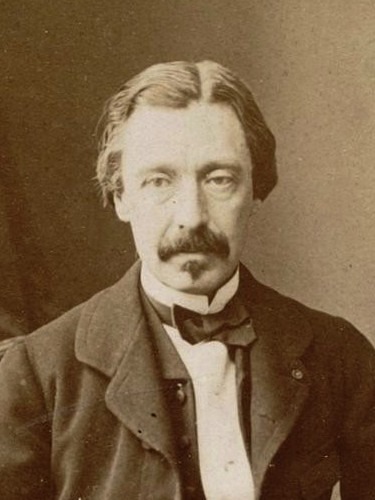
Léon Foucault, a name synonymous with groundbreaking scientific discoveries, is a figure whose contributions to the fields of physics and astronomy have left an indelible mark on history. Born on September 18, 1819, in Paris, France, Foucault was destined for greatness from an early age. His life was a journey of curiosity, experimentation, and innovation, leading to the development of tools and theories that continue to influence science today. This article delves into the life of Léon Foucault, exploring his age, the fame he garnered through his work, and the highlights of his illustrious career.
Early Life and Education
Jean Bernard Léon Foucault was born to a family with a strong intellectual background. His father was an editor, which exposed Foucault to the world of knowledge and learning from a young age. Initially, Foucault pursued studies in medicine, but his true passion lay elsewhere. It wasn’t long before he shifted his focus to physics, a decision that would set the course for his future achievements.
Foucault’s early experiments were heavily influenced by the scientific environment of Paris in the 19th century. He worked with the famous daguerreotypist Louis Daguerre, which piqued his interest in optics and light. This early exposure to the practical applications of science was crucial in shaping Foucault’s later work.
The Pendulum Experiment: A Breakthrough in Physics
Léon Foucault is perhaps best known for his invention of the Foucault Pendulum in 1851, a device that provided the first direct visual evidence of the Earth’s rotation. This simple yet ingenious experiment involved suspending a large pendulum from the ceiling of the Panthéon in Paris. As the pendulum swung back and forth, it appeared to change direction, although in reality, it was the Earth rotating beneath it. This demonstration was a pivotal moment in science, offering tangible proof of a concept that had been theorized but never directly observed.
The significance of the Foucault Pendulum cannot be overstated. At a time when the understanding of Earth’s movements was still developing, Foucault’s experiment offered concrete evidence of rotation, fundamentally changing the way people understood their place in the cosmos. The pendulum became a symbol of scientific progress, and Foucault’s name was forever etched into the annals of scientific history.
Fame and Recognition
Foucault’s fame grew rapidly following the success of the pendulum experiment. He was awarded the prestigious Copley Medal by the Royal Society of London in 1855, a recognition of his contributions to science. The Royal Society, one of the oldest and most respected scientific institutions in the world, honored Foucault for his work in demonstrating the Earth’s rotation and for his other contributions to physics.
But Foucault’s fame was not limited to the pendulum experiment. His work in measuring the speed of light also earned him widespread acclaim. Using a rotating mirror device, Foucault was able to measure the speed of light with unprecedented accuracy. His experiments showed that light travels slower in water than in air, providing further evidence for the wave theory of light.
Foucault’s findings were groundbreaking, and they played a critical role in advancing the field of optics. His work laid the groundwork for future scientists to explore the nature of light and its behavior in different media. This contribution to our understanding of light cemented Foucault’s status as one of the leading scientists of his time.
Contributions to Astronomy and Optics
Léon Foucault’s contributions to science extended beyond the pendulum and the speed of light. He was also instrumental in advancing the field of astronomy. In 1857, Foucault invented the Foucault Polarizer, a device that improved the observation of celestial objects by reducing glare and enhancing contrast. This invention was particularly useful for astronomers studying the sun, as it allowed for clearer and more detailed observations.
In 1862, Foucault furthered his contributions to astronomy by developing a method for testing the shape of telescope mirrors. He discovered that the mirrors used in telescopes were often imperfect, leading to distorted images. To address this, Foucault developed the Foucault Knife-Edge Test, a technique that allowed for the precise measurement and correction of mirror shapes. This innovation revolutionized telescope design, making it possible to produce clearer and more accurate images of the night sky.
Foucault’s work in optics and astronomy was not only innovative but also highly practical. His inventions and techniques are still used by astronomers and optical engineers today, demonstrating the lasting impact of his contributions.
Later Life and Legacy
Despite his many successes, Léon Foucault’s life was not without its challenges. In 1866, he was struck by a mysterious illness that gradually left him paralyzed. Modern medical experts believe he may have suffered from multiple sclerosis or amyotrophic lateral sclerosis (ALS), conditions that were not well understood at the time. Despite his declining health, Foucault remained committed to his work, even conducting experiments from his sickbed.
Foucault’s determination and passion for science were evident until the very end of his life. He continued to make contributions to physics and astronomy, even as his physical abilities diminished. He passed away on February 11, 1868, at the age of 48, leaving behind a legacy that would inspire future generations of scientists.
Historical Context and Influence
To fully appreciate Léon Foucault’s contributions to science, it’s important to understand the historical context in which he lived and worked. The 19th century was a time of rapid scientific progress, with new discoveries and inventions transforming the way people understood the world. Foucault was part of a generation of scientists who were pushing the boundaries of knowledge, building on the work of their predecessors, and laying the groundwork for future innovations.
Foucault’s work was influenced by the scientific culture of his time, but it also shaped that culture in profound ways. His experiments with the pendulum and the speed of light challenged existing theories and opened up new avenues of research. His contributions to optics and astronomy helped to advance these fields, making it possible for future scientists to make even greater discoveries.
In many ways, Foucault was a pioneer, leading the way for others to follow. His work exemplifies the spirit of curiosity and experimentation that drives scientific progress. By questioning established ideas and seeking out new ways to test them, Foucault helped to move science forward in ways that are still felt today.
Honors and Memorials
Léon Foucault’s contributions to science were recognized not only during his lifetime but also long after his death. He was awarded numerous honors, including the Legion of Honor in 1862 and membership in the prestigious Bureau des Longitudes. His name is inscribed on the Eiffel Tower, alongside other great figures of French science, a testament to the lasting impact of his work.
In addition to these honors, Foucault has been commemorated in other ways. A crater on the moon bears his name, as does asteroid 5668 Foucault. These memorials serve as a reminder of Foucault’s contributions to science and his place in the pantheon of great scientists.
Conclusion
Léon Foucault was a scientist whose work had a profound impact on the fields of physics and astronomy. From his early experiments in optics to his groundbreaking pendulum experiment and his contributions to the measurement of the speed of light, Foucault’s work was characterized by innovation, curiosity, and a relentless pursuit of knowledge.
His life is a testament to the power of scientific inquiry and the importance of challenging established ideas. Foucault’s legacy continues to inspire scientists and researchers around the world, and his contributions to science will be remembered for generations to come.


