
Introduction
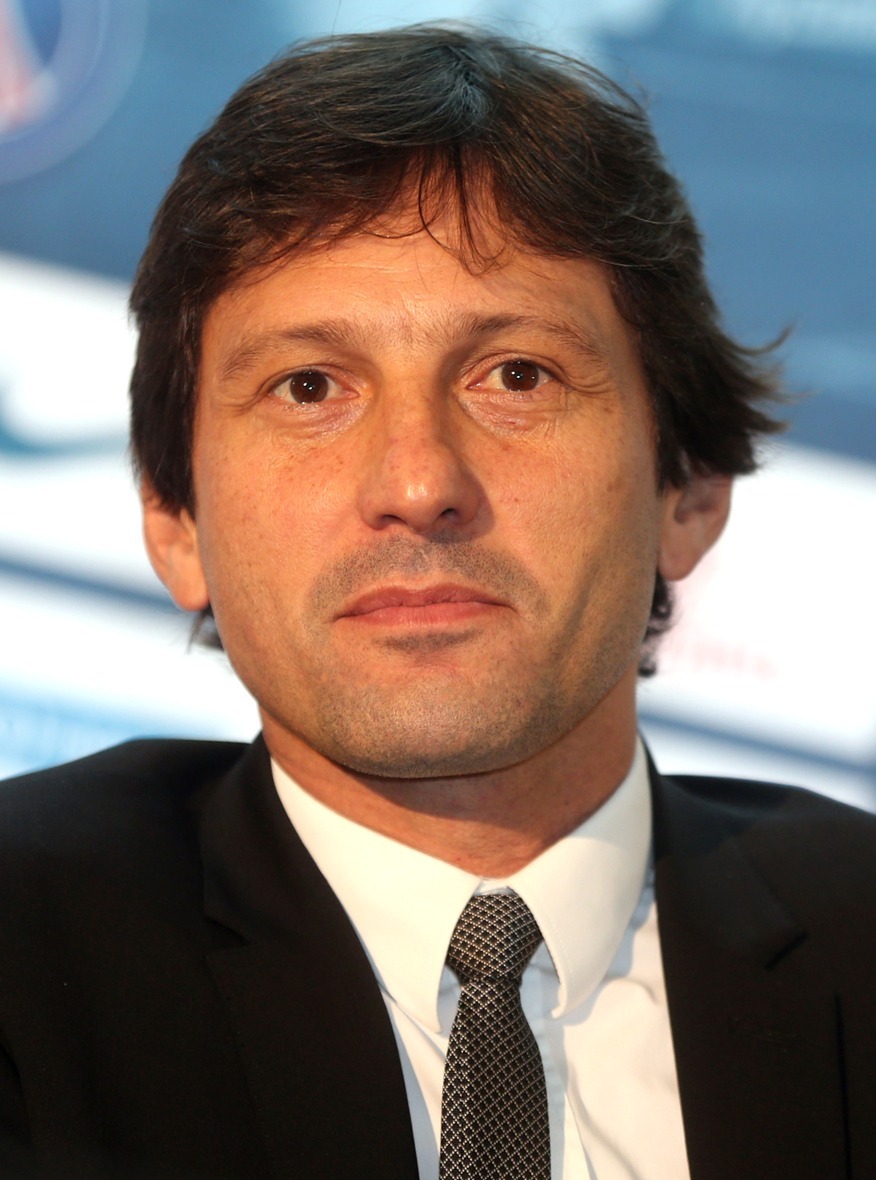
Leonardo Nascimento de Araújo, commonly known as Leonardo, is a name that resonates deeply within the world of football. Born on September 5, 1969, in Niterói, Rio de Janeiro, Brazil, Leonardo has carved out a multifaceted career as a professional footballer, coach, and sports executive. His journey through the world of football is a compelling narrative of talent, resilience, and adaptation, moving from the pitch to the boardroom with remarkable success. This article delves into the life of Leonardo, exploring his early beginnings, rise to fame, and the significant milestones that have defined his career.
Early Life and Career Beginnings
Leonardo’s passion for football was evident from an early age. Growing up in Brazil, a nation where football is not just a sport but a way of life, Leonardo was immersed in the game from his earliest years. He began his professional career with Flamengo, one of Brazil’s most storied football clubs, making his debut in 1987 at just 18 years old. This early start was a sign of things to come, as Leonardo quickly established himself as a talented and versatile player.
His time at Flamengo was marked by significant achievements, including playing alongside some of the greats of Brazilian football, such as Zico, Leandro, Bebeto, and Renato Gaúcho. These formative years provided Leonardo with a rich learning experience, honing his skills and shaping his understanding of the game. His ability to adapt to different positions on the field—whether as a midfielder or a left-back—showcased his versatility and tactical acumen, traits that would become hallmarks of his career.
In 1990, Leonardo moved to São Paulo FC, where he continued to build his reputation as one of Brazil’s most promising football talents. His time at São Paulo was crowned with victory in the Brazilian Championship in 1991, further cementing his status as a rising star in the football world.
International Fame and the Move to Europe
Leonardo’s skills did not go unnoticed on the international stage. In 1993, he made a significant move to Europe, joining Spanish club Valencia. This transition marked the beginning of Leonardo’s international career, where he would go on to play for some of the most prestigious clubs in Europe. However, before fully establishing himself in Europe, Leonardo returned briefly to Brazil, rejoining São Paulo. During this period, he achieved notable success, winning the Copa Libertadores and the Intercontinental Cup, the latter by defeating AC Milan in Tokyo—ironically, a club he would later become deeply associated with.
Leonardo’s international fame reached new heights in 1994 when he played a pivotal role in Brazil’s national team during the FIFA World Cup held in the United States. The tournament was a defining moment for Leonardo, as Brazil emerged victorious, defeating Italy in a dramatic final that went to penalties. However, Leonardo’s World Cup journey was not without controversy; he was infamously sent off in the round of 16 for an elbow incident, which resulted in a four-match ban. Despite this setback, his contributions to Brazil’s fourth World Cup triumph solidified his reputation on the global stage.
After the World Cup, Leonardo’s career took another international turn as he moved to Japan to play for the Kashima Antlers in the newly formed J.League. This move was significant, not only because it demonstrated Leonardo’s willingness to embrace new challenges but also because it allowed him to play alongside his childhood idol, Zico. His time in Japan was brief but impactful, as he helped raise the profile of the J.League and left a lasting impression on Japanese football.
Leonardo at Paris Saint-Germain and AC Milan
In 1996, Leonardo returned to Europe, this time signing with Paris Saint-Germain (PSG). His tenure with PSG was marked by success, including reaching the final of the UEFA Cup Winners’ Cup. Leonardo’s technical skills and football intelligence made him a key player for the French side, and he quickly became a fan favorite.
However, it was his move to AC Milan in 1997 that truly defined Leonardo’s club career. Joining Milan, one of Europe’s most successful and storied clubs, was a significant milestone. Over the next several years, Leonardo became an integral part of the Milan squad, known for his creativity, vision, and leadership on the field. His ability to play in multiple positions made him a valuable asset to the team.
During his time at Milan, Leonardo played 96 Serie A matches and scored 22 goals. His most notable achievement with the club came in the 1998-1999 season when Milan won the Scudetto (Italian Championship). Leonardo was a key figure in this triumph, scoring 12 goals in 27 appearances and helping Milan reclaim its status as one of Italy’s top teams.
The Transition from Player to Executive and Coach
After concluding his playing career with a brief return to Brazil, Leonardo transitioned seamlessly into a new role as a football executive and coach. His multilingual abilities—he speaks Portuguese, English, Spanish, French, and Italian—combined with his extensive network in the football world, made him an ideal candidate for these roles.
Leonardo’s first significant post-playing role was as the technical director at AC Milan. In this capacity, he was instrumental in scouting and signing several young talents who would go on to become stars, including Kaká, Pato, and Thiago Silva. His eye for talent and deep understanding of the game allowed him to make a successful transition from the pitch to the front office.
In 2009, Leonardo took on a new challenge when he was appointed as the head coach of AC Milan, replacing Carlo Ancelotti. His appointment was a bold move, as he had no prior experience as a head coach. However, Leonardo quickly proved his mettle, leading Milan to direct qualification for the UEFA Champions League. One of the highlights of his coaching tenure was a historic 3-2 victory over Real Madrid at the Santiago Bernabéu Stadium, marking Milan’s first win at the iconic venue.
Despite these successes, Leonardo’s relationship with Milan’s management, particularly with club president Silvio Berlusconi, became strained. These tensions ultimately led to his departure from the club in 2010. However, Leonardo’s coaching career was far from over. Later that year, he made a surprising move by joining AC Milan’s city rivals, Inter Milan. His appointment at Inter was seen as a Christmas gift by club owner Massimo Moratti, a long-time admirer of Leonardo. Though his time at Inter was short-lived, Leonardo managed to guide the team to a strong finish in Serie A and a Coppa Italia victory.
The Paris Saint-Germain Era
Leonardo’s career took another significant turn in 2011 when he was appointed as the sporting director of Paris Saint-Germain (PSG). This role marked the beginning of a new era for both Leonardo and the club. At PSG, Leonardo was tasked with overseeing a massive overhaul of the squad as the club sought to establish itself as a dominant force in European football. Backed by the financial power of the club’s Qatari owners, Leonardo played a pivotal role in bringing top talents to Paris, including Zlatan Ibrahimović, Thiago Silva, and Edinson Cavani.
Under Leonardo’s guidance, PSG quickly rose to prominence, winning multiple domestic titles and becoming a regular contender in the UEFA Champions League. His ability to attract world-class talent to the club was instrumental in transforming PSG into one of Europe’s elite teams. However, Leonardo’s time at PSG was not without controversy. In May 2013, he was handed a 14-month suspension by the French Football League’s Disciplinary Commission for pushing a referee during a match. This incident led to his resignation from PSG later that year.
Return to Media and Subsequent Career Moves
Following his departure from PSG, Leonardo took a step back from football management and transitioned into a media role. He became a football pundit for Sky Sport, where his insights and analysis were highly valued. His deep knowledge of the game, combined with his experience as both a player and a coach, made him a respected voice in the world of football broadcasting.
However, Leonardo’s hiatus from football management was short-lived. In 2017, after more than six years away from the touchline, he returned to coaching, taking charge of Turkish club Antalyaspor. Despite the presence of star player Samuel Eto’o, Leonardo’s time in Turkey was brief and challenging, as disagreements with the club’s management and poor results led to his resignation after just a few months.
In 2018, Leonardo made a return to AC Milan, this time as a director. His second stint at Milan was marked by efforts to restore the club’s fortunes and reestablish it as a competitive force in Serie A. However, his time at Milan ended in 2019 when he once again returned to PSG as sporting director. His second tenure at PSG was focused on further strengthening the squad and securing the club’s first UEFA Champions League title, a goal that remained elusive during his time there. In May 2022, Leonardo was relieved of his duties at PSG, marking the end of another chapter in his diverse and accomplished career.
Legacy and Impact on Football
Leonardo Nascimento de Araújo’s journey through football is a testament to his versatility, intelligence, and enduring passion for the game. From his early days as a promising talent in Brazil to his rise as a key figure in European football, Leonardo has left an indelible mark on the sport. His ability to excel in multiple roles—whether as a player, coach, or executive—sets him apart as one of the most dynamic figures in modern football.
Leonardo’s legacy is also defined by his commitment to humanitarian efforts. In 1999, he founded the Fundação Gol de Letra in Brazil, an organization dedicated to providing educational opportunities for underprivileged children. This initiative reflects Leonardo’s deep sense of social responsibility and his desire to give back to the community that shaped him.
Conclusion
Leonardo Nascimento de Araújo is more than just a football legend; he is a symbol of the transformative power of sport. His life and career offer valuable lessons in adaptability, leadership, and the importance of embracing new challenges. As football continues to evolve, Leonardo’s contributions to the game—both on and off the field—will be remembered as a key part of the sport’s rich history.
Whether as a player, coach, or executive, Leonardo has consistently demonstrated a profound understanding of football’s intricacies and an unwavering dedication to excellence. His story serves as an inspiration to future generations, reminding us that true greatness in sport is achieved not just through talent, but through hard work, resilience, and a commitment to making a positive impact on the world.


