
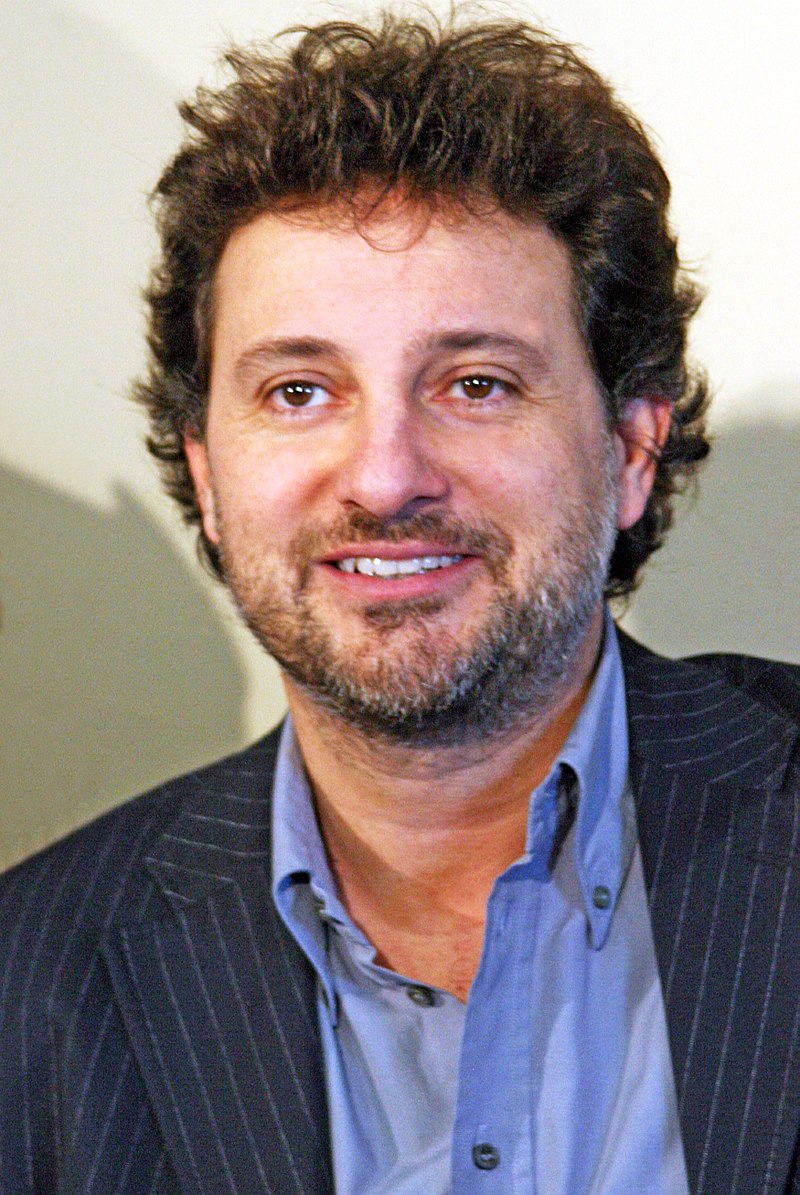
Leonardo Pieraccioni is a prominent Italian actor, director, and screenwriter, born on February 17, 1965, in Florence, Italy. His journey to fame is a tale of talent, perseverance, and a deep love for the arts. Over the years, Pieraccioni has become one of Italy’s most beloved comedians and filmmakers, known for his unique style that blends humor with a touch of melancholy.
Early Life and Career Beginnings
Pieraccioni’s early life was marked by a fascination with performance and entertainment. He attended an institute for business experts but left after two years. At the age of 16, he made his first television appearance on the show “Un ciak per artisti domani,” hosted by a then-unknown Carlo Conti. This experience ignited his passion for the entertainment industry, and he soon began collaborating with Conti and another rising star, Giorgio Panariello. Together, they formed the comedy trio “Fratelli d’Italia,” which enjoyed significant success in theaters across Tuscany.
The trio’s popularity led to more opportunities for Pieraccioni, including hosting the comedic variety show “Succo d’arancia” on a local network. His early work in television and cabaret laid the foundation for his later success in the film industry.
Breakthrough in Television and Music
In 1988, Pieraccioni made his debut on RAI, Italy’s national public broadcasting company, with the show “Il piacere dell’estate,” which aired on Raidue from June to September. This was followed by a radio program titled “Via Asiago Tenda.” His continued collaboration with Conti and Panariello resulted in the creation of “Vernice fresca,” a show broadcast in 1989 on the national Cinquestelle circuit.
During this period, Pieraccioni also ventured into music, recording an album titled “Animali di città” in collaboration with Nicola Serena and Massimo Miniati of the band Interno 31. His first single, “Ahi, ahi, ahi (I figliol di troia ‘e ‘un moian mai),” showcased his comedic talents in a new medium.
Transition to Film and Theatrical Success
Pieraccioni’s transition from television to film began in the early 1990s. He made his cinematic debut in 1991 with the film “Zitti e mosca,” directed by Alessandro Benvenuti. His performance caught the attention of both audiences and critics, establishing him as a rising star in Italian cinema.
Simultaneously, Pieraccioni continued to build his reputation in theater. In 1990, he launched the “Leonardo Pieraccioni Show,” a live performance that further expanded his fan base. The success of this show paved the way for his involvement in “Fantastico 12,” a television program hosted by Johnny Dorelli and Raffaella Carrà. Although he was considered a favorite, Pieraccioni finished second in the talent competition, a result that did little to hinder his career.
Filmmaking and Directorial Debut
The mid-1990s marked a significant turning point in Pieraccioni’s career. In 1995, he made his directorial debut with the film “I laureati.” The comedy, which featured actors like Rocco Papaleo, Maria Grazia Cucinotta, and Massimo Ceccherini, was a commercial success, earning 15 billion lire at the box office against a production cost of 2 billion lire. This success cemented Pieraccioni’s reputation as a filmmaker with a unique voice in Italian cinema.
Building on the momentum of “I laureati,” Pieraccioni released “Il ciclone” in 1996. The film, which starred Natalia Estrada, Alessandro Haber, and Massimo Ceccherini, became a cultural phenomenon, earning over 70 billion lire at the box office. “Il ciclone” is often credited with revitalizing the Italian comedy genre and remains one of the highest-grossing Italian films of all time.
Pieraccioni’s success continued with the release of “Fuochi d’artificio” in 1997, another box office hit that solidified his status as one of Italy’s leading filmmakers. Despite these triumphs, Pieraccioni remained humble, attributing his success to a combination of hard work, luck, and the support of his close-knit team of collaborators.
Expanding Horizons: Writing and Further Film Success
In 1998, Pieraccioni expanded his creative repertoire by writing his first book, “Trent’anni, alta, mora.” The collection of stories showcased a different side of his humor, one that was more introspective and tinged with melancholy. This contrast to the lightheartedness of his films revealed Pieraccioni’s depth as a storyteller.
Around the same time, he starred in the film “Il mio west,” alongside Alessia Marcuzzi, directed by Giovanni Veronesi. Although Pieraccioni did not direct this film, his involvement as an actor and screenwriter demonstrated his versatility in the film industry.
Between 1999 and 2001, Pieraccioni directed and starred in “Il pesce innamorato” and “Il principe e il pirata.” While these films did not achieve the same commercial success as his earlier works, they were still well-received and contributed to Pieraccioni’s growing body of work.
Continued Success and Personal Life
The early 2000s saw Pieraccioni continue to thrive both professionally and personally. In 2003, he released “Il paradiso all’improvviso,” a film that marked his return to the top of the Italian box office. The film featured Anna Maria Barbera, a comedian known for her ungrammatical punchlines, and was another hit for Pieraccioni.
In 2005, Pieraccioni directed and starred in “Ti amo in tutte le lingue del mondo,” a film that included appearances by his longtime friends and collaborators Massimo Ceccherini and Giorgio Panariello. The following year, he made a memorable appearance at the Sanremo Music Festival, hosted by Panariello, further cementing his status as a beloved figure in Italian entertainment.
In 2007, Pieraccioni released “Una moglie bellissima,” which starred Gabriel Garko and Laura Torrisi, a former contestant on the reality show “Grande Fratello” (Big Brother). Pieraccioni and Torrisi fell in love during the filming of the movie, and their relationship became a subject of public fascination. In December 2009, the couple welcomed their daughter, Martina.
Later Career and Ongoing Impact
As Pieraccioni entered the 2010s, his career showed no signs of slowing down. In 2011, he directed and starred in “Finalmente la felicità,” where he played a professor from Lucca. The film was well-received, adding another success to his already impressive filmography.
Two years later, in 2013, Pieraccioni returned to the big screen with “Un fantastico via vai,” a comedy that once again featured his trusted collaborators, Panariello and Ceccherini, alongside Serena Autieri. Around this time, Pieraccioni also reunited with Carlo Conti on the popular television show “Tale e quale Show,” where they performed a comedic imitation of the Three Tenors with Gabriele Cirilli.
Legacy and Influence
Leonardo Pieraccioni’s impact on Italian cinema and comedy cannot be overstated. His films, characterized by their blend of humor, romance, and a touch of sentimentality, have resonated with audiences across generations. Pieraccioni’s ability to connect with his audience on an emotional level, while still making them laugh, is a testament to his talent and versatility as an entertainer.
Beyond his work in film and television, Pieraccioni’s contributions to Italian culture extend to literature and music, showcasing his multifaceted creativity. His collaborations with fellow comedians like Carlo Conti and Giorgio Panariello have not only enriched his work but have also helped to shape the landscape of Italian entertainment.
As Pieraccioni continues to create and perform, his influence on the industry remains strong. His journey from a young comedian in Florence to a celebrated filmmaker and actor serves as an inspiration to aspiring artists in Italy and beyond. With each new project, Pieraccioni adds another layer to his already rich legacy, ensuring that his work will continue to be enjoyed by audiences for years to come.


