
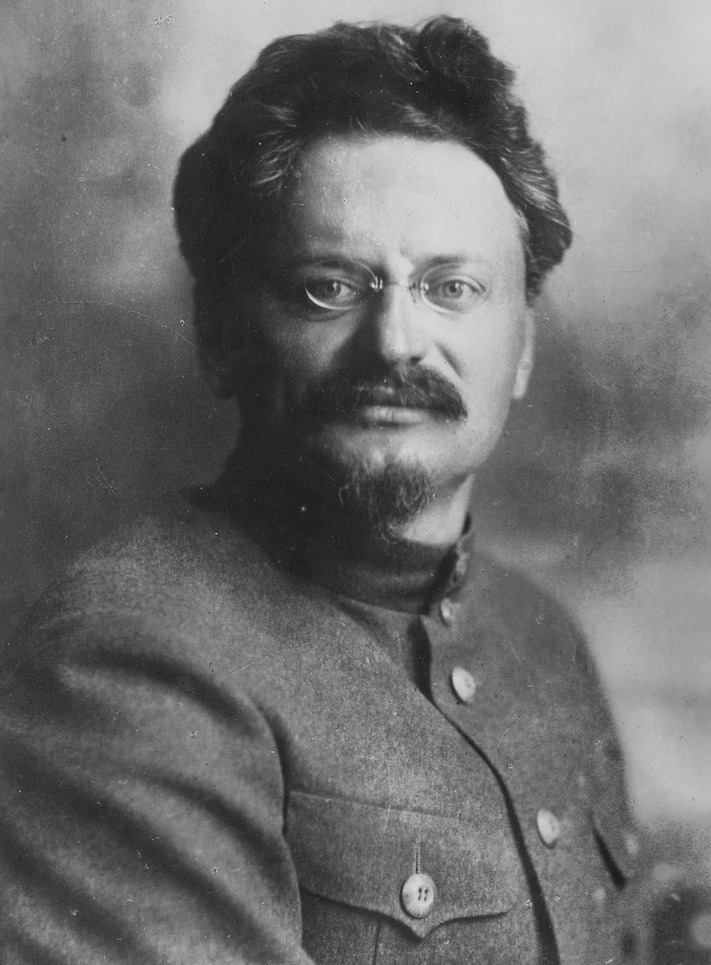
Lev Trotsky, born Lev Davidovich Bronstein on November 7, 1879, in Yanovka, Ukraine (then part of the Russian Empire), remains one of the most influential figures of the 20th century. His legacy as a revolutionary leader, political thinker, and Marxist theorist continues to inspire and provoke debate among historians and political scholars. Trotsky’s life, marked by both triumphs and tragedies, offers profound insights into the turbulent history of the Russian Revolution, the rise of the Soviet Union, and the internal struggles that shaped the trajectory of global communism.
Early Life and Education
Lev Trotsky was born into a relatively well-off Jewish farming family in the Kherson province of Ukraine. His upbringing in a rural setting contrasted sharply with the revolutionary ideals he would later embrace. Trotsky’s early education began at home, where he displayed a remarkable aptitude for learning. This intellectual curiosity eventually led him to Odessa, where he attended the university and first encountered revolutionary ideas.
In Odessa, Trotsky became involved with revolutionary circles, deeply influenced by Marxist ideology. By the age of 19, he was already an active member of the South Russian Workers’ Union, a group dedicated to advocating for workers’ rights and revolutionary change. This involvement led to his arrest in 1898, marking the beginning of his lifelong struggle against oppression.
Political Awakening and Exile
Trotsky’s revolutionary activities soon caught the attention of the Tsarist authorities, leading to his arrest and exile to Siberia in 1900. However, he managed to escape in 1902, adopting the pseudonym “Trotsky,” a name that would become synonymous with revolutionary fervor. His escape marked the beginning of a new phase in his life, one characterized by a deep commitment to the cause of socialism.
After his escape, Trotsky made his way to London, where he joined forces with Vladimir Lenin and other prominent Marxists. In London, he became an active participant in the Russian Social Democratic Labour Party (RSDLP) and contributed to the party’s newspaper, “Iskra.” Trotsky’s time in London was crucial in shaping his ideological beliefs, particularly his views on the necessity of a proletarian revolution.
The 1905 Revolution and Rise to Prominence
Trotsky’s return to Russia in 1905 coincided with one of the most significant events in the country’s history—the 1905 Revolution. This revolution, sparked by widespread discontent among workers and peasants, saw Trotsky rise to prominence as a key leader of the St. Petersburg Soviet. As the chairman of the Soviet, Trotsky played a central role in organizing strikes and protests, advocating for workers’ rights and political reform.
The 1905 Revolution ultimately failed, leading to a brutal crackdown by the Tsarist regime. Trotsky was arrested again and sentenced to life in exile. However, his leadership during the revolution cemented his reputation as a fearless revolutionary and a staunch advocate for the working class.
The Russian Revolution of 1917
The outbreak of World War I and the subsequent collapse of the Russian Empire created the conditions for another revolution in 1917. This time, Trotsky played an even more significant role. After a brief period in exile in the United States, Trotsky returned to Russia in time for the February Revolution, which led to the abdication of Tsar Nicholas II.
Trotsky quickly aligned himself with the Bolsheviks, led by Lenin, and became one of the most prominent leaders of the October Revolution. His oratory skills, strategic acumen, and deep commitment to Marxist principles made him an indispensable figure in the Bolshevik leadership. Trotsky’s role as the People’s Commissar for Foreign Affairs placed him at the forefront of negotiations with Germany, leading to the Treaty of Brest-Litovsk, which ended Russia’s involvement in World War I.
The Creation of the Red Army
Perhaps Trotsky’s most enduring legacy was his role in the creation of the Red Army. Appointed as the People’s Commissar for Military and Naval Affairs in 1918, Trotsky faced the daunting task of organizing a military force capable of defending the nascent Soviet state against internal and external enemies. Under his leadership, the Red Army grew into a formidable force, ultimately securing victory in the Russian Civil War against the anti-Bolshevik White Army.
Trotsky’s leadership during the Civil War showcased his ability to inspire and organize troops, despite facing enormous challenges. His use of former Tsarist officers, combined with a strict policy of discipline and political indoctrination, was instrumental in the Red Army’s success. However, his central role in the military also made him a target for rivals within the Bolshevik Party.
The Power Struggle with Stalin
After Lenin’s death in 1924, a power struggle ensued within the Soviet leadership. Trotsky, who had been widely regarded as Lenin’s natural successor, found himself at odds with Joseph Stalin, who was steadily consolidating power. Trotsky’s opposition to Stalin’s policies, particularly his theory of “socialism in one country,” put him at a disadvantage.
Trotsky advocated for the concept of “permanent revolution,” which argued that the success of socialism in Russia depended on the spread of revolution to other countries. This theory directly contradicted Stalin’s focus on building socialism within the Soviet Union first. As Stalin gained control of the party apparatus, Trotsky was gradually marginalized and eventually expelled from the Communist Party in 1927.
Exile and Continued Struggle
After his expulsion, Trotsky was exiled to Alma Ata in Kazakhstan and later deported from the Soviet Union entirely. Over the next decade, he lived in various countries, including Turkey, France, and Norway, before finally settling in Mexico in 1937. Despite his physical distance from the Soviet Union, Trotsky remained a vocal critic of Stalin’s regime, condemning its authoritarianism and the betrayal of the principles of the October Revolution.
In Mexico, Trotsky found an unlikely ally in the famous artist Diego Rivera and his wife, Frida Kahlo. Trotsky’s time in Mexico was marked by both intellectual productivity and personal turmoil. He continued to write extensively, producing works such as “The Revolution Betrayed,” in which he laid out his critique of the Soviet state under Stalin.
The Fourth International and Legacy
In 1938, Trotsky founded the Fourth International, an organization dedicated to promoting international socialist revolution. The Fourth International sought to challenge the dominance of Stalin’s Third International and provide a platform for leftist movements around the world. Although the organization never achieved the influence Trotsky had hoped for, it remains a testament to his unwavering commitment to the principles of Marxism.
Trotsky’s final years were spent under constant threat from Stalinist agents. His outspoken opposition to Stalin made him a target for assassination. On August 20, 1940, Trotsky was attacked in his home in Coyoacán, Mexico, by Ramón Mercader, a Stalinist agent. Mercader struck Trotsky in the head with an ice axe, inflicting a fatal wound. Trotsky succumbed to his injuries the following day, marking the end of one of the most remarkable lives of the 20th century.
Conclusion: Trotsky’s Enduring Influence
Lev Trotsky’s life and legacy continue to resonate in contemporary discussions of socialism, revolution, and the dynamics of power. His contributions to Marxist theory, particularly his ideas on permanent revolution and the role of the working class in revolutionary movements, remain influential among leftist thinkers and activists. Trotsky’s tragic end, at the hands of the regime he once helped to establish, serves as a poignant reminder of the dangers inherent in political struggle and the ever-present threat of authoritarianism.
Trotsky’s life story is not just a tale of revolutionary zeal and ideological battles; it is also a reflection of the broader historical forces that shaped the 20th century. His experiences, from the rural plains of Ukraine to the halls of power in revolutionary Russia, and finally to his exile in Mexico, offer valuable insights into the complexities of political life and the enduring struggle for justice and equality.
In the end, Lev Trotsky’s legacy is one of both inspiration and caution. He stands as a symbol of the revolutionary spirit, unyielding in his pursuit of a just society, yet also a victim of the brutal realities of political power. His life serves as a testament to the enduring relevance of the questions he grappled with—questions that continue to shape our world today.


