
Introduction
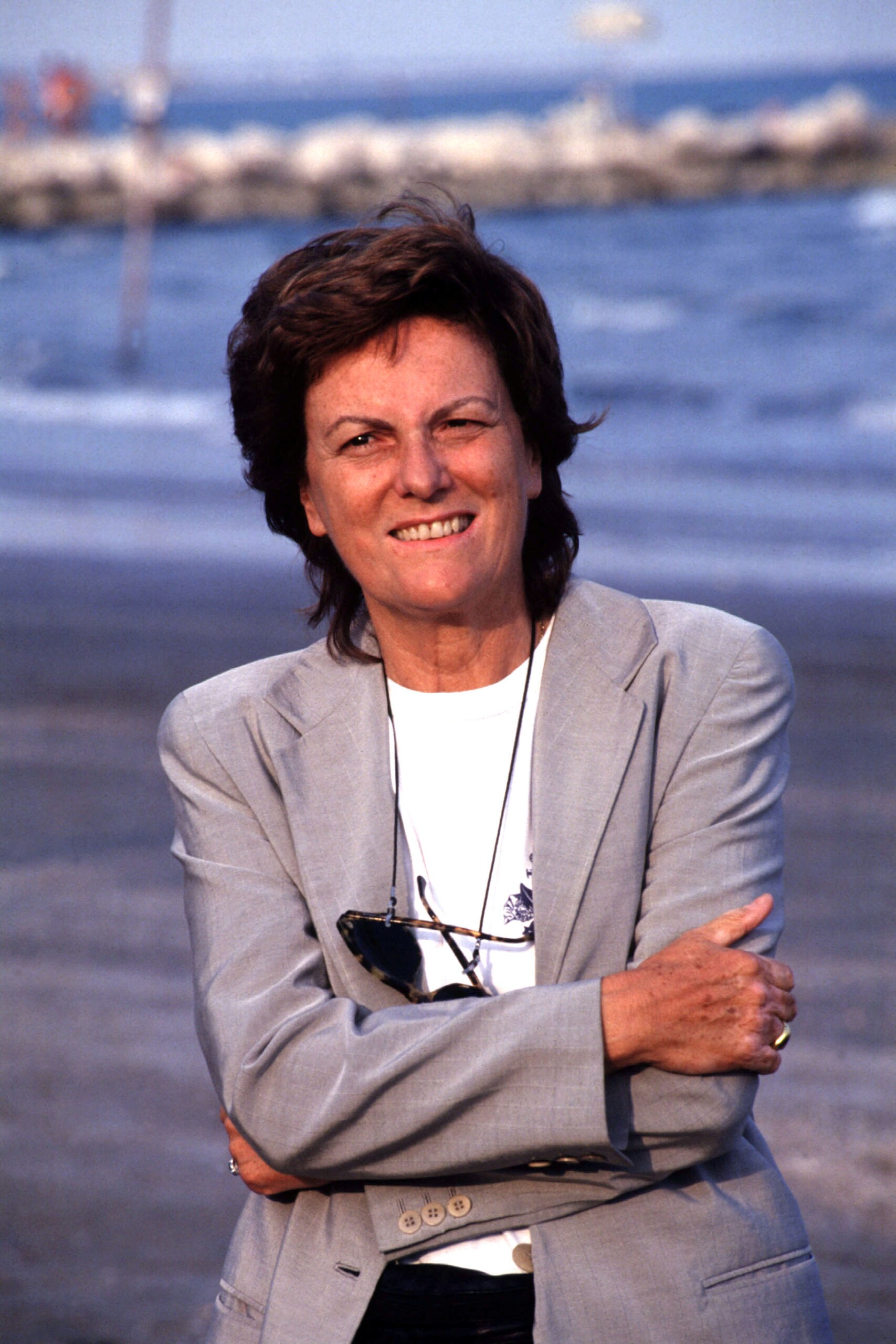
Liliana Cavani is a name synonymous with innovation and boldness in Italian cinema. Born on January 12, 1933, in Carpi, Italy, Cavani has carved out a distinctive place for herself in the world of filmmaking, known for her provocative and thought-provoking works. Over the course of her illustrious career, she has tackled complex themes such as power, sexuality, and existentialism, making her one of the most significant and enduring figures in Italian and international cinema. This article explores the life and achievements of Liliana Cavani, offering insights into her rise to fame, her groundbreaking contributions to film, and her lasting impact on the world of cinema.
Early Life and Education
Liliana Cavani was born into a family with deep roots in architecture, as her father was an architect originally from Mantua. Raised in a family where her father’s presence was largely absent, Cavani grew up in an environment that cultivated her intellectual curiosity. Her mother played a crucial role in nurturing her interest in cinema, frequently taking her to the movies, which became a cherished routine in her childhood.
After completing her high school education, Cavani enrolled at the University of Bologna, where she pursued a degree in Classical Literature. Her academic background in ancient literature provided her with a solid foundation in narrative structures and historical contexts, which would later influence her work as a filmmaker. In 1959, she graduated with a degree in Ancient Letters and soon moved to Rome to attend the prestigious Centro Sperimentale di Cinematografia, Italy’s national film school. This move marked the beginning of her formal education in filmmaking and set the stage for her future career.
Early Career: Documentaries and Social Inquiries
Liliana Cavani’s early work was deeply rooted in documentary filmmaking, focusing on social issues and historical subjects. Her talent was quickly recognized when she won the Ciak d’Oro for her short film “La battaglia,” which showcased her ability to blend historical inquiry with cinematic expression.
She went on to create a series of documentaries that explored complex and often controversial topics. Among these were “La storia del Terzo Reich” (“The History of the Third Reich”), “La donna nella resistenza” (“Women in the Resistance”), and “La casa in Italia” (“The House in Italy”). These works not only demonstrated Cavani’s keen interest in history and social issues but also her commitment to using film as a medium for education and social commentary. Her documentaries were characterized by their rigorous research, nuanced perspectives, and a deep empathy for the subjects she portrayed.
Breaking into Feature Films: “Francesco d’Assisi” and “Galileo”
In 1966, Liliana Cavani made her debut as a feature film director with “Francesco d’Assisi”, a biographical film about the life of Saint Francis of Assisi. The film starred Lou Castel as the titular character and was noted for its unorthodox portrayal of the saint, focusing on his spiritual journey and the challenges he faced in renouncing worldly possessions. The film was well-received and established Cavani as a director capable of tackling complex religious and philosophical themes.
Two years later, in 1968, Cavani directed “Galileo”, another biographical film, this time focusing on the life of the renowned scientist Galileo Galilei. The film was selected for the Venice Film Festival and was praised for its exploration of the conflict between science and religion. Cavani used the story of Galileo to comment on the broader societal implications of scientific inquiry and the resistance it often encounters from established power structures. This film further cemented Cavani’s reputation as a filmmaker unafraid to challenge conventional narratives and to engage with intellectually demanding material.
The 1970s: Controversy and Critical Acclaim
The 1970s were a pivotal decade for Liliana Cavani, during which she directed some of her most controversial and critically acclaimed works. In 1971, she returned to the Venice Film Festival, this time with “L’ospite” (“The Guest”), a film about a woman who, after being released from a psychiatric hospital, struggles to reintegrate into society. The film’s stark portrayal of mental illness and societal alienation resonated with audiences and critics alike.
However, it was in 1973 that Cavani truly made her mark on international cinema with the release of “Il portiere di notte” (“The Night Porter”). Starring Dirk Bogarde and Charlotte Rampling, the film tells the story of a former Nazi concentration camp officer who rekindles a sadomasochistic relationship with one of his former victims, now a concentration camp survivor. The film’s exploration of the psychological aftermath of the Holocaust, along with its explicit depiction of power dynamics and sexual perversion, sparked intense debate and controversy. Despite—or perhaps because of—its provocative content, “The Night Porter” became a landmark film, earning Cavani both acclaim and notoriety. It remains one of her most recognized works and a powerful example of her willingness to push the boundaries of cinematic storytelling.
In 1977, Cavani directed “Al di là del bene e del male” (“Beyond Good and Evil”), a film that delves into the later years of the philosopher Friedrich Nietzsche’s life, focusing on his complex relationship with Lou von Salomé and Paul Rée. The film’s exploration of existential themes, as well as its portrayal of Nietzsche’s troubled psyche, further demonstrated Cavani’s deep interest in the intersections of philosophy, psychology, and human behavior.
The 1980s: A Return to Historical and Philosophical Themes
The 1980s saw Liliana Cavani continuing to explore historical and philosophical themes through her work. In 1981, she directed “La pelle” (“The Skin”), an adaptation of Curzio Malaparte’s novel of the same name. The film, set in post-World War II Naples, featured a star-studded cast, including Burt Lancaster, Claudia Cardinale, and Marcello Mastroianni. “La pelle” was a stark and unflinching portrayal of the devastation and moral complexities of war, and it further solidified Cavani’s reputation as a filmmaker unafraid to tackle difficult and uncomfortable subjects.
Following “La pelle,” Cavani directed “Oltre la porta” (“Beyond the Door”) in 1982 and “Interno berlinese” (“The Berlin Affair”) in 1985. The latter, set in 1930s Berlin, explored themes of sexual perversion and the psychological impact of totalitarianism, themes that had become hallmarks of Cavani’s work. Her ability to blend personal narratives with broader historical and philosophical questions continued to set her apart as a filmmaker of exceptional depth and insight.
In 1989, Cavani returned to the subject of Saint Francis of Assisi with the film “Francesco”, this time casting Mickey Rourke in the lead role. The film offered a more modern interpretation of the saint’s life, focusing on his radical rejection of material wealth and his commitment to living in harmony with nature. “Francesco” was praised for its thoughtful and humanistic portrayal of the saint, and it highlighted Cavani’s enduring fascination with spiritual and existential themes.
The 1990s and 2000s: Honoring a Legacy
As the 1990s and 2000s progressed, Liliana Cavani continued to be recognized for her contributions to cinema. In 1999, she was awarded an honorary degree in Communication Sciences from the LUMSA University in Rome, recognizing her “research on the authenticity of humanity and for giving form to the anxieties of the present.” This honor reflected the profound impact of her work, which had consistently engaged with the most pressing social and philosophical questions of her time.
In 2002, Cavani directed “Il gioco di Ripley” (“Ripley’s Game”), an adaptation of Patricia Highsmith’s novel, starring John Malkovich. The film, a psychological thriller, explored themes of identity, morality, and the consequences of violence, continuing Cavani’s tradition of challenging her audience to confront uncomfortable truths.
Her work in television also gained recognition during this period. In 2004, she directed “De Gasperi, l’uomo della speranza”, a biographical television film about Alcide De Gasperi, the Italian statesman who played a key role in the country’s post-war reconstruction. The film starred Fabrizio Gifuni as De Gasperi and Sonia Bergamasco, and it was praised for its historical accuracy and emotional depth.
The 2010s and Beyond: A Lasting Influence
Liliana Cavani’s influence continued well into the 2010s and beyond. In 2012, she was honored with the Federico Fellini 8 ½ Award at the Bif&st Bari International Film Festival, recognizing her outstanding contributions to cinema. She continued to work in television, directing the TV movie “Francesco” in 2014, her third work focused on the life of Saint Francis of Assisi. This film, like her previous works, highlighted her enduring fascination with the saint’s message of brotherhood and compassion.
In 2023, at the age of 90, Liliana Cavani directed “L’ordine del tempo” (“The Order of Time”), a film based on the book by physicist Carlo Rovelli. The film, which explores the nature of time and human existence, was a fitting continuation of Cavani’s lifelong exploration of philosophical and existential themes. That same year, she was awarded the Golden Lion for Lifetime Achievement at the Venice Film Festival, a testament to her extraordinary career and her lasting impact on the world of cinema.
Conclusion
Liliana Cavani is a filmmaker whose work transcends conventional boundaries, exploring the deepest and most complex aspects of human existence. Her films are characterized by their intellectual rigor, emotional depth, and unflinching willingness to confront the darkest corners of the human psyche. Over the course of her career, Cavani has established herself as one of the most important and influential figures in Italian cinema, with a legacy that continues to inspire and challenge audiences around the world.
As a director, Cavani has never shied away from controversy, instead embracing it as a necessary part of the artistic process. Her work has sparked debate, provoked thought, and, most importantly, illuminated the human condition in all its complexity. In doing so, Liliana Cavani has left an indelible mark on the world of cinema, and her influence will undoubtedly continue to be felt for generations to come.


