
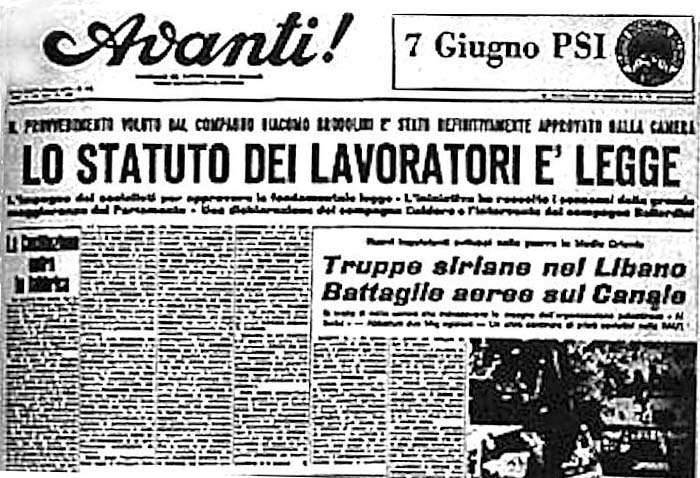
Lo Statuto dei lavoratori, or the “Workers’ Statute,” is one of the most significant legislative milestones in the history of Italian labor law. Enacted on May 20, 1970, this statute emerged during a period of intense social and political upheaval in Italy, following the “Hot Autumn” of 1969—a time when over seven million workers mobilized to demand better working conditions and rights. The Statute’s introduction marked a transformative moment in Italian society, embedding protections for workers that had far-reaching consequences for labor relations in the country. In this article, we will explore the origins, key provisions, and enduring impact of Lo Statuto dei lavoratori, providing detailed insights into its historical context and its relevance in today’s labor landscape.
Historical Context: The Road to the Workers’ Statute
To fully appreciate the significance of Lo Statuto dei lavoratori, it’s essential to understand the historical context in which it was conceived. The late 1960s were a period of significant social change across the globe, and Italy was no exception. The “Hot Autumn” of 1969, known as Autunno caldo in Italian, was characterized by a wave of strikes and protests that swept across the country. Workers from various industries, including manufacturing, transportation, and public services, united to demand better wages, shorter working hours, and more robust protections against unfair labor practices.
These protests were not just about economic demands; they also reflected broader discontent with the political and social status quo. The movement was fueled by a growing awareness among workers of their rights and a collective desire to challenge the existing power structures that had long marginalized them. The strikes were so widespread and intense that they forced the government to take notice and respond.
In response to this unrest, the Italian government began drafting what would become Lo Statuto dei lavoratori. The goal was to codify workers’ rights and create a legal framework that would regulate the relationship between employers and employees. The statute was seen as a way to stabilize the labor market and address the grievances that had fueled the protests. After months of negotiations and revisions, the statute was finally passed by the Italian Parliament in May 1970.
Key Provisions of Lo Statuto dei lavoratori
Lo Statuto dei lavoratori introduced several groundbreaking provisions that fundamentally altered the landscape of labor relations in Italy. The statute is divided into several sections, each addressing different aspects of workers’ rights and employer obligations. Below are some of the most important provisions:
-
Freedom of Expression and Protection Against Discrimination (Article 1):
The statute guarantees workers the right to freely express their political, religious, and trade union opinions in the workplace. This was a significant advancement at the time, as it protected workers from discrimination based on their beliefs and affiliations. Employers were prohibited from using private security to monitor employees or their activities, ensuring that workers could express themselves without fear of retribution. -
Protection of Privacy (Article 4):
Article 4 of the statute prohibits employers from using audiovisual or other equipment to monitor employees’ activities without their consent. This provision was crucial in safeguarding workers’ privacy, ensuring that they were not subjected to invasive surveillance while performing their duties. -
Regulation of Disciplinary Actions (Article 7):
The statute sets out strict guidelines for how employers can administer disciplinary actions. Workers are entitled to be informed of any disciplinary measures and have the right to contest them through established legal channels. This provision was designed to prevent arbitrary or unjust punishment and to ensure that workers had recourse in cases of unfair treatment. -
Right to Organize and Participate in Union Activities (Articles 14-17):
Lo Statuto dei lavoratori strongly emphasizes the right of workers to organize and participate in union activities. Employers are prohibited from discriminating against employees for their union membership or involvement in union activities. The statute also requires employers to allow workers to hold union meetings on company premises, providing a legal foundation for the flourishing of trade unionism in Italy. -
Reintegration and Compensation in Case of Unjust Dismissal (Article 18):
One of the most contentious and widely debated provisions of Lo Statuto dei lavoratori is Article 18, which deals with the reintegration of workers who have been unjustly dismissed. Under this article, if a court finds that a worker was dismissed without just cause, the employer is required to reinstate the worker to their previous position and compensate them for lost wages. This provision has been at the center of numerous legal and political battles over the years, with some advocating for its expansion and others calling for its revision.
The Impact of Lo Statuto dei lavoratori
The enactment of Lo Statuto dei lavoratori had a profound impact on Italian society and labor relations. For workers, the statute provided a new level of security and empowerment. It codified rights that many had fought for during the “Hot Autumn” and created a legal framework that protected them from exploitation and unfair treatment. The statute also contributed to the growth of the trade union movement in Italy, as it legitimized union activities and ensured that workers could organize without fear of retaliation.
For employers, the statute represented a significant shift in the balance of power. The new regulations imposed by Lo Statuto dei lavoratori required businesses to adhere to stricter standards in their treatment of employees, leading to changes in workplace practices and management strategies. While some employers viewed the statute as a necessary step toward modernizing labor relations, others saw it as a burden that increased the cost and complexity of doing business.
Over the years, Lo Statuto dei lavoratori has been the subject of ongoing debate and scrutiny. Proponents argue that it remains a vital tool for protecting workers’ rights and ensuring social justice in the workplace. They point to the statute’s role in reducing workplace discrimination, improving job security, and promoting fair labor practices as evidence of its enduring relevance.
Critics, however, have raised concerns about the statute’s impact on labor market flexibility and economic competitiveness. Some argue that the strict regulations imposed by the statute can make it difficult for businesses to adapt to changing economic conditions, leading to inefficiencies and hindering job creation. The debate over Article 18, in particular, has been a flashpoint, with some calling for its repeal or modification to allow for greater flexibility in hiring and firing practices.
Lo Statuto dei lavoratori in the Modern Era
As Italy has evolved economically and politically, so too has the interpretation and application of Lo Statuto dei lavoratori. In recent years, there have been several attempts to reform the statute, particularly in response to the challenges posed by globalization and the changing nature of work. The rise of the gig economy, the increasing prevalence of temporary and part-time work, and the need for greater labor market flexibility have all prompted calls for updates to the statute.
In 2015, the Italian government introduced the Jobs Act, a package of labor market reforms aimed at increasing flexibility and reducing unemployment. One of the key components of the Jobs Act was the revision of Article 18, which limited the circumstances under which workers could be reinstated after being unjustly dismissed. The reform sparked widespread protests from trade unions and workers’ rights groups, who argued that it undermined the protections provided by Lo Statuto dei lavoratori and weakened job security.
Despite these challenges, Lo Statuto dei lavoratori remains a cornerstone of Italian labor law. Its provisions continue to protect millions of workers across the country, ensuring that they are treated with dignity and respect in the workplace. The statute’s legacy is a testament to the power of collective action and the importance of enshrining workers’ rights in law.
Conclusion: The Enduring Legacy of Lo Statuto dei lavoratori
Lo Statuto dei lavoratori stands as a landmark achievement in the history of labor rights, not just in Italy, but globally. It represents the culmination of decades of struggle by workers to secure fair treatment, job security, and the right to organize. The statute has played a crucial role in shaping labor relations in Italy, providing a legal framework that has protected workers from exploitation and abuse for over half a century.
As we look to the future, the challenges facing workers and employers continue to evolve. Technological advancements, economic globalization, and shifting employment patterns are reshaping the world of work in ways that were unimaginable when Lo Statuto dei lavoratori was first enacted. However, the principles enshrined in the statute—fairness, dignity, and respect for workers—remain as relevant today as they were in 1970.
In a world where workers’ rights are increasingly under threat, the legacy of Lo Statuto dei lavoratori serves as a reminder of the importance of protecting and advancing those rights. Whether through continued advocacy, legal reform, or collective action, the spirit of the Workers’ Statute lives on in the ongoing struggle for social and economic justice.


