
Introduction
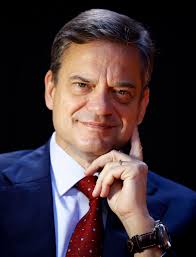
Lorenzo Bini Smaghi, born on November 29, 1956, in Florence, Italy, is a prominent Italian economist renowned for his significant contributions to European financial policy and economic governance. His illustrious career spans roles in major financial institutions, including the European Central Bank (ECB) and the Bank of Italy, as well as influential academic positions. This comprehensive biography delves into his early life, academic achievements, professional milestones, and the impact of his work on global economics.
Early Life and Education
Family Background
Lorenzo Bini Smaghi hails from a noble family with roots in Tuscany and Umbria. The Bini family of Florence, historically intertwined with the Smaghi family of Città della Pieve and Montepulciano, bestowed their surname upon the latter in 1853. Bini Smaghi’s parents, Maria Carla Mazzei and Bino Bini Smaghi, provided a rich cultural and intellectual environment, nurturing his early interests in economics and finance.
Academic Pursuits
Bini Smaghi’s academic journey began at the Lycée Français de Bruxelles in Belgium, where he completed his high school education in 1974. He then pursued higher education at the Catholic University of Leuven, Belgium, earning a degree in Economics in 1978. His quest for knowledge led him to the University of Southern California, where he obtained a Master of Arts in Economics in 1980. Furthering his expertise, Bini Smaghi earned a degree in Political Science from the University of Bologna.
Professional Career
Early Career at the Bank of Italy
In 1983, Lorenzo Bini Smaghi embarked on his professional career as an economist at the Bank of Italy, focusing on international economics within the research department. His analytical skills and keen insights quickly established him as a valuable asset. In 1988, after earning a PhD from the University of Chicago, he was appointed head of the Italian Foreign Exchange and International Trade Office at the Bank of Italy.
Roles in European and International Financial Institutions
In 1998, Bini Smaghi published “L’euro” with Il Mulino and married fellow economist Veronica De Romanis, with whom he has two children, Corso and Laudomia. That same year, he ascended to a prominent role at the Italian Ministry of Economy and Finance, becoming the Director General of International Financial Relations. His expertise was further recognized when he joined the European Monetary Institute, precursor to the ECB, leading the Analysis and Planning Division.
European Central Bank Executive Board
In 2005, Lorenzo Bini Smaghi’s career reached a pinnacle when he was appointed to the Executive Board of the European Central Bank (ECB). During his tenure, he played a crucial role in shaping monetary policy and financial stability measures across the Eurozone. His contributions were instrumental during the global financial crisis of 2008, where his decisions helped navigate the complexities of the economic downturn.
Leadership at Fondazione Palazzo Strozzi
In addition to his role at the ECB, Bini Smaghi served as the President of the Fondazione Palazzo Strozzi in Florence from 2006. Under his leadership, the foundation became a cultural beacon, promoting arts and cultural heritage in Italy.
The Controversial Resignation Issue
Political Pressure and Diplomatic Tensions
In June 2011, then-Prime Minister Silvio Berlusconi publicly announced that the Italian government had formally requested Bini Smaghi’s resignation from the ECB Executive Board. This request stemmed from the appointment of Mario Draghi as ECB President, which resulted in an imbalance with two Italians on the six-member board and no French representatives following Jean-Claude Trichet’s departure.
Defending ECB Independence
Bini Smaghi staunchly refused to resign, emphasizing the ECB’s independence from political influence. He argued that board members were appointed collectively by EU member states, not as representatives of individual nations. This stance garnered support from the ECB’s legal department, which highlighted that resignations should be voluntary and aligned with the individual’s qualifications and rank.
Resolution and Departure
The diplomatic standoff between Italy and France culminated in Bini Smaghi’s promise to step down by the end of the year. Despite various offers, including the presidency of the Italian Antitrust Authority and a potential candidacy for the presidency of the European Investment Bank, Bini Smaghi’s resignation was delayed until the political landscape in Italy shifted. In November 2011, following Berlusconi’s loss of parliamentary majority and subsequent resignation, Bini Smaghi announced his departure from the ECB via its official website.
Academic and Professional Roles in the 2010s
Harvard and Other Academic Positions
In January 2012, Lorenzo Bini Smaghi was appointed as a visiting scholar at Harvard University, further solidifying his academic credentials. Concurrently, he became a Senior Fellow at the Italian Institute for International Political Studies (ISPI), contributing to international economic policy discussions.
Leadership Roles in Corporate Governance
Bini Smaghi’s expertise in economics and finance led to several high-profile corporate appointments. In October 2012, he was elected President of Snam, a leading energy infrastructure company in Italy. The following year, he joined the Board of Directors of Morgan Stanley International as an independent member, providing strategic oversight and guidance.
Publications and Thought Leadership
Books and Articles
Lorenzo Bini Smaghi is a prolific author, contributing significantly to economic literature. His works include:
- “L’euro” (1998) – A comprehensive analysis of the euro and its implications for Europe.
- “Chi ci salva dalla prossima crisi finanziaria” (2000) – Examining potential financial crises and preventive measures.
- “Open Issues in European Central Banking” (2000) – Published by Macmillan, exploring key challenges in central banking.
- “Il paradosso dell’euro. Luci e ombre dieci anni dopo” (2008) – Reflecting on the euro’s first decade.
- “Morire di austerità” (2013) – Critiquing austerity measures and their impacts.
- “33 false verità sull’Europa” (2014) – Debunking common myths about Europe and its economy.
Impact and Influence
Bini Smaghi’s writings have been influential in shaping public discourse on economic policy and European integration. His ability to translate complex economic concepts into accessible language has made him a respected voice in both academic and policy circles.
Personal Life and Values
Family and Personal Interests
Lorenzo Bini Smaghi balances his professional commitments with a rich personal life. Married to economist Veronica De Romanis, the couple shares a deep intellectual partnership and has two children, Corso and Laudomia. Bini Smaghi’s interests extend beyond economics, encompassing cultural and historical pursuits, reflective of his noble heritage.
Commitment to Public Service
Throughout his career, Bini Smaghi has demonstrated a steadfast commitment to public service. His work at the ECB, Ministry of Economy and Finance, and various academic and corporate roles underscores his dedication to improving economic governance and financial stability. His principled stance on maintaining the ECB’s independence highlights his commitment to ethical standards in public administration.
Conclusion
Lorenzo Bini Smaghi’s life and career are a testament to his profound impact on global economics and European financial policy. From his early days at the Bank of Italy to his influential role at the ECB and beyond, Bini Smaghi has consistently demonstrated exceptional expertise and leadership. His contributions to economic thought, corporate governance, and public service continue to resonate, shaping the landscape of modern finance.
As we reflect on his achievements, Lorenzo Bini Smaghi’s legacy stands as a beacon of excellence in the field of economics. His work has not only advanced our understanding of financial systems but also reinforced the importance of principled leadership and independent governance in shaping a stable and prosperous global economy.


