
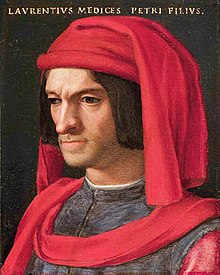
Lorenzo de’ Medici, commonly known as Lorenzo il Magnifico, is one of the most celebrated figures of the Italian Renaissance. Born into the powerful Medici family on January 1, 1449, in Florence, Lorenzo played a pivotal role in the political, cultural, and artistic life of Italy during the 15th century. His influence extended beyond the borders of Florence, earning him a reputation as a master diplomat, a patron of the arts, and a central figure in the Italian Renaissance. This article delves into the life of Lorenzo il Magnifico, exploring his rise to power, his contributions to the arts and culture, and the lasting impact of his legacy.
Early Life and Education
Lorenzo de’ Medici was born into the powerful Medici family, which had established itself as the de facto rulers of Florence through their banking empire and political acumen. Lorenzo was the grandson of Cosimo de’ Medici, known as Cosimo the Elder, who had laid the foundation for the family’s dominance in Florence. Lorenzo’s father, Piero de’ Medici, and his mother, Lucrezia Tornabuoni, ensured that he received an education befitting his status. From a young age, Lorenzo was immersed in the humanistic ideals that defined the Renaissance, studying subjects such as literature, philosophy, and the arts under the guidance of the most prominent scholars of the time.
By the age of 16, Lorenzo had already demonstrated his political acumen, taking on diplomatic missions to Naples, Rome, and Venice. These early experiences honed his skills in negotiation and diplomacy, which would later become his hallmark as the ruler of Florence. His education and early exposure to the political complexities of Renaissance Italy prepared him for the challenges he would face as he ascended to power.
Rise to Power
In 1469, Lorenzo’s father, Piero, passed away, leaving the young Lorenzo to assume the leadership of Florence at the age of 20. Upon taking power, Lorenzo married Clarice Orsini, a noblewoman from a powerful Roman family. This marriage not only solidified Lorenzo’s position within Florence but also strengthened his political alliances outside the city. Lorenzo’s early years as the de facto ruler of Florence were marked by his efforts to consolidate power and maintain the stability of the Medici regime.
Lorenzo’s rise to power was not without challenges. The Pazzi Conspiracy of 1478 was one of the most significant threats to his rule. The Pazzi family, with the backing of Pope Sixtus IV and other political rivals, plotted to assassinate Lorenzo and his brother Giuliano during Mass at the Florence Cathedral. Giuliano was killed, but Lorenzo managed to escape, although wounded. The conspiracy failed to overthrow the Medici, and Lorenzo’s swift and decisive response—exiling or executing the conspirators—solidified his control over Florence.
Political Achievements and Diplomacy
Lorenzo il Magnifico’s political achievements were characterized by his ability to navigate the intricate web of alliances and rivalries that defined Italian politics during the Renaissance. His diplomatic skills earned him the title “the needle of the Italian balance,” reflecting his role in maintaining peace and stability among the various Italian states.
One of Lorenzo’s most notable political achievements was his handling of the conflict with the Papacy during the War of Volterra in 1472. Florence sought to assert its dominance in the region, and Lorenzo’s leadership ensured that the city emerged victorious, further solidifying its influence in central Italy.
However, it was his diplomatic mission to Naples in 1479 that stands out as a defining moment in his career. Facing a coalition of enemies, including Pope Sixtus IV and Ferdinand I of Naples, Lorenzo personally traveled to Naples to negotiate a peace treaty. His success in securing an agreement not only saved Florence from a potentially devastating war but also enhanced his reputation as a statesman of extraordinary skill. This peace, known as the Peace of Lodi, established a balance of power that lasted for several decades and allowed the Italian states to focus on cultural and economic development rather than warfare.
Patronage of the Arts
Lorenzo il Magnifico is perhaps best known for his role as a patron of the arts, a title that reflects his deep appreciation for the cultural and intellectual achievements of the Renaissance. Under Lorenzo’s patronage, Florence became the epicenter of the Renaissance, attracting artists, writers, and scholars from across Europe.
Lorenzo’s support of the arts was both personal and political. He believed that the flourishing of art and culture would enhance the prestige of Florence and the Medici family. To this end, he provided financial support to some of the most famous artists of the time, including Sandro Botticelli, Michelangelo Buonarroti, and Leonardo da Vinci. Lorenzo’s patronage allowed these artists to produce some of their most iconic works, many of which continue to define the artistic achievements of the Renaissance.
Botticelli’s masterpieces, such as “The Birth of Venus” and “Primavera,” were created under Lorenzo’s patronage, reflecting the Medici’s influence in shaping the cultural landscape of the era. Lorenzo also supported the young Michelangelo, who grew up in the Medici household and benefited from Lorenzo’s guidance and encouragement. The Medici Palace itself was a center of artistic activity, with Lorenzo commissioning works that would adorn the family’s residences and public spaces throughout Florence.
Contributions to Literature and Philosophy
In addition to his patronage of the visual arts, Lorenzo il Magnifico was an accomplished poet and writer. He composed a number of works that reflected the humanistic values of the Renaissance, blending classical themes with contemporary Florentine culture. His poetry often explored themes of love, beauty, and the transient nature of life, reflecting the influence of Dante, Petrarch, and other great Italian poets.
One of Lorenzo’s most famous literary works is “La Nencia da Barberino,” a rustic poem that celebrates the simple pleasures of rural life. He also wrote a series of sonnets and canzoniere, which are noted for their lyrical beauty and exploration of human emotions. Lorenzo’s writings were not merely artistic endeavors; they also served to reinforce his image as a cultivated and enlightened ruler, a leader who embodied the ideals of the Renaissance.
Lorenzo’s intellectual pursuits extended beyond poetry. He was deeply interested in philosophy and was a patron of the Platonic Academy in Florence, where scholars gathered to study and discuss the works of Plato and other classical philosophers. This institution played a key role in the revival of Neoplatonism, a philosophical movement that sought to reconcile Platonic thought with Christian theology. Lorenzo’s support for the academy helped to establish Florence as a leading center of philosophical inquiry during the Renaissance.
The Medici Legacy
Lorenzo il Magnifico’s death on April 8, 1492, marked the end of an era for Florence and the Medici family. His passing left a power vacuum that would eventually lead to the decline of Medici influence in Florence, as well as the rise of more radical political and religious movements, such as those led by the Dominican friar Girolamo Savonarola.
Despite the challenges that followed his death, Lorenzo’s legacy endured. His contributions to the political stability of Italy, his patronage of the arts, and his support for intellectual pursuits left an indelible mark on the Renaissance. The Medici family continued to be associated with cultural and artistic patronage, and subsequent generations of Medici rulers would build on Lorenzo’s achievements, further cementing the family’s place in history.
Lorenzo’s life and legacy also had a profound impact on the broader cultural landscape of Europe. The artists, writers, and philosophers he supported helped to shape the course of Western art and thought, influencing generations of creators who followed. Lorenzo’s vision of a Florence that was both politically stable and culturally vibrant became a model for other Renaissance cities, and his contributions to the arts continue to be celebrated today.
Historical Context and Cultural Impact
To fully appreciate Lorenzo il Magnifico’s contributions, it is essential to understand the historical context in which he lived. The 15th century was a time of great change in Italy, with the rise of powerful city-states, the development of humanism, and the flourishing of the arts. Florence, under the Medici, became a beacon of Renaissance culture, attracting talent from across Europe and setting the standard for artistic and intellectual achievement.
Lorenzo’s ability to maintain peace and stability in such a turbulent period was a testament to his diplomatic skill and political acumen. His efforts to balance the interests of Florence with those of other Italian states helped to create a period of relative calm that allowed the Renaissance to thrive. This balance of power, however, was fragile, and the tensions that Lorenzo managed to keep in check would eventually lead to conflicts that reshaped the Italian peninsula.
Lorenzo’s cultural impact was equally significant. His patronage of the arts not only enriched the cultural life of Florence but also helped to disseminate Renaissance ideals throughout Europe. The works produced under his guidance continue to be studied and admired, serving as a testament to the enduring legacy of the Renaissance.
Conclusion
Lorenzo il Magnifico’s life and legacy are a testament to the power of cultural patronage, political diplomacy, and intellectual pursuit. As a ruler, he skillfully navigated the complex political landscape of Renaissance Italy, ensuring the stability and prosperity of Florence. As a patron, he fostered an environment in which the arts and humanities could flourish, leaving behind a legacy that continues to inspire and captivate.
Today, Lorenzo il Magnifico is remembered not just as a political leader, but as a symbol of the Renaissance itself—a period of unparalleled creativity, intellectual curiosity, and artistic achievement. His contributions to the cultural and political life of Florence have secured his place in history as one of the most important figures of the Italian Renaissance.


