
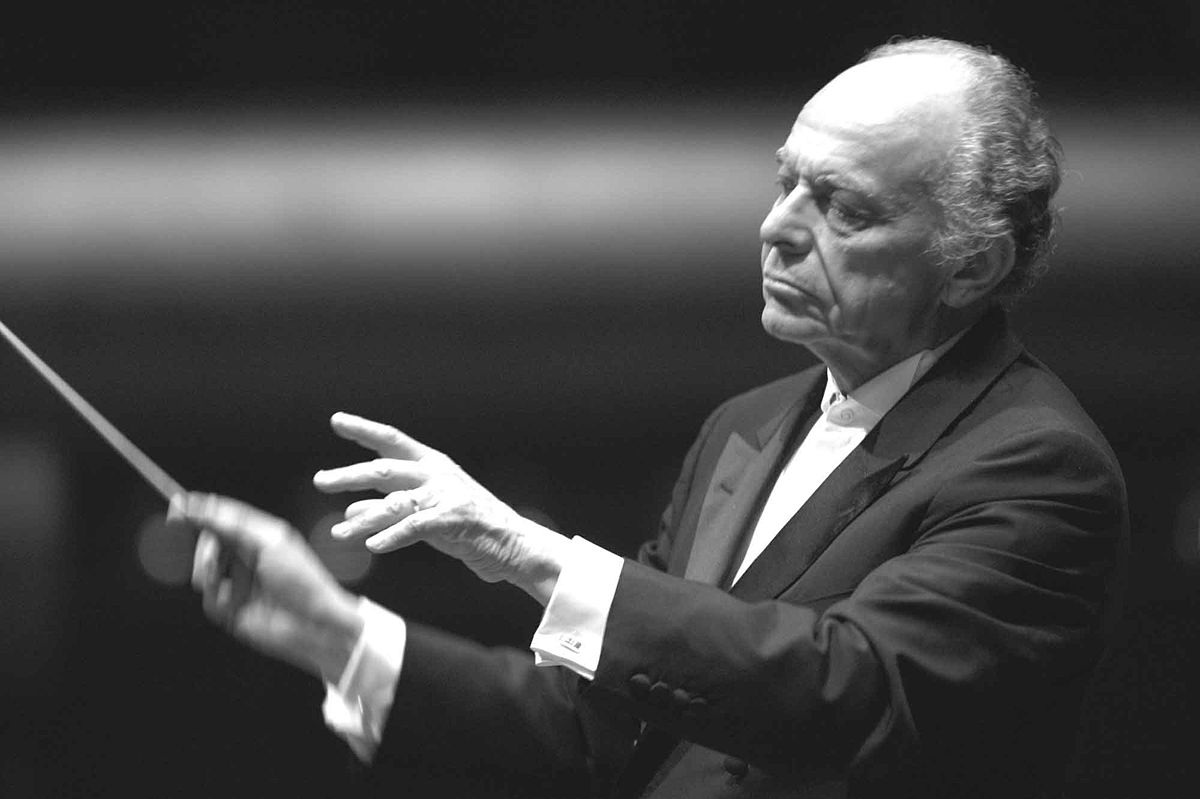
Lorin Varencove Maazel was a name that reverberated through the hallowed halls of classical music for decades. Born on March 6, 1930, in Neuilly-sur-Seine, France, to American parents, Maazel’s life was an extraordinary journey of musical brilliance that spanned continents and generations. From being a child prodigy to becoming one of the most revered conductors of the 20th and early 21st centuries, Maazel’s life is a testament to unparalleled talent, relentless dedication, and a deep-seated passion for the art of music.
Early Life and Rise to Fame
Lorin Maazel’s early years were marked by an astonishing display of musical aptitude. His family moved back to the United States when he was still a child, where he began his formal education. By the age of five, Maazel was already studying the violin under the tutelage of Karl Molidrem. His foray into conducting began at the tender age of seven, under the guidance of the Russian-born composer and conductor Vladimir Bakaleinikoff in Pittsburgh. Maazel’s debut as a conductor came when he was just eight years old, leading the university orchestra. This early start was a clear indication of the prodigious talent that Maazel possessed, a talent that would soon make him a household name in the world of classical music.
At nine, Maazel conducted the Interlochen Orchestra during the 1939 New York World’s Fair, a significant achievement for someone so young. That same year, he directed the Los Angeles Philharmonic, and by 1941, he had caught the attention of the legendary Arturo Toscanini, who invited him to conduct the NBC Orchestra. By the age of 12, Maazel had already led the prestigious New York Philharmonic, a feat that few could claim even at a much older age.
The Path to Greatness
As a teenager, Lorin Maazel’s resume was already enviable, having conducted most of the major American orchestras before he turned 15. However, his commitment to his craft did not deter him from continuing his education. He pursued studies in languages, mathematics, and philosophy in Pittsburgh, all while remaining an active member of the Pittsburgh Symphony Orchestra as a violinist. It was during this period that Maazel honed his skills as a conductor, an apprenticeship that laid the groundwork for his future success.
In 1951, a scholarship allowed Maazel to travel to Italy, where he immersed himself in the study of baroque music. This experience broadened his musical horizons and prepared him for his European debut in 1953, conducting the orchestra of Teatro Bellini in Catania. This marked the beginning of Maazel’s illustrious international career.
By 1960, Maazel had achieved a historic milestone by becoming the first American conductor, and the youngest ever, to lead an orchestra at the Bayreuth Festival, the epicenter of Richard Wagner’s musical legacy. This achievement was not only a personal triumph for Maazel but also a significant moment in the history of American classical music, establishing him as a global figure in the industry.
A Legacy in Leadership
Lorin Maazel’s career was defined by his leadership roles in some of the world’s most prestigious orchestras. From 1965 to 1971, he served as the Artistic Director and Principal Conductor of the Deutsche Oper Berlin, and from 1965 to 1975, he led the Radio Symphony Orchestra Berlin. His tenure as Music Director of the Cleveland Orchestra from 1972 to 1982 was particularly noteworthy, as he succeeded George Szell, one of the most respected conductors of the time. Maazel’s influence on the Cleveland Orchestra was profound, as he not only maintained the high standards set by Szell but also expanded the orchestra’s repertoire and international reputation.
In the early 1980s, Maazel took on the role of Chief Conductor at the Vienna State Opera, a position he held until 1984. Following this, he became the Musical Advisor (1984-1988) and then Music Director (1988-1996) of the Pittsburgh Symphony Orchestra. His leadership during these years was marked by a dedication to musical excellence and innovation, which earned him widespread acclaim.
From 1993 to 2002, Maazel was the Music Director of the Bavarian Radio Symphony Orchestra, further solidifying his reputation as one of the preeminent conductors of his time. His tenure at the New York Philharmonic, beginning in 2002 and lasting until 2009, was another significant chapter in his career. During this period, Maazel led the orchestra in over 100 concerts, continuing to push the boundaries of classical music with his visionary approach.
The Recording Artist
Beyond the concert hall, Lorin Maazel made an indelible mark on the recording industry. With over 300 recordings to his name, Maazel’s discography is a treasure trove for classical music enthusiasts. His interpretations of works by composers such as Beethoven, Brahms, Mahler, Sibelius, Rachmaninoff, and Tchaikovsky are particularly revered. Maazel’s recording of George Gershwin’s “Porgy and Bess,” featuring an all-African-American cast, was groundbreaking and remains a significant achievement in the annals of classical music recording.
His dedication to recording was not just about preserving music; it was about bringing new life to the works he conducted. Maazel’s recordings are known for their precision, emotional depth, and the unique perspective he brought to each piece. His legacy as a recording artist is one of innovation, bridging the gap between the traditional and the contemporary in classical music.
Awards and Honors
Lorin Maazel’s contributions to music were recognized with numerous awards and honors throughout his life. He was the recipient of ten Grand Prix du Disque awards, a testament to his excellence in the recording industry. Among the many accolades, perhaps the most prestigious were the French Legion of Honor, his designation as a Goodwill Ambassador for the United Nations, and his knighthood as a Knight Grand Cross of the Order of Merit of the Italian Republic.
These honors reflect not only Maazel’s mastery of music but also his impact on the global cultural landscape. His ability to connect with audiences across the world, to inspire musicians, and to elevate the art of conducting to new heights made him a figure of immense respect and admiration.
Final Years and Legacy
Lorin Maazel’s final years were no less remarkable than the rest of his career. In 2006, he was appointed Music Director for Life of the Symphonica Toscanini, a role that underscored his enduring influence in the world of classical music. Even as he aged, Maazel’s passion for music never waned, and he continued to conduct and mentor young musicians until his passing.
Maazel’s death on July 13, 2014, at the age of 84, marked the end of an era. However, his legacy lives on through the countless musicians he inspired, the recordings he left behind, and the indelible mark he made on the world of classical music. Lorin Maazel was more than just a conductor; he was a musical force, a visionary, and a bridge between the old and the new.
Conclusion
Lorin Maazel’s life was a symphony of achievements that resonated across the world. From his early days as a child prodigy to his final years as a venerated maestro, Maazel’s journey was one of constant growth, exploration, and excellence. His contributions to classical music are immeasurable, and his influence will be felt for generations to come. Whether through his leadership of the world’s greatest orchestras, his innovative recordings, or his tireless mentorship of young musicians, Lorin Maazel’s legacy is one of greatness—a true testament to the power of music to transcend boundaries and touch the human soul.


