
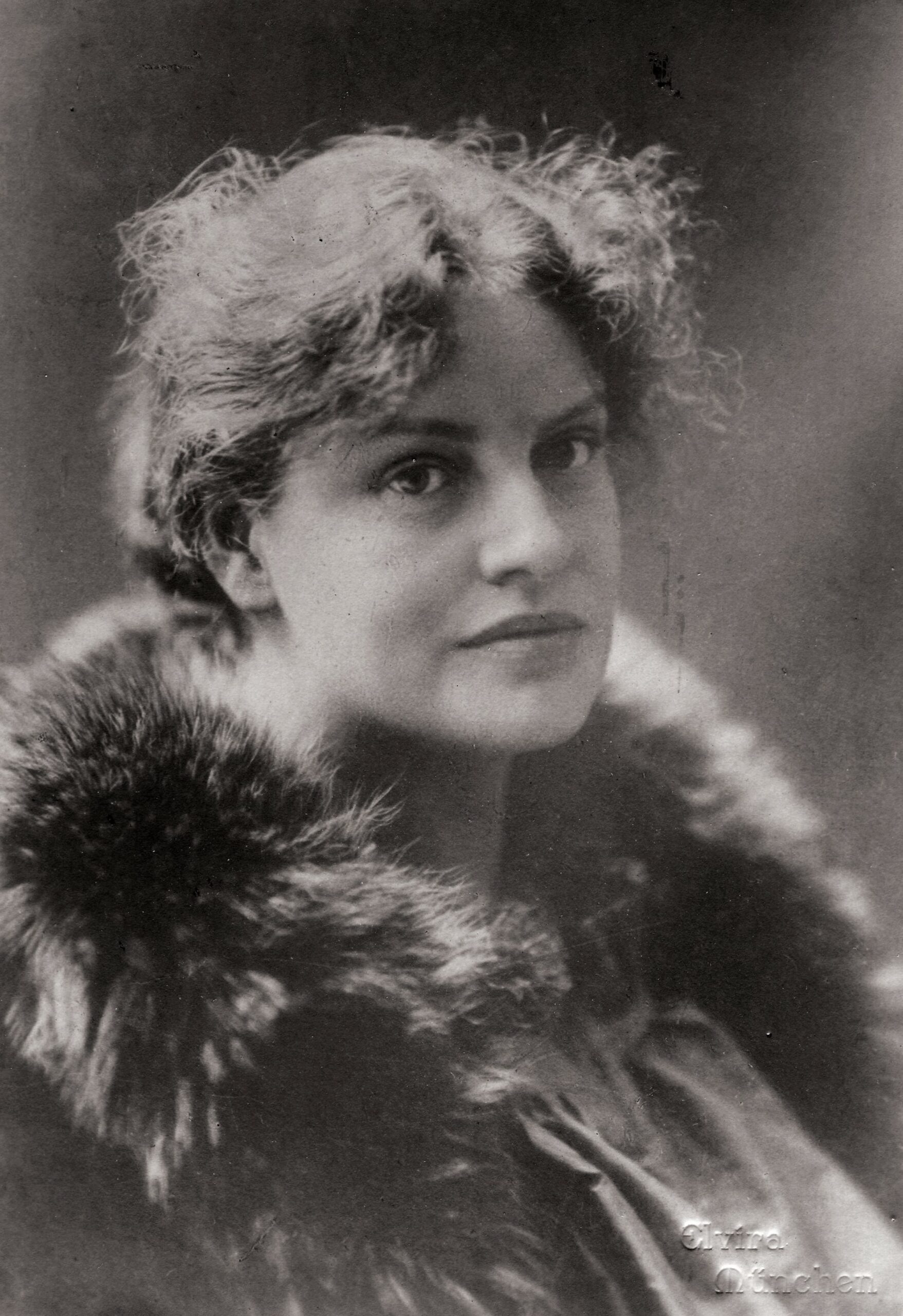
Lou von Salomé, born on February 12, 1861, in St. Petersburg, Russia, was an extraordinary figure whose life and intellect left a profound impact on some of the most prominent thinkers and writers of her time. A writer, psychoanalyst, and intellectual muse, Lou von Salomé was known for her independence, intelligence, and unconventional relationships with many of the leading minds of the late 19th and early 20th centuries. Her life story is one of deep intellectual exploration, emotional complexity, and a defiance of societal norms.
Early Life and Intellectual Formation
Born into a noble and affluent family, Lou von Salomé was the only daughter among six children. Her father, Gustav von Salomé, was a general in the Russian Imperial Army, and her mother, Louise Wilm, was the daughter of a German industrialist. Growing up in a culturally rich environment, Lou exhibited remarkable intelligence and a strong sense of independence from an early age. Her early education was guided by private tutors, including the Lutheran pastor Hendrik Gillot, who introduced her to a broad range of subjects, including philosophy, literature, and theology.
By the time she was 19, Lou had already developed a vast knowledge of the humanities and had begun to write. Her intellectual curiosity and rebellious spirit set her apart from her contemporaries, and she quickly became known for her sharp mind and independent nature. However, her intellectual development was not without personal turmoil. Gillot, who had become infatuated with her, proposed marriage, but Lou, who valued her independence above all, refused him. This decision marked the beginning of a life characterized by deep intellectual pursuits and complex emotional relationships.
Early Travels and Literary Beginnings
Due to health issues, particularly tuberculosis, Lou von Salomé moved to Zurich in 1880 in search of a milder climate. However, finding little improvement in her condition, she relocated to Rome two years later. It was in Rome that Lou began to carve out her identity as a writer and thinker, meeting and forming connections with some of the most influential intellectuals of the time.
In Rome, Lou met the German philosopher and writer Paul Rée through their mutual friend Malwida von Meysenbug. The two quickly formed a close intellectual bond, which soon deepened into an intense, albeit platonic, relationship. Rée introduced Lou to the renowned philosopher Friedrich Nietzsche, and the trio became inseparable, forming a complex and emotionally charged intellectual triangle.
Nietzsche, struck by Lou’s intellect and beauty, quickly fell in love with her and proposed marriage several times, all of which she declined. Nietzsche’s unrequited love for Lou is often seen as a significant influence on his later work, particularly in Thus Spoke Zarathustra, where he grapples with themes of love, power, and human suffering. Despite their deep intellectual connection, the relationship between Lou, Rée, and Nietzsche eventually dissolved, leaving Nietzsche heartbroken and Lou estranged from both men.
Marriage and Intellectual Maturity
In 1887, Lou von Salomé met Friedrich Carl Andreas, a German orientalist and scholar. Despite not feeling any romantic attraction towards him, Lou agreed to marry Andreas after he threatened to commit suicide if she refused. Their marriage was unconventional, as Lou insisted on maintaining a platonic relationship, and they lived largely separate lives while remaining legally married until Andreas’ death in 1930.
During her marriage, Lou continued to pursue her intellectual interests, writing prolifically and engaging with the leading intellectual movements of the time. She became deeply involved in the Freie Bühne, an avant-garde theater movement in Berlin that sought to challenge the artistic and cultural conventions of the day. Lou’s involvement in this movement brought her into contact with many prominent figures, including the playwright Gerhart Hauptmann, who would later win the Nobel Prize in Literature.
Throughout the 1890s, Lou maintained her independence, both intellectually and personally. She continued to write, producing essays, novels, and critiques that explored themes of love, sexuality, and the human psyche. Her work during this period reflected her deep engagement with the intellectual currents of her time, including the burgeoning field of psychoanalysis.
Relationship with Rainer Maria Rilke
One of the most significant relationships of Lou von Salomé’s life was with the young poet Rainer Maria Rilke, whom she met in 1897. Despite being nearly 15 years his senior, Lou and Rilke quickly formed a deep and intense bond. Their relationship was marked by a profound intellectual and emotional connection, and Lou became both a muse and a mentor to Rilke.
Under Lou’s influence, Rilke began to explore deeper themes in his poetry, moving away from the sentimentalism of his earlier work towards the more profound and introspective style that would define his later career. Lou introduced Rilke to the work of Russian writers and philosophers, and together they traveled to Russia in 1899 and 1900, a journey that had a lasting impact on Rilke’s work.
Their relationship, though intense, was not without its challenges. Lou’s desire for independence and Rilke’s growing neediness eventually led to the end of their romantic relationship in 1901. However, they remained close friends and continued to correspond for many years. Rilke’s later works, including The Notebooks of Malte Laurids Brigge and The Duino Elegies, bear the mark of Lou’s influence, both in their exploration of existential themes and their stylistic innovations.
Psychoanalysis and Later Life
Lou von Salomé’s intellectual journey took a new turn in the early 20th century when she became involved in the psychoanalytic movement. After attending the International Psychoanalytic Congress in Weimar in 1911, she became deeply interested in the theories of Sigmund Freud and began to study psychoanalysis. Freud, impressed by Lou’s intellect and insight, welcomed her into his inner circle, and she became one of the first women to practice psychoanalysis.
Lou’s work in psychoanalysis focused on the psychology of love and sexuality, topics she had long explored in her literary work. She contributed essays and articles to Freud’s journal Imago, and her writings on these subjects were highly regarded by her contemporaries. Freud himself admired Lou’s intellect and character, describing her as possessing “a purity and harmony of being” that left a lasting impression on all who knew her.
During this period, Lou also developed a close relationship with Viktor Tausk, a Slovak psychoanalyst and one of Freud’s most promising students. Their relationship, which was both personal and professional, was fraught with tension and ultimately ended in tragedy when Tausk committed suicide in 1919. Freud, who had disapproved of their relationship, later blamed Lou for Tausk’s death, a charge that has been the subject of much debate among historians.
Despite the personal and professional challenges she faced, Lou continued to work as a psychoanalyst until her death. She remained deeply engaged with the intellectual life of her time, and her home in Göttingen became a gathering place for scholars, writers, and artists. Her influence on the intellectual and cultural life of early 20th-century Europe was profound, and her work in psychoanalysis, though less well-known than her literary contributions, remains an important part of her legacy.
Legacy and Impact on Intellectual History
Lou von Salomé died on February 5, 1937, at the age of 75. Her death marked the end of a life that had been marked by intellectual brilliance, emotional complexity, and a deep commitment to exploring the human condition. Her legacy is multifaceted, encompassing her work as a writer, psychoanalyst, and muse to some of the greatest minds of her time.
Lou’s influence on intellectual history is perhaps best understood through the impact she had on the men who fell under her spell. Nietzsche, Rilke, Freud, and many others were deeply affected by their relationships with her, and their work bears the imprint of her ideas and personality. However, to view Lou merely as a muse or companion to great men would be to underestimate her own intellectual contributions.
As a writer, Lou von Salomé explored themes of love, sexuality, and the human psyche with a depth and sensitivity that was ahead of her time. Her essays, novels, and biographical works, including biographies of Nietzsche and Rilke, provide valuable insights into the intellectual currents of the late 19th and early 20th centuries. Her writings on psychoanalysis, though less well-known, are also significant, offering a unique perspective on the intersection of psychology, literature, and philosophy.
Lou von Salomé was also a pioneer of female intellectual independence. At a time when women were often relegated to the domestic sphere, she carved out a space for herself as an intellectual equal to the men around her. Her refusal to conform to societal expectations, whether in her personal relationships or her professional pursuits, made her a trailblazer for future generations of women.
Conclusion: The Enduring Influence of Lou von Salomé
Lou von Salomé’s life and work continue to inspire and fascinate scholars, writers, and thinkers today. Her contributions to literature, psychoanalysis, and intellectual history are profound, and her legacy as a pioneer of female independence and intellectual exploration is enduring. As we reflect on her life, it is clear that Lou von Salomé was not just a muse or a companion to great men, but a formidable thinker and writer in her own right.
Her ability to navigate the complex emotional and intellectual landscapes of her time, and her refusal to be defined by the expectations of others, make Lou von Salomé a figure of enduring relevance. Her life story is a testament to the power of intellect, independence, and the courage to live life on one’s own terms.


