
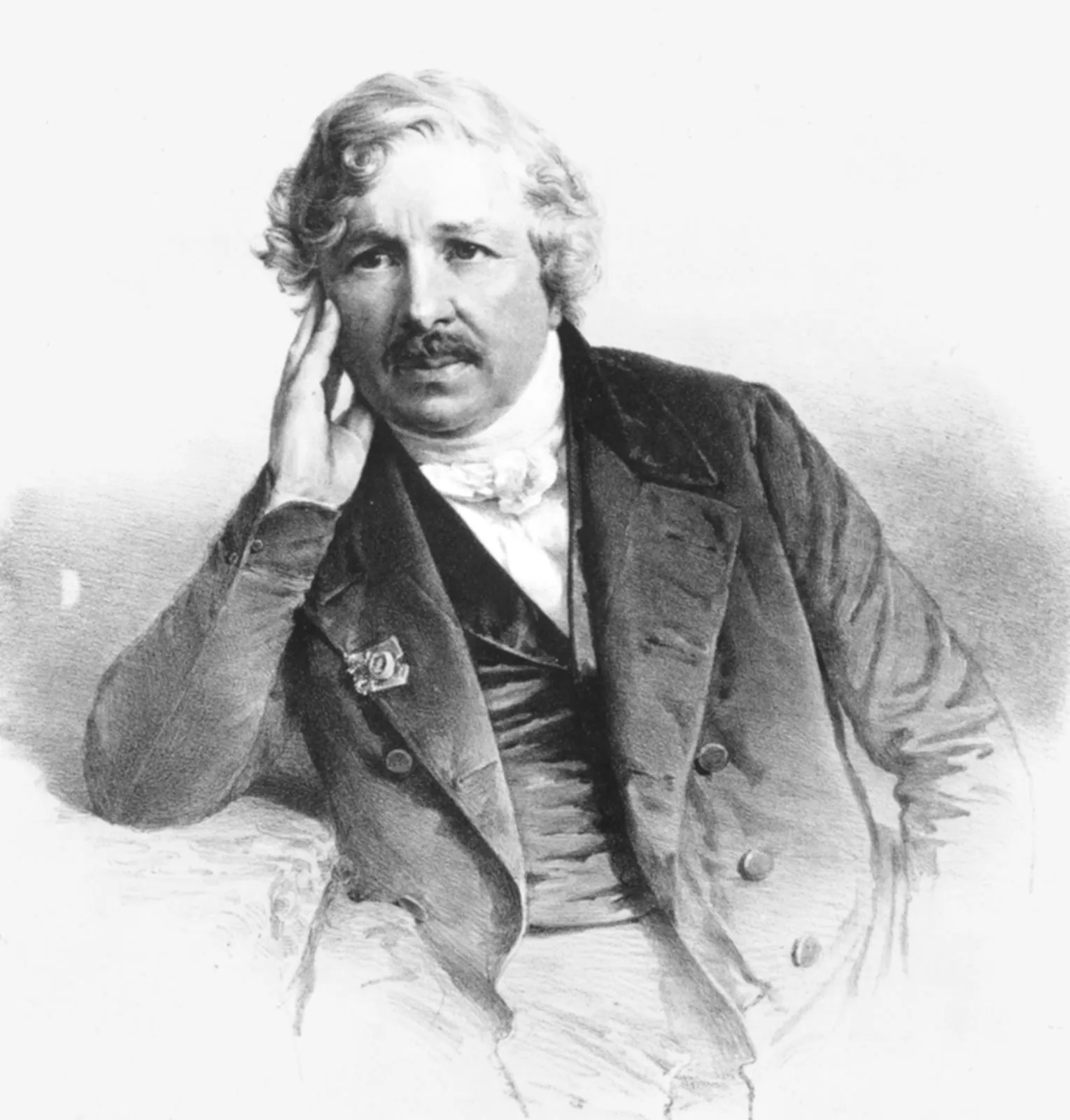
Louis Daguerre, born Louis-Jacques-Mandé Daguerre on November 18, 1787, in Cormeilles-en-Parisis, France, is a name synonymous with the birth of photography. His contributions to the field of photography were groundbreaking, and he is best known for developing the daguerreotype process, the first practical method of obtaining permanent photographs. Daguerre’s journey from a young artist and scenographer to an inventor who would change the course of visual history is both fascinating and instructive. This article delves into the life, achievements, and lasting impact of Louis Daguerre, offering a comprehensive view of his contributions to art and science.
Early Life and Artistic Beginnings
Louis Daguerre was born in the late 18th century in a period of profound political and social upheaval in France. Growing up in a post-revolutionary France, Daguerre’s early life was shaped by a mix of traditional values and the burgeoning spirit of innovation that characterized the era. His father worked as an employee in the king’s estate, while his mother, Leda Seminò, was also employed at the royal embassy.
From a young age, Daguerre displayed a keen interest in the arts, particularly in drawing and design. This early passion for the visual arts led him to pursue a career in scenography, the art of creating theatrical scenery. Daguerre began working under a scenographer at the Paris Opera, where he gained significant experience and honed his skills in designing elaborate stage sets. This work was crucial in developing his understanding of light, perspective, and the use of visual effects—skills that would later prove indispensable in his photographic experiments.
Daguerre’s talent soon caught the attention of Pierre Prévost, the first French painter of panoramas. Under Prévost’s tutelage, Daguerre expanded his artistic capabilities, particularly in the creation of panoramic paintings—large-scale artworks that provided viewers with a 360-degree perspective. These immersive visual experiences were precursors to Daguerre’s later work in dioramas and photography.
The Invention of the Diorama
Before becoming a pioneer in photography, Daguerre made a significant impact in the world of theater through his invention of the diorama. The diorama was a large-scale, immersive form of entertainment that combined painting, lighting, and mechanical effects to create lifelike scenes. These scenes were displayed in darkened theaters and were illuminated by carefully controlled lighting to simulate changes in time, weather, and mood. The diorama was a precursor to modern-day cinematic effects and was immensely popular in the early 19th century.
Daguerre’s dioramas were renowned for their realism and dramatic impact. The combination of his artistic talent and innovative use of technology made the diorama a successful form of visual entertainment, drawing large audiences in Paris and across Europe. The popularity of the diorama not only established Daguerre as a leading figure in the arts but also provided him with the financial resources and the platform to pursue his interest in capturing real-life images through the use of light.
The Road to Photography: Collaboration with Joseph Nicéphore Niépce
Louis Daguerre’s journey into photography began in the 1820s when he became increasingly interested in finding a way to permanently capture images produced by a camera obscura. The camera obscura, a device that projects an image of its surroundings onto a screen, had been known for centuries, but it was primarily used by artists as a drawing aid. Daguerre envisioned a process that could chemically fix these images onto a surface, making them permanent.
In 1826, Daguerre began corresponding with Joseph Nicéphore Niépce, a French inventor who had successfully created a crude photograph using a process he called heliography. Niépce’s method involved coating a pewter plate with a light-sensitive substance and then exposing it to light, which resulted in a rudimentary photographic image. Impressed by Niépce’s work, Daguerre entered into a partnership with him in 1829, hoping to refine the process and develop a more practical and reliable method of capturing images.
The partnership between Daguerre and Niépce was short-lived, as Niépce died in 1833. However, Daguerre continued to work on the project, building on the foundations laid by Niépce. After years of experimentation, Daguerre made a breakthrough in 1837 when he discovered that a silver-coated copper plate treated with iodine vapor could produce a highly detailed image when exposed to light. The image could then be developed using mercury vapor and fixed with a solution of common salt. This process, which he named the daguerreotype, was the first practical and commercially viable method of photography.
The Daguerreotype: A Revolution in Visual Culture
The daguerreotype process was officially announced to the world on January 7, 1839, at a meeting of the French Academy of Sciences. The scientist François Arago, who had been a supporter of Daguerre’s work, presented the invention to the scientific community and the general public. The announcement was met with widespread excitement, and the French government soon acquired the rights to the invention, making it freely available to the public as a gift to the world.
The daguerreotype process revolutionized the way people perceived and interacted with visual information. For the first time in history, it was possible to capture a detailed, accurate representation of reality in a way that was previously unimaginable. The daguerreotype quickly became popular across Europe and the United States, with studios springing up in major cities to meet the growing demand for photographic portraits.
The process was particularly valued for its ability to capture minute details with incredible precision. The images produced by a daguerreotype were sharp and clear, with a level of detail that exceeded even the finest paintings. This quality made the daguerreotype the preferred method for portrait photography, as it allowed people to preserve the likenesses of loved ones and important figures with an unprecedented level of fidelity.
Challenges and Limitations of the Daguerreotype
Despite its many advantages, the daguerreotype process had several limitations that ultimately led to its decline in popularity. One of the main drawbacks was the lengthy exposure time required to capture an image. Depending on the lighting conditions, exposure times could range from several minutes to half an hour, making it difficult to photograph moving subjects. This limitation made the process unsuitable for capturing dynamic scenes or candid moments.
Additionally, daguerreotypes were one-of-a-kind images, as there was no way to produce multiple copies from a single exposure. Each image was unique and could not be duplicated, which limited the distribution and accessibility of photographs. The process also required the use of hazardous chemicals, such as mercury and iodine, which posed significant health risks to photographers.
Despite these challenges, the daguerreotype remained the dominant form of photography throughout the 1840s and early 1850s. It was eventually supplanted by newer photographic processes, such as the ambrotype and the tintype, which offered greater convenience, shorter exposure times, and the ability to produce multiple copies of an image.
Later Life and Legacy
Louis Daguerre continued to work as an artist and inventor after the introduction of the daguerreotype, but he never achieved the same level of success with his subsequent endeavors. He retired to Bry-sur-Marne, a small town near Paris, where he lived out his final years in relative obscurity. Daguerre passed away on July 10, 1851, at the age of 63.
Although the daguerreotype was eventually replaced by more advanced photographic processes, Daguerre’s contribution to the field of photography remains monumental. His invention marked the beginning of the modern era of visual communication, fundamentally changing the way people perceive and document the world around them.
Daguerre’s legacy is reflected in the countless daguerreotypes that have survived to this day, providing a glimpse into the lives and landscapes of the 19th century. These images are not only valuable historical records but also enduring works of art that continue to captivate and inspire viewers with their detail and beauty.
The Impact of the Daguerreotype on Art and Society
The invention of the daguerreotype had a profound impact on both art and society. It democratized the creation and distribution of images, making visual documentation accessible to a much wider audience. Before the advent of photography, only the wealthy could afford to have their portraits painted, but the daguerreotype allowed people from all walks of life to preserve their likenesses for posterity.
The daguerreotype also influenced the development of other artistic disciplines, including painting and sculpture. Many artists began to use photographs as references for their work, allowing them to achieve greater accuracy and realism in their depictions. The ability to capture and study images of distant places and people also broadened the horizons of artists and scholars, contributing to the growth of cultural exchange and understanding.
In addition to its artistic impact, the daguerreotype played a significant role in the documentation of historical events. Early photographers used the process to capture images of wars, political figures, and other important moments, providing future generations with a visual record of history. The daguerreotype was particularly valuable during the American Civil War, when photographers used it to document the conflict and its aftermath.
Conclusion: Louis Daguerre’s Enduring Legacy
Louis Daguerre’s invention of the daguerreotype was a turning point in the history of photography and visual culture. His work laid the foundation for the development of modern photography, paving the way for the countless innovations that have followed. Daguerre’s ability to combine art, science, and technology in the creation of the daguerreotype is a testament to his genius and his lasting impact on the world.
Today, Louis Daguerre is remembered not only as the inventor of the daguerreotype but also as a visionary who recognized the potential of photography to transform the way we see and understand the world. His legacy lives on in the millions of photographs that continue to shape our perceptions of history, identity, and reality.


