
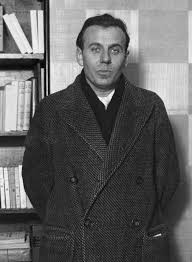
Louis-Ferdinand Céline, born Louis Ferdinand Auguste Destouches on May 27, 1894, in Courbevoie, France, is a figure of profound complexity in the landscape of 20th-century literature. His life and work have sparked significant debate, balancing between brilliant literary innovation and controversial political views. This article explores Céline’s life, his major achievements, and his enduring impact on literature and culture.
Early Life and Education
Louis-Ferdinand Céline was born into a modest family. His father, Fernando Destouches, worked in insurance, while his mother, Marguerite, ran a small shop selling lace and porcelain. Céline’s early years were marked by economic hardship and a stifling provincial mentality, which fueled his later critiques of society.
His formative years were spent under the shadow of a strict and conservative upbringing, which was later exacerbated by his father’s rigid control and his mother’s overprotectiveness. Seeking to broaden his horizons, Céline was sent abroad by his father to study languages. Between the summer of 1907 and 1908, he lived in Germany, followed by a year in England, which provided him with a broader perspective on life and culture.
World War I and Its Impact
In 1912, Céline enlisted in the French army at the age of 18. He served with distinction in World War I, initially with the 12th Regiment of Cuirassiers. Céline’s war experience was grueling and traumatic. He was severely wounded on October 27, 1914, during a mission in the Western Front. The injuries he sustained led to two operations on his head, primarily to repair damage caused by an explosion. For his bravery, Céline was decorated with the Médaille militaire and the Croix de guerre.
Following his injuries, Céline spent considerable time in military hospitals, receiving a disability pension and being discharged with a 75% disability rating. His war experiences profoundly influenced his worldview and literary voice, particularly his critical perspective on societal structures and human nature.
Post-War Life and Early Career
After the war, Céline found work at the French consulate in London. It was here that he married Suzanne Nebout, a barmaid he had met in the seedy underbelly of London. This marriage was short-lived and was never officially recognized in France.
In 1916, Céline accepted a position with the Compagnie Française Shanga Oubangui, relocating to Cameroon to manage a cocoa plantation. However, he returned to France after nine months, having contracted malaria. Back in France, Céline took up work with a scientific magazine, marking his initial foray into writing and journalism.
By 1919, Céline married Edith Follet, the daughter of a physician, and they had a daughter named Colette in 1920. He completed his medical degree at the University of Rennes in 1924 and began working for the League of Nations. His professional career took him to Geneva, England, Africa, America, and Cuba, expanding his global perspective and contributing to his understanding of diverse cultural and political issues.
Literary Breakthrough and Major Works
Céline’s return to France in 1928 marked a pivotal moment in his life. Settling in Montmartre, Paris, he worked as a physician while dedicating himself to writing. It was during this period that Céline penned his most famous work, “Voyage au bout de la nuit” (“Journey to the End of the Night”), published in 1932. This novel, characterized by its innovative narrative style and raw depiction of human suffering, established Céline as a significant literary figure.
“Voyage au bout de la nuit” is notable for its use of stream-of-consciousness and its critical portrayal of society, war, and the human condition. The novel’s unflinching exploration of these themes made it a groundbreaking work in modern literature and cemented Céline’s reputation as a revolutionary writer.
In 1937, Céline published “Bagatelle pour un massacre” (“Trifles for a Massacre”), followed by “L’école des cadavres” (“The School of Corpses”) in 1938, and “Les beaux draps” (“The Beautiful Sheets”) in 1941. These works displayed his increasingly extreme political views, particularly his anti-Semitic sentiments. Céline’s pamphlets were infamous for their virulent anti-Semitism and their controversial calls for alliances with Germany.
Controversy and Exile
Céline’s political views and his writings during World War II led to his downfall. In 1945, after the war, he was exiled from France on charges of collaborationism and anti-Semitism. Céline fled to Denmark, where he initially lived in hiding with his third wife, Lucie Georgette Almansor, a former ballet dancer.
His time in Denmark was marked by severe hardship. He was arrested, imprisoned for fourteen months, and suffered from poor health due to inadequate nutrition and harsh living conditions. In February 1947, Céline was granted provisional release and sought medical care in Copenhagen. He regained his freedom permanently later that year and continued to live in relative obscurity.
Later Years and Literary Legacy
After returning to France in 1951, Céline settled in Meudon, near Paris. Despite his controversial past, he continued to write. His later works include “Féerie pour une autre fois I” (1952) and “Normance” (1954), which form part of his “German Trilogy,” including “D’un château l’autre” (1957), “Nord” (1960), and “Rigodon” (1961). These works continued to showcase his distinctive style and thematic concerns, though they also reflected his continued isolation and bitterness.
Céline’s final years were marked by a deepening misanthropy and social withdrawal. He lived a reclusive life, rarely leaving his home, surrounded only by a few close companions and animals. On June 29, 1961, Céline completed his last novel, “Rigodon,” but suffered a fatal aneurysm two days later, dying on July 1, 1961, at the age of 67.
Céline’s Impact and Controversy
Louis-Ferdinand Céline is a complex and controversial figure in literature. His contributions to modern literature are undeniable. He is recognized for his innovative narrative techniques, particularly his use of stream-of-consciousness and colloquial language, which influenced later writers and movements, including the Beat Generation. Authors such as Charles Bukowski admired Céline’s prose style, reflecting his significant impact on contemporary literature.
However, Céline’s legacy is marred by his extremist political views and anti-Semitic writings. His controversial opinions and affiliations during World War II have led to his marginalization in literary circles. Despite his literary achievements, his political stances have overshadowed his contributions, leading to ongoing debates about the separation of an artist’s work from their personal beliefs.
Conclusion
Louis-Ferdinand Céline’s life and work offer a compelling study of literary innovation and ethical complexity. His groundbreaking contributions to literature are tempered by his controversial political views, creating a legacy that is both celebrated and debated. Céline’s impact on modern literature is profound, but his personal beliefs and actions during a tumultuous period in history continue to provoke discussion and analysis. His story remains a powerful example of the interplay between artistic genius and moral ambiguity.


