
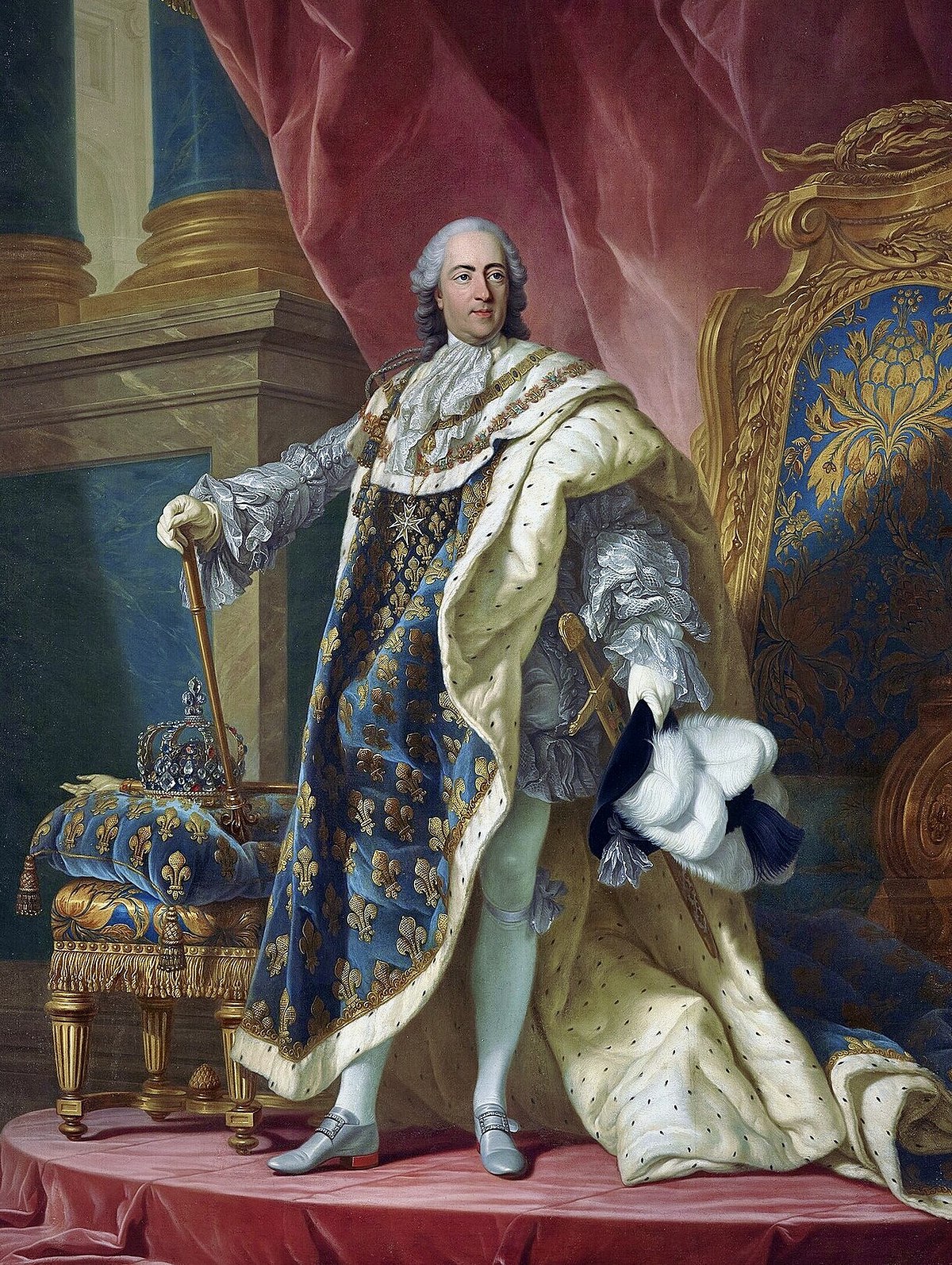
Louis XV of France, born on February 15, 1710, in the opulent palace of Versailles, ascended the throne at the tender age of five. His reign, which lasted for nearly six decades, is marked by both moments of great triumph and profound despair. Louis XV, also known as “Louis the Well-Beloved” (Le Bien-Aimé), was a monarch whose legacy is intertwined with the grandeur of the Bourbon dynasty, the complexities of European politics, and the eventual decline that foreshadowed the French Revolution.
This article delves into the life of Louis XV, exploring the key moments of his reign, his contributions, and the controversies that surrounded him. Through this exploration, we aim to provide a comprehensive understanding of one of France’s most intriguing kings.
Early Life and Accession to the Throne
Louis XV was born into the French royal family as the great-grandson of Louis XIV, one of the most powerful and longest-reigning monarchs in European history. His early years were marked by tragedy, as an epidemic of smallpox swept through the royal family, claiming the lives of his parents and older brother. By the age of five, Louis XV had become the Dauphin, or heir to the throne, and shortly thereafter, upon the death of his great-grandfather in 1715, he was crowned King of France.
Given his young age, a regency was established under the control of his great-uncle, Philippe II, Duke of Orléans. During these formative years, Louis XV was educated under the watchful eye of Madame de Ventadour, who played a crucial role in his upbringing. His education was thorough, focusing on history, geography, and the arts, preparing him for the immense responsibilities that lay ahead.
The Early Years of Reign and Cardinal Fleury’s Influence
When Louis XV officially took control of the French government in 1723, at the age of 13, his reign began under the strong influence of his tutor, Cardinal André-Hercule de Fleury. Fleury, who became the king’s chief minister, was instrumental in guiding the young king and was largely responsible for many of the successes of the early years of Louis XV’s reign.
Cardinal Fleury’s administration is often remembered as a period of relative stability and prosperity in France. He focused on improving the economy by reducing the national debt and promoting trade. Under Fleury’s guidance, France saw significant developments in infrastructure, including the expansion of the country’s road network, which facilitated commerce and communication.
Moreover, Fleury’s foreign policy was characterized by a cautious and pragmatic approach. He sought to avoid costly wars and maintained a balance of power in Europe, particularly through France’s involvement in the War of the Polish Succession (1733–1738) and the War of the Austrian Succession (1740–1748). These conflicts, while initially successful for France, also sowed the seeds of future discord.
The Role of Marriage and Dynastic Alliances
Louis XV’s marriage to Maria Leszczyńska, the daughter of the dethroned King of Poland, in 1725 was a key dynastic alliance. The marriage was arranged to solidify France’s influence in Eastern Europe and to strengthen the Bourbon dynasty. Initially, the marriage was a success, with Maria bearing Louis ten children, thus securing the royal lineage.
However, the marriage was strained by the political machinations at court and Louis’s growing disinterest in his wife. Over time, Louis XV became known for his numerous extramarital affairs, most notably with Madame de Pompadour and later, Madame du Barry. These relationships not only caused scandal but also had significant political ramifications, as these women wielded considerable influence over the king and, by extension, the French government.
Louis XV’s Reign and the Decline of Popularity
Louis XV’s popularity peaked during the War of the Austrian Succession, where his decision to personally lead troops in battle earned him admiration and the moniker “Louis the Well-Beloved.” However, this acclaim was short-lived. As the 18th century progressed, France found itself embroiled in a series of conflicts that strained the nation’s resources and led to widespread discontent.
The Seven Years’ War (1756–1763) was particularly disastrous for France. The war, which pitted France against Great Britain and other European powers, resulted in the loss of many of France’s overseas colonies, including Canada and territories in India. The war’s financial burden exacerbated France’s already precarious economic situation, leading to increased taxation and further alienating the king from his subjects.
In addition to military failures, Louis XV faced internal challenges. His attempts to reform the French legal and tax systems were met with resistance from the powerful parlements (regional courts) and the nobility, who saw these reforms as a threat to their privileges. The king’s inability to successfully implement these reforms contributed to the growing perception of his reign as ineffective and led to a decline in his popularity.
The Role of the Royal Mistresses and Court Intrigue
The influence of royal mistresses on Louis XV’s reign cannot be overstated. Madame de Pompadour, perhaps the most famous of his mistresses, was not only a close companion to the king but also an influential political figure. She was a patron of the arts and played a key role in shaping France’s cultural and artistic development during the 18th century. However, her involvement in politics and her control over access to the king also made her a target of public criticism.
Madame de Pompadour’s influence extended to matters of state, including foreign policy and appointments to key government positions. Her successor, Madame du Barry, similarly wielded considerable influence over the aging king, though she was less involved in the day-to-day governance of the kingdom.
These relationships, while providing Louis XV with personal comfort, also contributed to his growing isolation from the French people. The perception that the king was more concerned with his personal pleasures than with the welfare of the nation led to widespread disillusionment and the eventual shift in public sentiment against him.
The Shift from “Well-Beloved” to “Mal-Aimé”
As Louis XV’s reign progressed, the public’s perception of him shifted dramatically. The very attributes that had once earned him the love of his people—his personal charm and leadership in battle—became overshadowed by his failures in governance and his perceived moral failings.
The unsuccessful outcomes of the Seven Years’ War, coupled with economic hardships and the king’s perceived detachment from the realities faced by his subjects, led to his nickname transforming from “Louis the Well-Beloved” to “Louis the Unloved” (Mal-Aimé). The public’s discontent reached a peak with the assassination attempt by Robert-François Damiens in 1757, an event that shocked the nation and further eroded the king’s standing.
The aftermath of the assassination attempt marked a turning point in Louis XV’s reign. Although the king survived, the incident deepened his sense of isolation and mistrust, leading to a more reclusive and indecisive style of governance. His later years were characterized by a withdrawal from public life and an increasing reliance on his courtiers, further alienating him from the people.
The Legacy of Louis XV and the Prelude to Revolution
Louis XV’s death from smallpox on May 10, 1774, marked the end of an era. His death was met with little public mourning, a stark contrast to the reverence shown to his great-grandfather, Louis XIV. The legacy of Louis XV is complex and multifaceted. On one hand, his reign saw significant cultural and artistic achievements, including the flourishing of the Rococo style and the continued development of French literature and philosophy.
However, his reign is also seen as a period of missed opportunities and declining royal authority. The failures of his military campaigns, the economic struggles, and his inability to implement meaningful reforms laid the groundwork for the financial and social crises that would erupt into the French Revolution just 15 years after his death.
Louis XV’s reign serves as a cautionary tale of how the personal actions and decisions of a monarch can have far-reaching consequences for a nation. His inability to adapt to the changing political and social landscape of 18th-century France, coupled with his reliance on a corrupt and inefficient court, contributed to the erosion of public trust in the monarchy—a trust that would ultimately be shattered during the reign of his successor, Louis XVI.
Conclusion
Louis XV of France remains one of the most enigmatic figures in French history. His reign, marked by both brilliance and failure, reflects the complexities of absolute monarchy during a time of profound change in Europe. While he was once celebrated as a beloved king, his later years were characterized by a growing disconnect between the crown and the people, setting the stage for the revolutionary upheavals that would follow.
In understanding Louis XV’s life and reign, we gain insight into the challenges of leadership, the consequences of personal and political decisions, and the fragile nature of public trust. Louis XV’s legacy is a reminder of the delicate balance between power and responsibility, and the enduring impact of a monarch’s reign on the course of history.


