
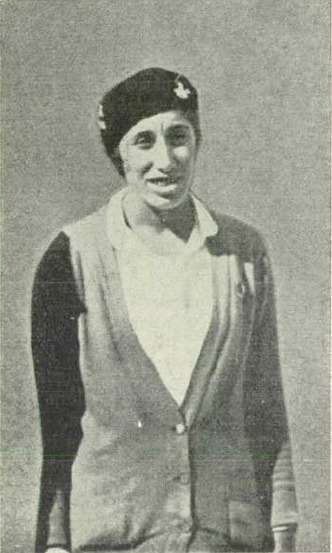
Lucia Valerio stands as one of the most celebrated figures in the history of Italian tennis. Born in Milan on February 28, 1905, her journey through the world of sports is a tale of pioneering spirit, passion, and excellence that has left an indelible mark on the landscape of tennis, not only in Italy but globally. This article delves into her life, exploring the nuances of her career, her rise to fame, and the legacy she left behind.
Early Life and Introduction to Tennis
Lucia Valerio was born into a world that was, at the time, dominated by societal expectations and limitations on women’s participation in sports. Despite these constraints, Lucia exhibited a profound interest in various sports from a young age. Before dedicating herself entirely to tennis, she was actively involved in equestrian sports, skiing, and fencing. This diverse athletic background contributed to her overall physical fitness, agility, and strategic thinking, which would later define her tennis career.
Rising to Prominence: The Early Years
Lucia Valerio’s tennis career began to gain momentum in the 1920s. In 1926, at the age of 21, she won the Italian National Championships in Trieste. This victory marked the beginning of her dominance in Italian tennis, where she secured the national title in the singles category for ten consecutive years. Her consistency on the court and her ability to perform under pressure made her a formidable opponent.
Valerio’s style of play was characterized by her endurance and strategic depth. Known as a “regolarista” or baseline player, she excelled in long rallies, often wearing down her opponents with her stamina and precision. Her forehand was particularly strong, though her backhand was less reliable. However, it was her mental toughness and competitive spirit that set her apart.
Confronting the Greats: International Recognition
Lucia Valerio’s talents were not confined to Italy. She frequently competed against some of the best players of her time on the international stage. Her rivalry with German tennis star Cilly Aussem was particularly notable. Valerio defeated Aussem multiple times in the Italian Open, both in Milan in 1932 and Rome in 1935, often in the semifinals.
One of Valerio’s most memorable matches came during the inaugural edition of the Italian Open in 1930, where she faced Spanish player Lilí de Álvarez in the final. Despite leading the match, Valerio eventually lost in the third set. However, this defeat only fueled her determination. The following year, in 1931, she triumphed in front of her home crowd, securing the Italian Open title and cementing her status as one of the leading players of her era.
The Golden Era of Tennis: A Glimpse into the 1930s
The 1930s were a golden era for tennis, and Lucia Valerio was at the heart of it. The sport, which was largely associated with the elite, saw tournaments being held in glamorous locations such as the French Riviera and the Italian Riviera. Valerio’s presence at these events was a testament to her status within the sport.
Her impeccable sense of style was also a talking point. Always dressed in white, with long skirts and thick stockings, Valerio embodied the elegance and grace that were synonymous with tennis at the time. Her wide-brimmed visor became one of her trademarks, adding to her distinctive on-court persona.
Wimbledon and the Pinnacle of Her Career
Lucia Valerio’s international career reached its peak in 1933 when she advanced to the quarterfinals of Wimbledon. This was a remarkable achievement, as it marked the best performance by an Italian woman at the prestigious tournament up until that point. It would be another 56 years before another Italian, Laura Golarsa, would reach the same stage at Wimbledon.
Wimbledon in the 1930s was the ultimate stage for any tennis player, and Valerio’s success there brought her international recognition. Her performance was a source of pride for Italy and helped to inspire future generations of Italian tennis players.
Life Beyond Tennis
Even after her retirement from competitive tennis, Lucia Valerio remained deeply connected to the sport. She never officially “hung up her racket,” continuing to play well into her later years. Her passion for tennis was a lifelong commitment, and she was known to have played matches even as she approached the age of 90.
Her dedication to tennis was matched by her love for other sports, particularly equestrian activities, skiing, and fencing. These pursuits not only kept her physically active but also reinforced the discipline and competitive spirit that had defined her tennis career.
Legacy and Impact on Italian Tennis
Lucia Valerio passed away on September 26, 1996, in Milan, but her legacy in the world of tennis lives on. She is remembered not only for her achievements on the court but also for her role as a trailblazer for women in sports. At a time when female athletes were often sidelined, Valerio’s success helped to pave the way for future generations of women in tennis and other sports.
Her influence is particularly evident in the way Italian tennis evolved after her time. The resurgence of Italian women’s tennis in the late 20th and early 21st centuries, with players like Flavia Pennetta and Francesca Schiavone achieving Grand Slam success, can be traced back to the path Valerio helped to forge.
Historical Context: Women in Sports during the Early 20th Century
To fully appreciate Lucia Valerio’s achievements, it is essential to understand the broader historical context in which she played. The early 20th century was a time of significant social change, particularly in relation to gender roles. The participation of women in competitive sports was still a relatively new phenomenon, and societal attitudes towards female athletes were often dismissive or outright hostile.
In this environment, Valerio’s success was not just a personal triumph but also a statement about the capabilities of women in sports. Her victories challenged the prevailing stereotypes and helped to shift public perceptions, albeit slowly. The visibility of women like Valerio in sports also contributed to the growing movement for gender equality, both in and outside of the athletic arena.
The Evolution of Tennis: From Valerio’s Era to the Present
Tennis has evolved significantly since Lucia Valerio’s time. The sport has become more global, with advancements in technology, training methods, and media coverage contributing to its popularity. The modern game is faster and more physically demanding, but the strategic elements that Valerio excelled in remain crucial.
Valerio’s era was one where the physical demands of the game were different, with wooden rackets and slower court surfaces. Players relied more on strategy and endurance than the power and speed that characterize the modern game. However, the core principles of tennis—precision, mental toughness, and adaptability—remain unchanged.
Conclusion: Remembering a Pioneer
Lucia Valerio’s life and career offer a fascinating glimpse into the world of tennis during its formative years. She was not only a champion on the court but also a pioneer who helped to shape the future of women’s tennis. Her legacy is one of perseverance, passion, and an unwavering commitment to excellence.
As we look back on her contributions to the sport, it is clear that Lucia Valerio was much more than just a tennis player. She was a trailblazer, a role model, and an inspiration to countless athletes who followed in her footsteps. Her story is a reminder of the power of sport to transcend societal boundaries and to bring about lasting change.
Lucia Valerio’s name may not be as widely recognized as some of the tennis legends who came after her, but her impact on the game, particularly in Italy, is undeniable. She laid the foundation for the success of future generations of Italian tennis players and remains a symbol of the enduring spirit of competition.
In the annals of tennis history, Lucia Valerio’s name will always be synonymous with the pioneering spirit and the passion that has driven the sport forward. Her life is a testament to the fact that true greatness is not measured solely by titles or accolades but by the lasting influence one leaves on the world.


