
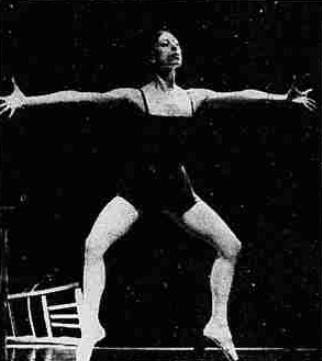
Luciana Savignano is an iconic figure in the world of dance, renowned for her unparalleled talent and distinctive style that has captivated audiences globally. Born on November 30, 1943, in Milan, Italy, Savignano has established herself as a leading dancer whose influence transcends the boundaries of classical ballet, reaching into contemporary and avant-garde dance forms. Her life and career are a testament to her extraordinary ability to merge technical precision with emotional depth, making her one of the most respected and admired dancers of her generation.
Early Life and Classical Training
Luciana Savignano’s journey into the world of dance began at an early age. Growing up in Milan, she was drawn to the art form, demonstrating a natural talent that led her to enroll in the prestigious Scuola di Ballo del Teatro alla Scala, one of the most esteemed ballet schools in the world. At La Scala, she received rigorous training in classical ballet, honing her skills under the guidance of some of the best instructors in the field.
Savignano’s training at La Scala laid a solid foundation for her future career. However, it was her further studies at the Bolshoi Ballet Academy in Moscow that truly expanded her artistic horizons. At the Bolshoi, she was exposed to a different approach to ballet, one that emphasized not only technical excellence but also expressive storytelling and emotional resonance. This experience profoundly influenced her development as a dancer, contributing to the unique style that would later define her career.
Rise to Fame: The Mandarino Meraviglioso
Luciana Savignano’s breakthrough came in the early 1970s when she caught the attention of the celebrated choreographer Mario Pistoni. Pistoni recognized the exceptional qualities that set Savignano apart from her peers—her enigmatic beauty, her sensual yet powerful stage presence, and her ability to convey deep emotion through movement. In 1972, he cast her in the lead role of “Il Mandarino Meraviglioso” (The Miraculous Mandarin), a ballet that would become a pivotal work in her career.
Savignano’s performance in “Il Mandarino Meraviglioso” was met with widespread acclaim. Her portrayal of the title character was both mesmerizing and haunting, earning her critical praise and establishing her as a formidable force in the dance world. This role not only marked the beginning of her rise to fame but also set the stage for her long-standing collaboration with some of the most influential choreographers of the 20th century.
Collaboration with Maurice Béjart
One of the most significant partnerships in Luciana Savignano’s career was with the legendary French choreographer Maurice Béjart. In 1972, shortly after her success in “Il Mandarino Meraviglioso,” Savignano was invited by Béjart to join his renowned dance company, Ballet du XXe Siècle (Ballet of the 20th Century). This collaboration would prove to be one of the most fruitful and artistically rewarding periods of her career.
Béjart was known for his innovative approach to choreography, blending classical ballet with modern dance, theater, and other art forms. He was also a master at creating roles that highlighted the unique qualities of his dancers, and with Savignano, he found the perfect muse. Over the years, Béjart created numerous works specifically for her, each one tailored to her distinctive style and personality.
Some of the most notable works that Béjart created for Savignano include “Leda e il Cigno,” “Ce que l’amour me dit” (with Jorge Donn), “La Luna,” “Duo,” and his iconic version of “Boléro” by Maurice Ravel. In these ballets, Savignano’s performances were nothing short of electrifying, combining technical brilliance with an emotional intensity that left audiences spellbound. Her work with Béjart not only solidified her status as a leading dancer but also expanded her artistic repertoire, allowing her to explore new dimensions of movement and expression.
A Versatile and Prolific Career
Throughout her career, Luciana Savignano demonstrated remarkable versatility, seamlessly transitioning between classical and contemporary roles. While she continued to excel in traditional ballets like “Swan Lake” and “Cinderella,” she also embraced more avant-garde and experimental works, collaborating with a wide range of choreographers.
In 1994, Savignano began a close collaboration with the Italian choreographer Micha Van Hoecke, another pivotal figure in her career. Together, they created several groundbreaking works, including “A la mémoire” (set to music by Gustav Mahler), “Carmina Burana” (Carl Orff), and “Orfeo” (Igor Stravinsky). These productions showcased Savignano’s ability to embody complex characters and convey profound emotional narratives through dance.
Savignano’s work with Van Hoecke further highlighted her status as a dancer who defied categorization. Her performances were marked by a fluidity of movement and an expressive range that transcended the traditional boundaries of ballet. She was equally at home in the dramatic, almost theatrical pieces of Van Hoecke as she was in the more abstract and symbolic works of Béjart.
Later Collaborations and Artistic Contributions
In addition to her work with Béjart and Van Hoecke, Luciana Savignano formed significant artistic partnerships with other choreographers, including Susanna Beltrami. From 1995 onward, Beltrami created several works for Savignano, including “Blu Diablo,” “La Lupa,” “Jules e Jim,” “Tango di Luna,” and “Il suo nome… Carmen.” These collaborations further underscored Savignano’s ability to adapt to different choreographic styles and her commitment to pushing the boundaries of dance.
In 1998, Savignano and Beltrami co-founded the Compagnia Pier Lombardo Danza, a dance company based in Milan. The company provided a platform for innovative and experimental dance productions, many of which featured Savignano in leading roles. Through this company, Savignano continued to contribute to the evolution of contemporary dance in Italy, mentoring younger dancers and fostering a new generation of talent.
Beyond Dance: Acting and Literary Contributions
Luciana Savignano’s artistic talents extended beyond the world of dance. In addition to her work as a dancer, she also ventured into acting, bringing her unique presence to the theater stage. One of her notable performances in this realm was in “L’hotel dei due mondi” (The Hotel of Two Worlds) by Éric-Emmanuel Schmitt, where she showcased her ability to convey deep emotion through both movement and spoken word.
In 2006, Savignano’s life and career were chronicled in the book “Savignano. Anomalia di una stella” (Savignano: An Anomaly of a Star), written by Valeria Crippa and published by Rizzoli. The book offers an in-depth look at her life, her artistic journey, and her contributions to the world of dance, providing readers with a deeper understanding of the woman behind the iconic performances.
Recognition and Legacy
Luciana Savignano’s contributions to dance have been recognized and celebrated both in Italy and internationally. Her career, which spans several decades, is a testament to her enduring talent, creativity, and dedication to the art of dance. She has received numerous awards and accolades for her work, and her influence continues to be felt in the dance community.
In 2009, Savignano’s expertise was further acknowledged when she was invited to serve as a judge and teacher on the television program “Academy,” which aired on Rai Due. This role allowed her to share her knowledge and experience with a wider audience, inspiring a new generation of dancers.
Conclusion
Luciana Savignano is a true icon of the dance world, a performer whose career has been marked by innovation, versatility, and a deep commitment to her art. From her early days at La Scala to her collaborations with some of the most influential choreographers of the 20th and 21st centuries, Savignano has continually pushed the boundaries of what dance can be.
Her unique style, characterized by a blend of classical precision and emotional depth, has made her one of the most respected and admired dancers of her time. Through her work, she has not only entertained audiences but also expanded the possibilities of dance as an art form.
As Luciana Savignano continues to inspire dancers and choreographers around the world, her legacy as a pioneering artist and a trailblazer in the field of dance is secure. Her contributions to the art of dance will undoubtedly continue to influence and inspire future generations of performers, ensuring that her impact on the world of dance endures for years to come.


