
Early Life and Background
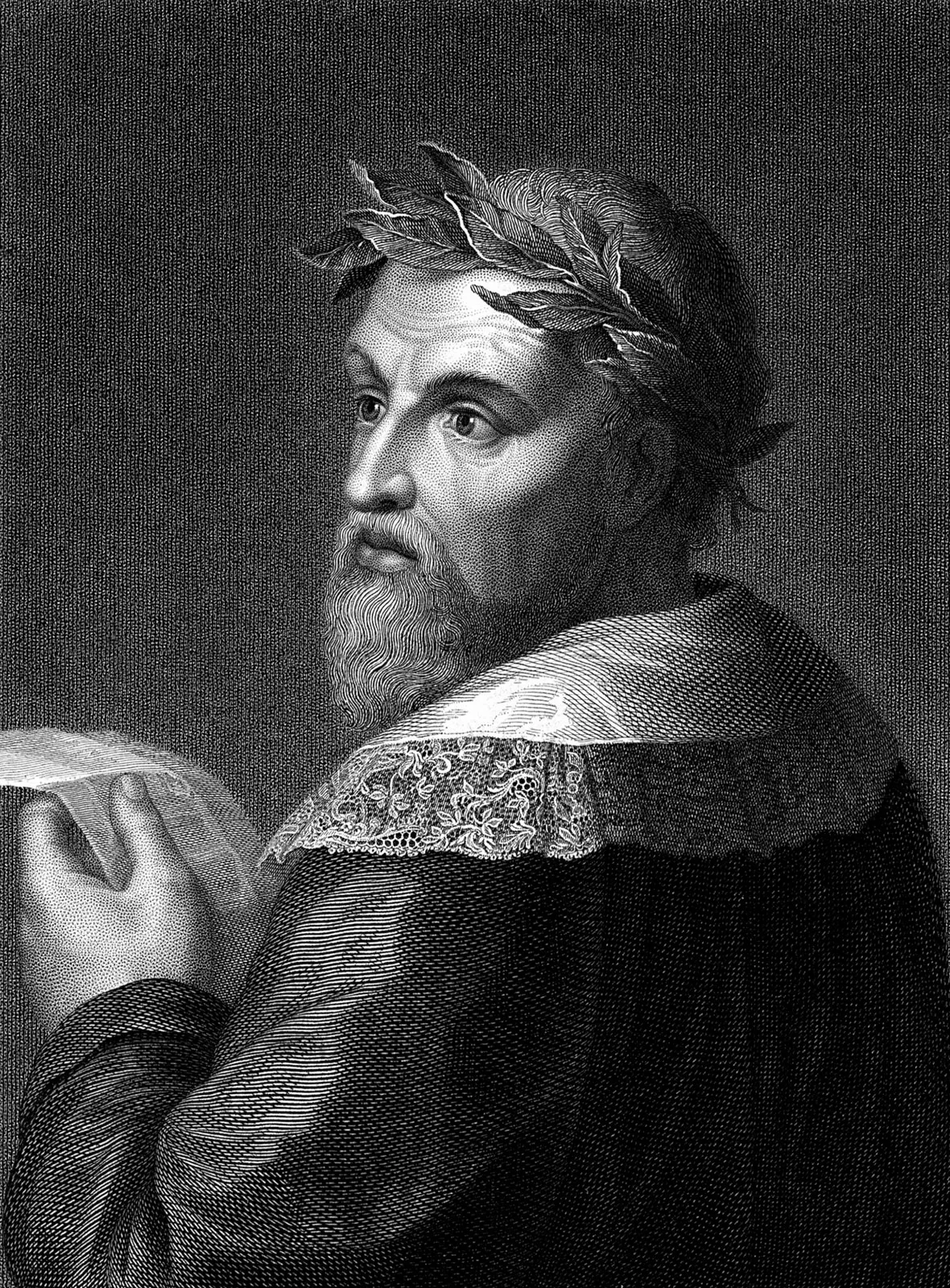
Ludovico Ariosto was born on September 8, 1474, in Reggio Emilia, Italy. He was the eldest of ten children in the family of Niccolò Ariosto, a commander of the citadel of the city. Due to his father’s job, the family moved frequently, living in various cities including Rovigo, Venice, and Reggio Emilia before finally settling in Ferrara in 1484. Despite these relocations, Ferrara remained dear to Ludovico, and he always considered it his true home.
Education and Early Career
Initially pressured by his father to study law, Ariosto enrolled in legal studies between 1484 and 1494, but his heart was never in it. His true passion lay in literature. Finally, in 1495, he was allowed to follow his literary interests. During this time, he came into contact with notable figures such as Ercole Strozzi and Pietro Bembo at the court of Ercole I d’Este in Ferrara. These connections enriched his literary development.
From 1495 to 1500 were some of Ariosto’s happiest years as he immersed himself in the study of literature. He composed love lyrics and elegies, even writing in Latin. Some of his early works include “De diversis amoribus,” “De laudibus Sophiae ad Herculem,” and “Rime,” which were published posthumously in 1546.
Family Responsibilities and Public Service
The death of his father in 1500 marked a significant turning point in Ariosto’s life. As the eldest son, he took on the responsibility of caring for his nine siblings. This period saw him juggling various public and private roles to support his family. Notably, he managed to marry off his sisters and secure employment for his brothers without depleting the family’s resources. He also took care of his paralyzed brother Gabriele, who lived with him throughout his life.
In 1502, Ariosto accepted the position of commander of the Rocca di Canossa. During this time, he had two children, Giambattista with a maid named Maria and Virginio with Olimpia Sassomarino. In 1503, he took minor ecclesiastical orders and entered the service of Cardinal Ippolito d’Este, a relationship that was professionally demanding and often strained.
Service to Cardinal Ippolito d’Este
As a member of Cardinal Ippolito’s retinue, Ariosto’s duties ranged from administrative tasks to personal services, and he accompanied the Cardinal on various political and diplomatic missions. Between 1507 and 1515, these missions took him to Urbino, Venice, Florence, Bologna, Modena, Mantua, and Rome.
Despite his busy schedule, Ariosto managed to write and stage several plays during this period, including the comedies “Cassaria” and “I Suppositi.” His dedication to his literary craft persisted even amid his extensive responsibilities.
Orlando Furioso and Literary Achievements
Ariosto’s magnum opus, “Orlando Furioso,” was first published in 1516. This epic poem, an expansion of Matteo Maria Boiardo’s “Orlando Innamorato,” solidified Ariosto’s fame and is considered one of the greatest works of Italian literature. The poem blends romance, chivalry, and classical mythology, presenting a complex and multifaceted narrative that captured the imagination of readers across Europe.
His relationship with Cardinal Ippolito soured following the publication of “Orlando Furioso,” particularly when Ariosto refused to accompany the Cardinal to Hungary. This refusal led to his dismissal and significant financial difficulties.
Later Career and Governorship
In 1517, Ariosto entered the service of Duke Alfonso d’Este, which he found more fulfilling as it allowed him to stay in Ferrara. However, his financial troubles persisted, and he was eventually appointed governor of Garfagnana, a remote and lawless region under Este control. From 1522 to 1525, Ariosto worked diligently to bring order to the area, dealing with rampant banditry and other challenges.
Despite these administrative burdens, he continued to write. Between 1519 and 1520, he produced several vernacular poems and two comedies, “Il Negromante” and the incomplete “I Studenti.” In 1521, he published a revised edition of “Orlando Furioso.”
Personal Life and Final Years
Ludovico Ariosto had a long-standing relationship with Alessandra Benucci, whom he married secretly in 1527. The marriage remained clandestine to avoid jeopardizing Ariosto’s ecclesiastical benefits and Alessandra’s inheritance rights. The couple never lived together officially, but their bond remained strong.
In his later years, Ariosto enjoyed a period of relative peace and stability. He received a pension from Alfonso d’Avalos for his services as an ambassador, which allowed him to spend his final years in comfort at his home in Mirasole, Ferrara, surrounded by his family and loved ones.
In 1532, Ariosto published the definitive edition of “Orlando Furioso,” a testament to his relentless pursuit of literary excellence. Unfortunately, he fell ill with enteritis and passed away on July 6, 1533, at the age of 58.
Legacy and Influence
Ludovico Ariosto’s impact on literature and culture is profound. “Orlando Furioso” not only established him as a literary giant but also influenced a myriad of writers, poets, and artists across Europe. His work is characterized by its intricate narrative structure, rich character development, and the seamless blending of fantastical and historical elements.
Ariosto’s ability to weave complex stories with deep emotional and psychological insights set a new standard for epic poetry. His influence can be seen in the works of later writers such as Torquato Tasso, Edmund Spenser, and even William Shakespeare.
Conclusion
Ludovico Ariosto’s life and work remain a cornerstone of Italian Renaissance literature. His journey from a reluctant law student to a celebrated poet and statesman highlights the transformative power of passion and perseverance. Despite personal and financial challenges, Ariosto’s commitment to his art never wavered, leaving a legacy that continues to inspire and captivate readers worldwide.
His works, particularly “Orlando Furioso,” stand as timeless monuments to his genius, reflecting the rich cultural and intellectual heritage of the Renaissance. Through his poetry, Ariosto invites readers into a world where the boundaries of reality and imagination blur, offering a glimpse into the enduring power of human creativity.


