
Introduction
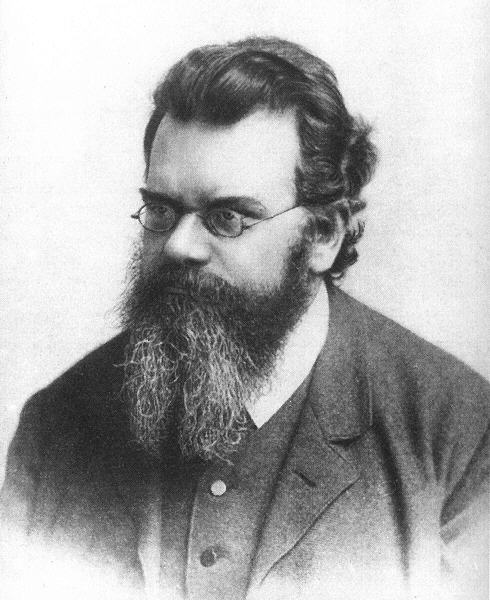
Ludwig Boltzmann was an Austrian physicist born on February 20, 1844, in Vienna. He is best known for his foundational contributions to the field of statistical mechanics and the kinetic theory of gases. Boltzmann’s work bridged the gap between macroscopic and microscopic physical laws, providing profound insights into the behavior of matter. This article delves into Ludwig Boltzmann’s life, examining his age, rise to fame, and significant achievements, providing a comprehensive view of his contributions to science.
Early Life and Education
Ludwig Boltzmann was born into a middle-class family in Vienna. His father, Ludwig Georg Boltzmann, was a government official, and his mother, Katharina Pauernfeind, came from a family with a strong educational background. Boltzmann showed an early aptitude for mathematics and science, which led him to pursue studies in these fields.
Boltzmann attended high school in Linz and later enrolled at the University of Vienna, where he studied physics under the guidance of Josef Stefan. His early work focused on the kinetic theory of gases, an area that would become the cornerstone of his scientific legacy.
Academic Career and Early Contributions
Teaching and Research
After completing his doctorate, Boltzmann began his academic career at the University of Graz, where he was appointed as a professor of mathematical physics in 1869. During his time at Graz, Boltzmann collaborated with renowned physicists such as Hermann von Helmholtz and Gustav Kirchhoff, significantly shaping his scientific perspectives.
Kinetic Theory of Gases
In the 1870s, Boltzmann published a series of papers that laid the groundwork for the kinetic theory of gases. He established a precise relationship between the energy of a gas and its absolute temperature, providing a more general definition of entropy. This work was pivotal in addressing the apparent paradoxes of the second law of thermodynamics and offering a microscopic explanation of macroscopic phenomena.
Major Scientific Achievements
Boltzmann Equation and Statistical Mechanics
One of Boltzmann’s most significant contributions was the formulation of the Boltzmann equation, which describes the statistical behavior of a thermodynamic system not in equilibrium. This equation became a fundamental component of statistical mechanics, a field that Boltzmann helped establish. His work demonstrated how the properties of atoms and molecules could explain the behavior of gases, leading to a deeper understanding of entropy and the second law of thermodynamics.
Stefan-Boltzmann Law
In collaboration with his mentor Josef Stefan, Boltzmann investigated the radiation emitted by a black body. They formulated the Stefan-Boltzmann law, which states that the total energy radiated by a black body is proportional to the fourth power of its absolute temperature. This law has profound implications in thermodynamics and astrophysics, particularly in understanding stellar radiation.
Philosophical Perspectives and Irreversibility
Boltzmann’s philosophical views on the nature of physical laws and irreversibility were also noteworthy. He believed that natural phenomena exhibited a clear distinction between past and future due to the irreversible nature of atomic motion. Boltzmann famously stated:
“Now, if the world of nature is made of atoms, and we are also made of atoms and obey physical laws, the most obvious interpretation of this clear distinction between past and future and of this irreversibility of all phenomena would be that some of the laws of atomic motion go in only one direction, and not in both.”
This perspective underscored his belief in the asymmetry of time and its implications for the second law of thermodynamics.
Challenges and Controversies
Opposition and Vindication
Boltzmann’s ideas were met with considerable opposition from many contemporaries who favored classical thermodynamics and were skeptical of atomic theory. Prominent scientists such as Ernst Mach and Wilhelm Ostwald challenged Boltzmann’s statistical approach. Despite this, Boltzmann remained steadfast in his beliefs, continuing to develop his theories and defend the atomic hypothesis.
Fluctuations and Cosmology
Boltzmann also delved into cosmological questions, addressing issues related to thermodynamic equilibrium and the distribution of matter in the universe. He proposed that the universe might contain regions far from thermodynamic equilibrium, known as “Boltzmann universes,” which could explain the apparent order we observe. This idea laid the groundwork for discussions about the nature of the universe and the concept of multiple universes.
Later Years and Legacy
Personal Struggles and Tragic End
Despite his scientific accomplishments, Boltzmann faced personal and professional challenges. The persistent opposition to his work took a toll on his mental health. Tragically, Ludwig Boltzmann took his own life on September 5, 1906, while vacationing in Duino, Italy.
Posthumous Recognition
Ironically, much of Boltzmann’s work gained widespread acceptance and validation shortly after his death. Experimental evidence in the early 20th century confirmed many of his theories, solidifying his legacy as one of the founding figures of modern physics. The development of quantum mechanics and atomic theory further underscored the importance of Boltzmann’s contributions.
Lasting Impact
Boltzmann’s work has had a lasting impact on various fields, including statistical mechanics, thermodynamics, and cosmology. His ideas about entropy and the statistical nature of physical laws continue to influence scientific thought. The Boltzmann constant, a fundamental physical constant, is named in his honor, symbolizing his enduring legacy in the world of science.
Conclusion
Ludwig Boltzmann’s journey from a young physics enthusiast to one of the most influential scientists in history is a testament to his intellectual rigor and perseverance. Despite facing significant opposition and personal struggles, Boltzmann’s groundbreaking work laid the foundation for modern statistical mechanics and thermodynamics. His contributions have left an indelible mark on the scientific community, inspiring future generations of physicists to explore the fundamental nature of the universe.


