
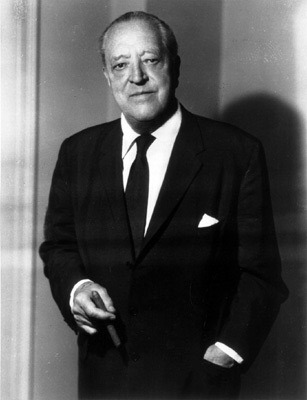
Ludwig Mies van der Rohe, born on March 27, 1886, in Aachen, Germany, is one of the most influential architects of the 20th century. Renowned for his contribution to the Modernist movement, his designs have left an indelible mark on the architectural landscape. His work embodies the principles of simplicity and clarity, which he famously summarized in his aphorisms, “Less is more” and “God is in the details.”
Early Life and Formative Years
Mies van der Rohe was born into a modest family. His father, Michael Mies, was a stonemason who specialized in creating monuments, and young Ludwig grew up assisting in the family business. Despite not completing formal schooling, Mies developed a strong foundation in craftsmanship, learning to draw and working on construction sites. This early exposure to the practical aspects of building would deeply influence his architectural philosophy.
At 19, Mies moved to Berlin, where he began his architectural career. He initially worked for interior designer Bruno Paul and later joined the studio of Peter Behrens, one of the leading architects of the time. During his tenure with Behrens, Mies was introduced to the ideas of the emerging Modernist movement and worked alongside future architectural luminaries such as Walter Gropius and Le Corbusier. These experiences were pivotal in shaping his design approach, which emphasized functionalism and a stripped-down aesthetic.
Rise to Fame: Key Architectural Contributions
Mies van der Rohe’s rise to fame began in the 1920s when he started exploring the potential of new materials and construction techniques. One of his early significant projects was the design for a skyscraper on Berlin’s Friedrichstrasse in 1921. Although never built, the project was revolutionary, with its crystalline structure of glass and steel representing a bold departure from traditional architectural forms.
Another milestone in his career was his role in the Weissenhof Estate project in Stuttgart in 1927. As the artistic director, Mies oversaw the design of a housing exhibition that showcased the ideas of the International Style—a movement that emphasized volume over mass, the use of lightweight materials, and a rejection of ornamentation. His contributions to the Weissenhof project solidified his reputation as a leader in modern architecture.
Mies’s work reached a pinnacle with the design of the German Pavilion for the 1929 International Exposition in Barcelona. Known as the Barcelona Pavilion, this structure epitomized his architectural ideals. It featured a simple, open-plan layout with flowing spaces, supported by slender steel columns and enclosed by glass walls. The pavilion’s luxurious materials, such as marble and onyx, combined with its minimalist design, made it an instant icon of modern architecture.
Bauhaus and Emigration to the United States
In 1930, Mies was appointed director of the Bauhaus, the influential German school of design. Under his leadership, the Bauhaus continued to pioneer modern design principles, despite increasing pressure from the Nazi regime, which viewed the school’s avant-garde philosophy with suspicion. In 1933, the Bauhaus was forced to close, and Mies’s career in Germany was effectively over.
Faced with the rise of Nazism, Mies emigrated to the United States in 1937. His reputation as a leading architect had already reached American shores, and he was quickly offered the position of head of the architecture department at the Armour Institute of Technology in Chicago (later the Illinois Institute of Technology, IIT). Here, Mies had the opportunity to implement his vision on a grand scale, redesigning the campus and creating some of his most celebrated buildings, including the iconic Crown Hall.
American Masterpieces: Farnsworth House and the Seagram Building
One of Mies’s most famous works in the United States is the Farnsworth House, completed in 1951. Located in Plano, Illinois, this one-story weekend retreat is a masterpiece of minimalist design. The house is composed of two horizontal slabs (the floor and the roof) supported by steel columns, with floor-to-ceiling glass walls offering unobstructed views of the surrounding landscape. The Farnsworth House is celebrated for its elegant simplicity and its seamless integration with nature.
Mies’s impact on the American cityscape is perhaps best exemplified by the Seagram Building in New York City, completed in 1958. This 38-story skyscraper on Park Avenue is a landmark of the International Style. The building’s façade of bronze and glass, combined with its functional, grid-like structure, set new standards for commercial architecture. The Seagram Building’s design also introduced the concept of the “corporate plaza,” an open space at the building’s base that has since become a common feature in urban architecture.
Architectural Philosophy: “Less is More”
Mies van der Rohe’s architectural philosophy is often summarized by his dictum “Less is more.” This principle guided his approach to design, where he sought to strip architecture down to its essential elements. He believed that by eliminating unnecessary details, the inherent beauty of the materials and the purity of the form could be fully appreciated. This approach resulted in buildings that were both functional and aesthetically pleasing, with a timeless quality that continues to inspire architects today.
Mies also popularized the idea that “God is in the details,” underscoring his belief in the importance of precision and craftsmanship. In his buildings, every element, from the arrangement of the steel beams to the placement of a pane of glass, was meticulously considered. This attention to detail not only enhanced the visual clarity of his designs but also contributed to their structural integrity.
Legacy and Lasting Influence
Ludwig Mies van der Rohe passed away on August 17, 1969, in Chicago at the age of 83. His influence on architecture, however, endures. His teachings and designs laid the groundwork for much of modern architecture and continue to be studied and admired by architects and students around the world.
The principles Mies championed—simplicity, clarity, and the honest use of materials—are evident in countless buildings across the globe. His work paved the way for the development of the International Style, which dominated mid-20th-century architecture. Mies’s ideas about the relationship between form and function, as well as his belief in the social responsibility of architecture, remain relevant in today’s discussions about sustainable and ethical design.
Mies van der Rohe’s Role in the International Style
Mies van der Rohe played a crucial role in the development and dissemination of the International Style, which became the dominant architectural language of the mid-20th century. This style is characterized by an emphasis on volume over mass, the use of lightweight, industrial materials, and a rejection of decorative ornamentation. Mies’s work in this style is distinguished by its rigorous logic, structural clarity, and an austere beauty that comes from the careful arrangement of forms and spaces.
The International Style, influenced by Mies’s work, sought to create a universal architectural language that could be applied to a wide range of building types and contexts. It was a style that reflected the modern world’s aspirations toward progress, efficiency, and rationality. Mies’s buildings, with their clean lines and open plans, embodied these ideals and set a new standard for architectural design.
Notable Projects and Their Impact
Beyond the Farnsworth House and the Seagram Building, Mies van der Rohe’s portfolio includes numerous other significant projects. The 860-880 Lake Shore Drive apartments in Chicago (1948-1951) are a prime example of his influence on residential architecture. These twin glass-and-steel towers introduced a new model for high-rise living, one that prioritized light, space, and views. Their design set the template for countless skyscrapers that followed.
Mies’s work on the Illinois Institute of Technology campus, particularly the design of Crown Hall (1956), is another landmark achievement. Crown Hall, home to the architecture school, is widely regarded as one of Mies’s masterpieces. Its open interior space, free of columns, exemplifies his commitment to structural purity and spatial flexibility. The building’s design reflects Mies’s belief that architecture should provide a framework for human activity, not dictate it.
Mies van der Rohe’s Influence on Contemporary Architecture
Mies van der Rohe’s influence extends far beyond his own buildings. His ideas about minimalism, the use of modern materials, and the importance of architectural integrity have shaped the work of countless architects. His approach to design, which combines functionalism with a deep appreciation for the aesthetics of structure and material, continues to resonate in contemporary architecture.
Many of today’s leading architects, including Renzo Piano, Norman Foster, and Tadao Ando, have cited Mies as a major influence on their work. His legacy is also evident in the continued popularity of the International Style, particularly in the design of corporate and institutional buildings. Mies’s vision of a modern, rational architecture that serves the needs of society is as relevant today as it was in the 20th century.
Conclusion
Ludwig Mies van der Rohe was more than just an architect; he was a visionary who redefined the possibilities of modern architecture. His work, characterized by its simplicity, clarity, and attention to detail, set new standards for design and continues to inspire architects around the world. From his early days in Berlin to his later years in Chicago, Mies remained committed to the idea that architecture could improve people’s lives by creating spaces that were both functional and beautiful.
As we continue to confront the challenges of the modern world, Mies van der Rohe’s principles of simplicity, integrity, and the honest use of materials offer valuable lessons. His legacy is a reminder that great architecture is not just about building structures but about creating environments that enhance our experience of the world.


