
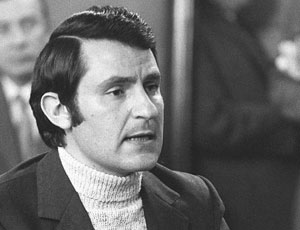
Luigi Calabresi was an Italian police officer whose life and career were tragically cut short in one of the most turbulent periods of Italy’s modern history. Born on November 14, 1937, in Rome, Calabresi’s story is intertwined with the political and social unrest of Italy during the late 1960s and early 1970s. His involvement in the investigation of the Piazza Fontana bombing and the subsequent death of anarchist Giuseppe Pinelli made him a central figure in Italy’s “Years of Lead” (Anni di Piombo), a time marked by widespread political violence. This article explores the life, career, and enduring legacy of Luigi Calabresi, offering detailed insights into the historical context in which he lived and the events that led to his untimely death.
Early Life and Education
Luigi Calabresi was born into a middle-class family in Rome. His father was a wine and oil merchant, which afforded the family a stable, if modest, lifestyle. Calabresi attended the prestigious “San Leone Magno” classical high school, where he received a traditional education that emphasized Latin, Greek, and philosophy. This classical education would later inform his intellectual approach to law enforcement and his deep commitment to justice.
After completing high school, Calabresi enrolled in the University of Rome, where he studied law. In 1964, he graduated with a thesis on the Sicilian mafia, a subject that was not widely studied at the time but would later become a significant area of focus for Italian law enforcement. Despite his academic success, Calabresi was not drawn to a career as a lawyer or judge; instead, he chose to join the police force, driven by a desire to actively combat the growing threats of organized crime and political violence in Italy.
Career Beginnings and Rise in the Police Force
In 1965, Luigi Calabresi passed the competitive examination to become a vice-commissioner of public security. After completing his training at the Superior Institute of Police in Rome, he was assigned to the political office of the Milan police headquarters. His role involved monitoring and investigating various political groups, particularly those on the far left, including anarchists and Maoists, who were increasingly active in Italy during the 1960s.
Calabresi quickly gained a reputation as a diligent and capable officer. He was deeply involved in investigating the activities of leftist groups, which were suspected of planning or executing acts of violence in protest against the Italian government and the establishment. One of his earliest notable assignments was overseeing the response to the student occupation of the Catholic University of the Sacred Heart in Milan in 1967, an event that was part of the broader wave of student protests that swept across Europe in 1968.
The Piazza Fontana Bombing and the Death of Giuseppe Pinelli
Luigi Calabresi’s name became widely known in Italy following the tragic events of December 12, 1969, when a bomb exploded at the Banca Nazionale dell’Agricoltura in Milan’s Piazza Fontana, killing 17 people and injuring nearly 100 others. The attack, which remains one of the darkest moments in Italian history, was initially blamed on anarchist groups. Calabresi, as a senior officer in the political office, was tasked with investigating the bombing.
In the days following the bombing, Calabresi ordered the arrest and interrogation of several known anarchists, including Giuseppe Pinelli, a well-known figure in Milan’s anarchist circles. Pinelli was brought to the Milan police headquarters, where he was questioned over several days. On the night of December 15, Pinelli died after falling from a fourth-floor window of the police station. The circumstances of his death were immediately suspicious and became the subject of intense controversy.
The police initially claimed that Pinelli had committed suicide out of guilt, but this explanation was widely disbelieved, particularly among leftist groups and intellectuals. Many believed that Pinelli had been murdered, either deliberately pushed out of the window or accidentally killed during a violent interrogation. The exact circumstances of Pinelli’s death have never been definitively established, but the incident sparked widespread outrage and led to a relentless campaign against Luigi Calabresi, who was accused of being directly or indirectly responsible for Pinelli’s death.
The “Lotta Continua” Campaign and Calabresi’s Struggles
The death of Giuseppe Pinelli marked the beginning of a sustained campaign of vilification against Luigi Calabresi, particularly by the left-wing newspaper “Lotta Continua,” which accused him of being a murderer and torturer. The newspaper’s editor, Pio Baldelli, and other intellectuals publicly condemned Calabresi, calling for his resignation and prosecution. This campaign was part of a broader movement that sought to hold the Italian state accountable for what many perceived as the repression of political dissent.
The intense public scrutiny and the constant threats took a significant toll on Calabresi. Despite this, he continued his work with the Milan police, even as the situation became increasingly dangerous. He pursued legal action against “Lotta Continua” for defamation, leading to a highly politicized trial that further polarized Italian society.
In the midst of this personal and professional turmoil, Calabresi remained committed to his duties as a police officer. He was known for his calm demeanor and professionalism, qualities that made him a respected figure within the police force, even as he was vilified by others. His legal battle against “Lotta Continua” and its supporters became a symbol of the broader struggle between the Italian state and the radical left during this tumultuous period.
Assassination and Aftermath
On the morning of May 17, 1972, Luigi Calabresi was assassinated outside his home in Milan as he was preparing to leave for work. He was shot in the back of the head by assailants who ambushed him from behind, ensuring his death was swift and brutal. The assassination was widely believed to be politically motivated, a direct result of the campaign against him by radical leftist groups who held him responsible for Pinelli’s death and saw him as a symbol of state repression.
Calabresi’s murder shocked the nation and marked a turning point in Italy’s “Years of Lead,” a period characterized by widespread political violence, including assassinations, bombings, and kidnappings by both far-left and far-right extremist groups. The assassination left behind his pregnant wife, Gemma Capra, and two young sons, Paolo and Mario. A third child, Luigi, was born shortly after his father’s death.
In the years that followed, the investigation into Calabresi’s murder became a protracted legal saga. For many years, the case remained unsolved, contributing to a sense of impunity and deepening the divisions within Italian society. However, in 1988, Leonardo Marino, a former member of the radical leftist group Lotta Continua, came forward and confessed to his involvement in the assassination, implicating fellow members Ovidio Bompressi, Adriano Sofri, and Giorgio Pietrostefani as the masterminds behind the plot.
After lengthy trials and appeals, Sofri, Bompressi, and Pietrostefani were convicted and sentenced to lengthy prison terms for their roles in Calabresi’s murder. The convictions, while bringing some closure, also reignited debates about the events of the 1970s and the justice system’s handling of politically motivated crimes.
Legacy and Impact on Italian Society
Luigi Calabresi’s life and death have had a lasting impact on Italian society. For many, he remains a symbol of the law enforcement officers who were caught in the crossfire of Italy’s political violence during the “Years of Lead.” His assassination highlighted the deep divisions within Italian society and the extreme measures that some were willing to take in pursuit of their political objectives.
Calabresi’s family, particularly his widow Gemma and son Mario, have played an important role in preserving his legacy. Mario Calabresi, who became a well-known journalist and author, has written extensively about his father’s life and the broader historical context of the era. Through their efforts, the Calabresi family has sought to ensure that Luigi’s story is remembered not just as a tragic episode, but as a lesson in the dangers of political extremism and the importance of justice and reconciliation.
In the decades since his death, Luigi Calabresi has been posthumously honored in various ways. Streets and public spaces have been named after him, and his story has been the subject of numerous books, documentaries, and films. His life and tragic end continue to be a powerful reminder of the human cost of political violence and the enduring need for a just and equitable society.
Conclusion
Luigi Calabresi’s life was emblematic of the challenges and complexities faced by law enforcement officers during one of the most volatile periods in modern Italian history. His dedication to his work, even in the face of extreme adversity, and his tragic assassination serve as stark reminders of the perils that come with serving the public in times of political unrest.
Calabresi’s legacy is one of courage, integrity, and an unwavering commitment to justice. His story, and the broader historical context in which it unfolded, continue to resonate in Italy and beyond, offering important lessons about the dangers of extremism and the enduring need for the rule of law.


