
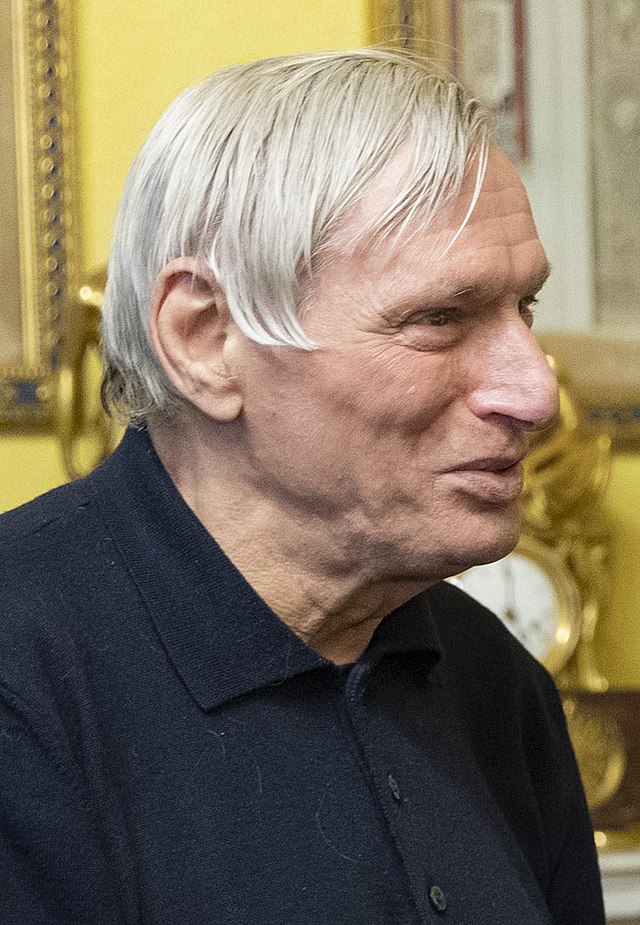
Luigi Ciotti, better known as Don Luigi Ciotti, is a name that resonates deeply within the landscape of Italian social activism and the fight against organized crime. As a Catholic priest, social worker, and founder of numerous organizations aimed at helping the marginalized and combating criminal networks, Don Ciotti’s life is a testament to unwavering commitment and moral courage. This article provides an in-depth exploration of Luigi Ciotti’s life, tracing his early years, rise to prominence, and the significant contributions he has made to Italian society and beyond.
Early Life and Background
Born on September 10, 1945, in Pieve di Cadore, a small town in the province of Belluno in Northern Italy, Luigi Ciotti was exposed to the hardships of life from an early age. His family relocated to Turin when he was just five years old, a city that would become the epicenter of his life’s work. Turin, with its industrial landscape and burgeoning social challenges, provided the young Ciotti with a front-row seat to the struggles of the working class and the marginalized communities.
As a young man, Ciotti was deeply influenced by the social teachings of the Catholic Church, which emphasized the need to care for the poor and the oppressed. This influence led him to pursue a path in the seminary at Rivoli, near Turin. It was here that Ciotti began to conceptualize the idea of using his faith as a tool for social change.
The Birth of Gruppo Abele: A Lifelong Commitment to Social Justice
In 1965, at the age of 20, Luigi Ciotti founded Gruppo Abele, an organization that would become a cornerstone of his life’s work. Initially conceived as a youth engagement group, Gruppo Abele quickly expanded its mission to address a wide range of social issues, including drug addiction, homelessness, and criminal rehabilitation. The group’s early efforts included the establishment of community centers for adolescents as alternatives to incarceration, as well as educational initiatives within juvenile detention centers.
Gruppo Abele’s approach was revolutionary for its time, focusing on rehabilitation and social reintegration rather than punishment. Ciotti’s vision was to create a society where the marginalized and disenfranchised could find hope and support, and this vision was deeply rooted in the principles of compassion and dignity for all individuals.
Ordination and Early Priesthood
In November 1972, Luigi Ciotti was ordained as a Catholic priest by Cardinal Michele Pellegrino, marking the beginning of his formal religious ministry. However, unlike many of his contemporaries, Don Ciotti did not confine his work to the church. He saw his priesthood as a call to serve the most vulnerable members of society, and he quickly became known for his hands-on approach to social issues.
In 1973, just a year after his ordination, Don Ciotti and Gruppo Abele opened Centro Droga, Italy’s first center dedicated to helping drug addicts. This initiative was groundbreaking, as it provided a model for addiction treatment that focused on care and rehabilitation rather than stigmatization. The center’s success laid the foundation for further expansion of Gruppo Abele’s activities, including the creation of additional community spaces that addressed broader social problems.
Expanding Horizons: The 1980s and Beyond
As the 1980s dawned, Don Luigi Ciotti’s work gained national and international recognition. In 1982, he played a key role in establishing the Coordinamento Nazionale delle Comunità di Accoglienza (CNCA), or the National Coordination of Welcome Communities, a network of organizations dedicated to social inclusion and support for marginalized populations. Ciotti served as the president of CNCA, guiding the organization in its mission to provide care and advocacy for those on the fringes of society.
Four years later, in 1986, Ciotti co-founded the Lega Italiana per la Lotta contro l’Aids (LILA), the Italian League for the Fight against AIDS. This organization was instrumental in defending the rights of HIV-positive individuals, promoting public awareness about the disease, and combating the stigma associated with it. LILA’s work was particularly crucial during a time when misinformation and fear about HIV/AIDS were widespread, and Ciotti’s leadership helped to shift public discourse towards compassion and understanding.
Journalism and Public Advocacy
In addition to his social work, Don Luigi Ciotti became an influential voice in Italian media. In 1988, he was officially recognized as a publicist journalist, a role that allowed him to reach a wider audience with his message of social justice. His writing often focused on the intersection of poverty, drug addiction, and crime, shedding light on the systemic issues that perpetuated these problems.
In 1991, Ciotti was appointed as a Garante (guardian or advocate) at the World AIDS Conference in Florence, further solidifying his reputation as a leading advocate for marginalized communities. His involvement in this conference highlighted the importance of human rights in the fight against public health crises, and his work in this area continued to influence policies and public attitudes.
The Fight Against Organized Crime: The 1990s
The 1990s were a pivotal decade for Don Luigi Ciotti, as he turned his attention to one of Italy’s most pressing social issues: organized crime. The early 1990s were marked by a series of high-profile mafia killings, including the assassinations of anti-mafia magistrates Giovanni Falcone and Paolo Borsellino. These events shook Italy to its core and spurred Ciotti to take a more active role in combating criminal networks.
In response to these tragedies, Don Ciotti founded Narcomafie in 1994, a monthly publication dedicated to exposing and combating the influence of the mafia and other organized crime syndicates. As the director of Narcomafie, Ciotti used his platform to raise awareness about the insidious effects of organized crime on Italian society and to advocate for stronger anti-mafia legislation.
The Founding of Libera: A National Movement
Perhaps Don Luigi Ciotti’s most significant contribution to Italian society came in 1995 with the founding of Libera – Associazioni, nomi e numeri contro le mafie (Libera – Associations, Names, and Numbers Against the Mafia). Libera was established in the wake of the mafia killings of 1992 and aimed to create a broad-based movement against organized crime. The organization’s mission was not only to combat the mafia but also to promote a culture of lawfulness, justice, and social responsibility.
Libera quickly became one of the most influential anti-mafia organizations in Italy. In 1996, under Ciotti’s leadership, Libera launched a nationwide petition that collected over a million signatures in support of a law that would allow the confiscation and social reuse of property seized from the mafia. This law, which was eventually passed, has since enabled the transformation of former mafia assets into community centers, educational institutions, and other socially beneficial enterprises.
Recognition and Awards
Don Luigi Ciotti’s tireless work has earned him numerous accolades over the years. In 1996, he was awarded the title of Cavaliere di Gran Croce dell’Ordine al Merito della Repubblica Italiana (Knight Grand Cross of the Order of Merit of the Italian Republic), one of the highest honors bestowed by the Italian government. This recognition was a testament to Ciotti’s profound impact on Italian society and his unwavering commitment to justice.
In 1998, Ciotti received an honorary degree in Educational Sciences from the University of Bologna, acknowledging his contributions to social education and his role in fostering a more just and equitable society. This was followed by a second honorary degree in Law from the University of Foggia in 2006, further highlighting his influence in the fields of law and social justice.
Continued Activism: The 2000s and 2010s
As the new millennium unfolded, Don Luigi Ciotti continued to be a leading figure in the fight for social justice and against organized crime. His work with Libera expanded internationally, as the organization began to collaborate with other anti-mafia groups and human rights organizations around the world.
In 2010, Ciotti contributed the preface to Lauro Venturi’s book Romanzo reale, and in 2011, he published La speranza non è in vendita (Hope Is Not for Sale), a book that encapsulated his philosophy of resistance and hope in the face of adversity. These publications, along with his continued public speaking and advocacy, kept Ciotti at the forefront of Italy’s social and political discourse.
In January 2012, Don Luigi Ciotti, through Gruppo Abele and Libera, launched Riparte il futuro, a web-based campaign aimed at combating political corruption and mafia infiltration in Italy. The campaign was successful in prompting the Italian government to amend Article 416 ter of the Penal Code, which deals with political-mafia collusion, in April 2013. This was a significant victory in the ongoing battle against corruption in Italy, demonstrating Ciotti’s ability to mobilize public opinion and effect legislative change.
Legacy and Impact
Don Luigi Ciotti’s legacy is one of relentless advocacy for the marginalized and an unwavering commitment to justice. His work has not only transformed the lives of countless individuals but has also had a profound impact on Italian society as a whole. Through his leadership in Gruppo Abele and Libera, Ciotti has shown that it is possible to challenge entrenched systems of power and bring about meaningful change.
Ciotti’s approach to social activism is deeply rooted in the belief that true justice must be accompanied by compassion and solidarity. His life’s work serves as a powerful reminder that the fight against inequality, injustice, and organized crime is not just a legal or political battle, but a moral imperative that requires the collective effort of society.
Conclusion
Luigi Ciotti’s life and work stand as a testament to the power of faith, compassion, and determination in the pursuit of social justice. From his early days in Turin to his role as a leading figure in the fight against organized crime, Don Ciotti has dedicated his life to serving those who are most in need and to challenging the forces of corruption and oppression.
His contributions to Italian society, whether through his founding of Gruppo Abele, his leadership of Libera, or his tireless advocacy for human rights, have left an indelible mark on the country and the world. As we reflect on Don Luigi Ciotti’s life, we are reminded of the importance of standing up for what is right, even in the face of seemingly insurmountable challenges. His legacy continues to inspire and guide those who seek to create a more just and equitable world.


