
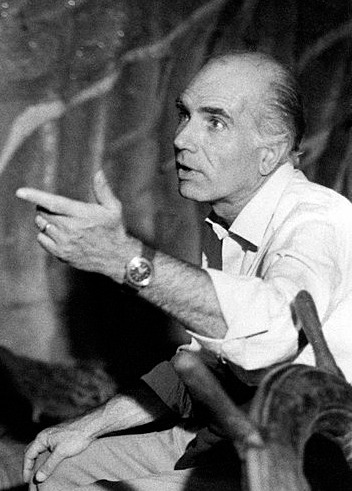
Luigi Comencini, born on June 8, 1916, in Salò, a town in the province of Brescia, Italy, is one of the most revered filmmakers in Italian cinema history. Known as the “director of children,” Comencini’s films often explored themes of childhood, family, and the societal challenges faced by the most vulnerable. His contributions to Italian cinema span several decades, making him a pivotal figure in the neorealism and commedia all’italiana movements. This article delves into Comencini’s life, his cinematic achievements, and the lasting impact of his work on both Italian and global cinema.
Early Life and Education
Luigi Comencini was born into a family that would soon move to France, where he spent much of his early childhood. This bicultural upbringing played a significant role in shaping his worldview and later influenced his approach to filmmaking. He returned to Italy for his education, eventually enrolling at the University of Milan, where he earned a degree in architecture. However, his passion for cinema soon outweighed his interest in architecture, leading him to pivot towards a career in film.
The Beginnings of a Cinematic Journey
In the aftermath of World War II, Comencini co-founded the Cineteca Italiana in Milan in 1947 alongside Alberto Lattuada and Mario Ferrari. This institution became Italy’s first film archive, dedicated to preserving and promoting cinematic heritage. The establishment of the Cineteca Italiana marked the beginning of Comencini’s deep involvement in the film industry, not just as a creator but as a preserver and educator of film culture.
Comencini’s early work as a film critic for publications like L’Avanti! and Il Tempo further honed his understanding of cinema. These experiences provided him with the critical tools to analyze and later create films that were not only entertaining but also socially and culturally significant.
Transition to Filmmaking
In 1946, Comencini made his directorial debut with the documentary Bambini in città, a film that explored the lives of children in post-war Italy. This work highlighted Comencini’s deep empathy for children and the marginalized, themes that would recur throughout his career. Two years later, he directed his first feature film, Proibito rubare (1948), which told the story of young boys struggling to survive in the harsh environment of Naples. This film established Comencini’s reputation as a filmmaker with a unique perspective on youth and the challenges they face.
Comencini’s early films often focused on the struggles of children and families, reflecting his belief in the importance of understanding and addressing societal issues through the lens of those most affected by them. His work during this period laid the foundation for his later success in the Italian film industry.
Rise to Fame: The Neorealism Era
The 1950s marked a turning point in Comencini’s career as he became a prominent figure in the neorealism movement. Neorealism, characterized by its focus on the everyday lives of ordinary people, resonated with Comencini’s desire to create films that were both socially relevant and emotionally engaging.
One of Comencini’s most celebrated works from this period is Pane, amore e fantasia (1953), followed by its sequel Pane, amore e gelosia (1954). These films, starring Vittorio De Sica and Gina Lollobrigida, were critical and commercial successes, epitomizing the lighter, more comedic side of neorealism known as “neorealismo rosa.” The success of these films solidified Comencini’s reputation as a master of blending humor with social commentary, a hallmark of his style.
The Pane, amore series not only entertained audiences but also provided a commentary on post-war Italian society, exploring themes of love, jealousy, and the complexities of rural life. Comencini’s ability to capture the nuances of Italian culture and the human condition made these films enduring classics.
Contributions to Commedia all’Italiana
As Italian cinema evolved in the 1960s, so did Comencini’s work. He became a leading figure in the commedia all’italiana genre, a style of comedy that blended humor with sharp social criticism. One of his most significant contributions during this era was Tutti a casa (1960), a film that depicted the confusion and chaos experienced by Italian soldiers after the armistice of September 8, 1943. The film starred Alberto Sordi and Eduardo De Filippo, two of Italy’s most beloved actors, and was praised for its poignant portrayal of a nation in turmoil.
Commedia all’italiana allowed Comencini to explore the contradictions and complexities of Italian society with a humorous yet critical eye. His films from this period, including A cavallo della tigre (1961) and Il commissario (1962), showcased his ability to balance comedy with deeper, often darker, themes. These works reflected the changing social dynamics of Italy in the post-war era and contributed to the genre’s status as a defining element of Italian cinema.
Exploration of Childhood and Family
Throughout his career, Comencini maintained a deep interest in the experiences of children and the dynamics of family life. His 1964 film Incompreso: vita col figlio is a powerful exploration of the relationship between a father and his son, based on the novel by Florence Montgomery. The film’s sensitive portrayal of childhood grief and misunderstanding resonated with audiences and critics alike, further establishing Comencini as a filmmaker with a unique talent for capturing the emotional complexities of family life.
Comencini’s work in television also reflected his fascination with childhood and classic literature. In 1971, he directed the acclaimed TV adaptation of Le avventure di Pinocchio, starring Nino Manfredi as Geppetto. This adaptation of Carlo Collodi’s beloved novel became a cultural touchstone for generations of Italian viewers. The series was praised for its faithful yet imaginative interpretation of the source material, and it remains one of the most beloved adaptations of Pinocchio to this day.
In 1984, Comencini returned to television with Cuore, an adaptation of Edmondo De Amicis’s novel. The series, featuring Johnny Dorelli and Giuliana De Sio, explored themes of education, morality, and social responsibility. Like Pinocchio, Cuore became a significant cultural event in Italy, further cementing Comencini’s reputation as a director who could bring classic stories to life in a way that resonated with contemporary audiences.
Later Career and Legacy
In the later years of his career, Comencini continued to produce films that challenged and entertained audiences. Notable works from the 1970s and 1980s include Lo scopone scientifico (1972), a satirical comedy starring Bette Davis, Silvana Mangano, and Alberto Sordi, and La donna della domenica (1975), a murder mystery with a satirical edge featuring Marcello Mastroianni and Jacqueline Bisset.
Comencini’s 1980 film Voltati, Eugenio examined the relationships between different generations, showcasing his enduring interest in the family as a central theme in his work. His films from this period often blended humor with serious social commentary, reflecting the complexities of modern Italian life.
Despite facing health challenges in his later years, Comencini remained active in the film industry until the early 1990s. His final films, including Marcellino pane e vino (1991), continued to explore themes of childhood, innocence, and the impact of societal pressures on the individual.
Luigi Comencini passed away in Rome on April 6, 2007, at the age of 90. His death marked the end of an era in Italian cinema, but his legacy lives on through his films and the influence he had on subsequent generations of filmmakers.
The Comencini Legacy: A Family of Filmmakers
Comencini’s influence extends beyond his own work; his legacy continues through his daughters, Francesca and Cristina Comencini, both of whom followed in their father’s footsteps to become accomplished filmmakers. Francesca Comencini has spoken about how she and her sister have inherited different aspects of their father’s approach to cinema, particularly his empathy for the marginalized and his commitment to addressing social issues through film.
Francesca Comencini’s films often focus on the struggles of women and the challenges of contemporary life, reflecting her father’s sensitivity to social issues. Cristina Comencini, meanwhile, has explored a range of themes in her work, from family dynamics to historical events, further extending the Comencini family’s influence on Italian cinema.
Conclusion
Luigi Comencini’s contributions to Italian cinema are immeasurable. As a pioneer of neorealism and commedia all’italiana, he created films that entertained, provoked, and inspired audiences across the world. His ability to blend humor with social critique, along with his deep empathy for children and the marginalized, made him one of the most important directors of his generation.
Comencini’s work continues to be celebrated for its artistic quality and its insightful exploration of the human condition. His films remain relevant today, offering a window into the social and cultural history of Italy, while also speaking to universal themes of family, identity, and the struggle for a better life.
As we reflect on Luigi Comencini’s life and career, it is clear that his impact on cinema extends far beyond his own films. Through his daughters and the many filmmakers he inspired, Comencini’s legacy continues to shape the world of cinema, ensuring that his voice and vision will endure for generations to come.


